L'usine auto-déclarative

Chaque outil. Chaque ordre WIP. Chaque actif. Suivis automatiquement. Pour que votre ligne ne s'arrête jamais.

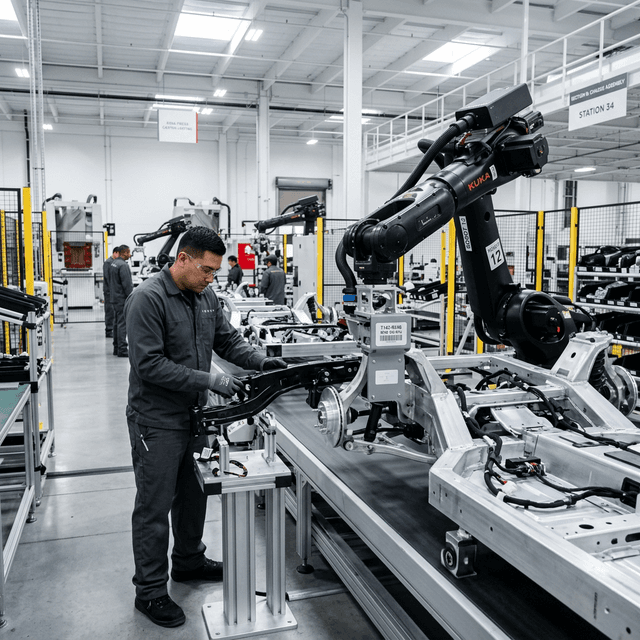
Modern manufacturing is a high-stakes environment where minutes of downtime cost thousands of dollars. Despite advanced robotics and ERP systems, the 'connective tissue' of the factory - the movement of Work-in-Progress (WIP), tools, and raw materials - often remains a manual black box.
Suivi des actifs de fabricationEPC Gen2Démarrer un pilote
100 %Responsabilité numérique des outils
750 k$Économies annuelles sur les remplacements
0Incidents FOD depuis le projet
Suivi des actifs de fabrication
Notre approche
Suivi des actifs de fabrication
Ce que vous obtenez
Suivi des actifs de fabrication
Étude de cas
Le problème

Le paradoxe de l'efficacité

Modern manufacturing is a high-stakes environment where minutes of downtime cost thousands of dollars. Despite advanced robotics and ERP systems, the 'connective tissue' of the factory - the movement of Work-in-Progress (WIP), tools, and raw materials - often remains a manual black box.

Managers ask: 'Where is Order #504?' 'Where is the calibrated torque wrench?' 'Why is Line B stalled?' The answers are hidden because the physical assets are disconnected from the digital system. Operators waste critical hours searching for tools (Search Time). Production planners schedule based on theoretical capacity, not real-time status (Buffers).

In regulated industries like Aerospace and Defense, this visibility gap is a compliance risk. Foreign Object Debris (FOD) left inside an assembly can be catastrophic. Missing genealogy data can trigger massive recalls.

Points de difficulté clés 01

Temps de recherche et stocks tampons

L'ouvrier industriel moyen passe 10 à 15 % de son poste à chercher des choses. Ce temps sans valeur ajoutée crée des contraintes de capacité artificielles, forçant les usines à maintenir des stocks tampons WIP plus importants pour compenser.

Points de difficulté clés 02

Accumulation d'actifs

Parce que les outils sont difficiles à trouver, les travailleurs les accumulent dans des casiers non autorisés. L'usine achète plus d'outils qu'elle n'en a besoin, pourtant la disponibilité reste faible.

Points de difficulté clés 03

Qualité et généalogie

Si un défaut est trouvé, pouvez-vous tracer exactement quel lot de colle a été utilisé, quel outil l'a appliqué et qui était l'opérateur ? Sans RFID, cette « généalogie » est souvent une paperasse manuelle incomplète.

Notre approche

Le tissu IoT industriel

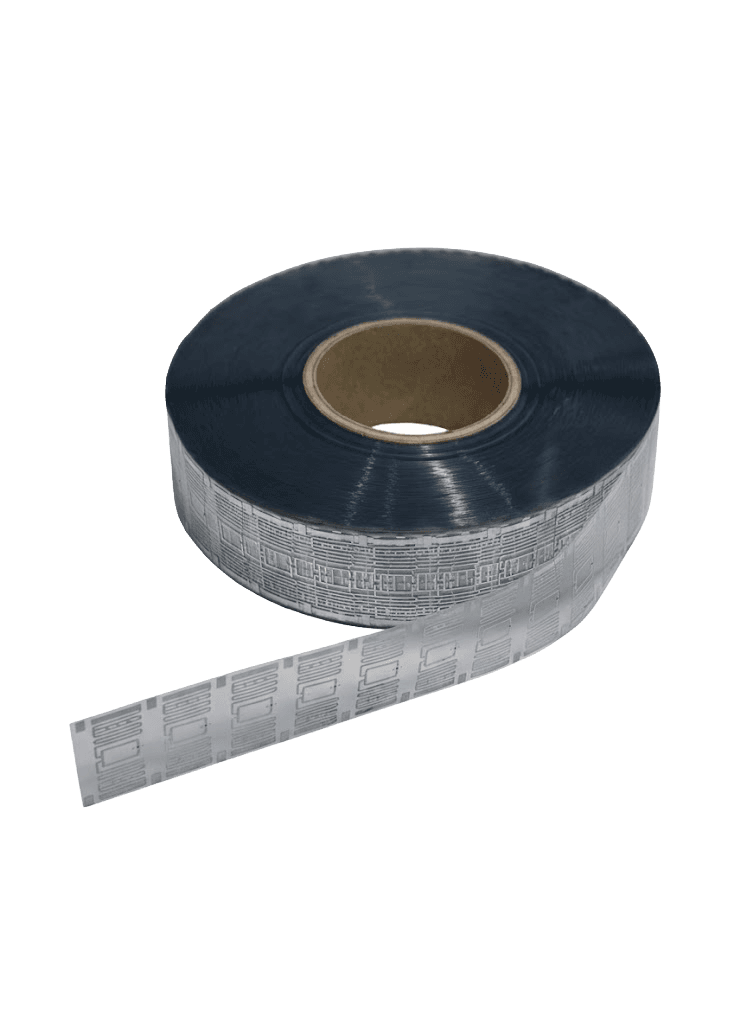
Nextwaves deploys an Industrial IoT layer over your existing OT/IT infrastructure. We attach specialized, high-durability RFID tags to every moving element: the parts (WIP), the carriers (skids/totes), and the tools. These tags are engineered to survive autocalves, acid baths, paint ovens (250°C), and shot blasting.

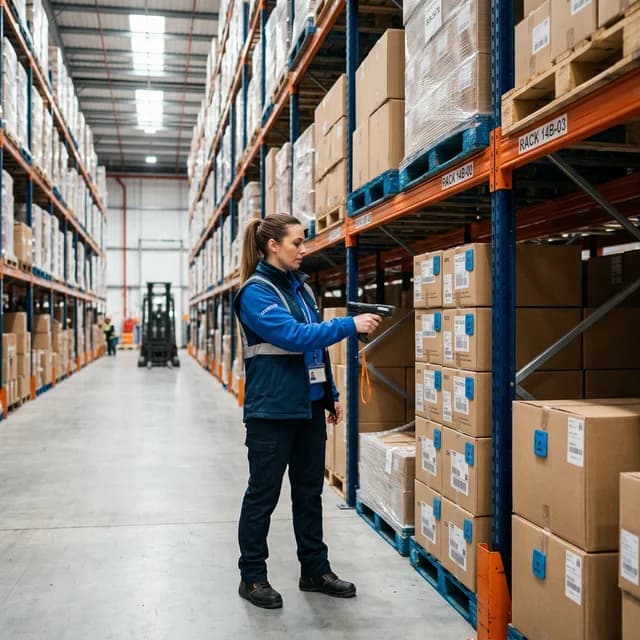
We blanket the facility with a grid of readers - at workstations, choke points, and tool cribs. As assets move, they update their own status. A tool 'checks itself out' when it leaves the crib. A product 'updates its operation' when it arrives at Station 5.

This data feeds into our 'Factory Twin' middleware, which orchestrates logic: 'If Tool A is not calibrated, do not enable Station B.' 'If Order 504 arrives at Paint, trigger ERP update.' The factory becomes self-aware and self-reporting.

Suivi des actifs de fabrication
Ce que vous obtenez

Intelligence de fabrication

01

Réduisez le WIP de 20 %

Avec une visibilité en temps réel, vous pouvez supprimer les stocks tampons de sécurité et passer à un véritable flux juste-à-temps.

02

Prévention des FOD

Responsabilité automatique des outils. Assurez-vous que 100 % des outils émis sont retournés avant que le produit quitte la cellule.

03

Maintenance prédictive

Suivez les cycles d'utilisation des outils (coups, heures). Entretenez les moules et matrices selon l'usure réelle, évitant une maintenance prématurée ou tardive.

04

Routage dynamique

Les convoyeurs intelligents peuvent automatiquement acheminer les produits défectueux vers les lignes de retouche en fonction des données du tag RFID.

Étude de cas

Étude de cas : Fabricant de moteurs d'avion

Un fabricant de turboréacteurs nécessitait une responsabilité absolue pour plus de 50 000 outils à main afin de prévenir les dommages par corps étrangers (FOD). Une seule douille perdue pourrait immobiliser un vol d'essai.

Comment ça marche

Conçu pour survivre sur le sol de l'usine

  1. Standard retail tags fail quickly in industrial environments. heat melts the adhesive, metal surfaces detune the antenna, and paint lines coat the chip beyond readability. We select and test tags specifically for your environment: ceramic-backed on-metal tags for steel components, high-temp variants rated to 250°C for paint ovens, and flexible encapsulated tags for tooling that gets dropped.

  2. Our readers are mounted at every meaningful choke point: tool crib exits, station entries, final inspection gates. As assets flow through, the system updates their status automatically. no operator input required. A calibrated tool that is overdue for service is flagged before it reaches the line.

Prochaine étape

Le tag qui voyage avec le produit

The tag doesn't stop being useful once the product leaves the factory. We are working with manufacturers to keep the same tag active through distribution, retail sale, and eventually end-of-life recycling. creating a single unbroken digital record for the product's entire journey.

This 'Digital Product Passport' approach is also becoming a regulatory requirement in the EU. Products will need to carry proof of their material composition and sustainability data. The infrastructure you build for manufacturing traceability today becomes your compliance backbone tomorrow.

Obtenir un devis

Éliminez les angles morts.

Transformez vos actifs physiques en flux de données numériques. Optimisez maintenant.