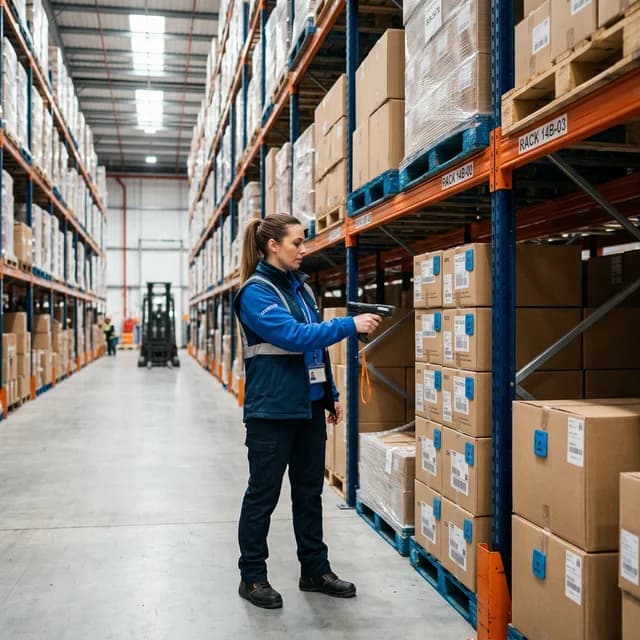
Zéro erreur d'expédition. Zéro scan manuel. Vérifiez chaque palette à pleine vitesse de chariot élévateur.
The modern supply chain is a miracle of efficiency until it hits the dock door. This is the 'Black Hole' of logistics. Warehouses and Distribution Centers (DCs) process millions of items, but the frantic pace of inbound and outbound loading often leads to critical errors. A single mixed-pallet error can trigger a chain reaction of chargebacks, reverse logistics costs, and stockouts at the retail destination.
Automatisation de l'entreposageEPC Gen2Démarrer un pilote
100 %Précision d'expédition sortante atteinte
2,4 M$Réclamations annuelles évitées
300 %Augmentation du débit aux quais
Automatisation de l'entreposageNotre approcheCe que vous obtenezÉtude de cas
Le problème
Le chaos des « derniers mètres »
The modern supply chain is a miracle of efficiency until it hits the dock door. This is the 'Black Hole' of logistics. Warehouses and Distribution Centers (DCs) process millions of items, but the frantic pace of inbound and outbound loading often leads to critical errors. A single mixed-pallet error can trigger a chain reaction of chargebacks, reverse logistics costs, and stockouts at the retail destination.
Manual scanning is the bottleneck. It requires line-of-sight. It requires a human to stop, aim, and shoot. In a high-volume cross-docking facility, there is simply no time to scan every carton. So, operators approximate. They scan the pallet label and *assume* the contents are correct. They aren't.
Furthermore, Returnable Transport Items (RTIs) - the plastic totes, cages, and pallets that carry these goods - are bleeding out of the system. Companies lose millions annually simply buying the same plastic containers over and over again because they have no visibility into where they end up.
Points de difficulté clés 01
Précision d'expédition
La moyenne sectorielle de précision d'expédition oscille autour de 95-97 %. Ce taux d'erreur de 3 % équivaut à des millions de dollars en pénalités et actions correctives. Vous payez pour l'expédier, vous payez pour le retourner, et vous payez l'amende.
Points de difficulté clés 02
Paralysie du cross-docking
Pour vérifier une palette décomposée, elle doit être mise en zone de préparation, dépilée, scannée et réempilée. Ce « toucher » ajoute du coût de main-d'œuvre et du temps, anéantissant tout l'intérêt du cross-docking rapide.
Points de difficulté clés 03
Pertes de RTI
Les actifs réutilisables sont traités comme des consommables. Sans suivi, ils sont accumulés par les partenaires en aval ou jetés, créant une fuite de capital massive et invisible.
Notre approche
Vérification automatisée par portique
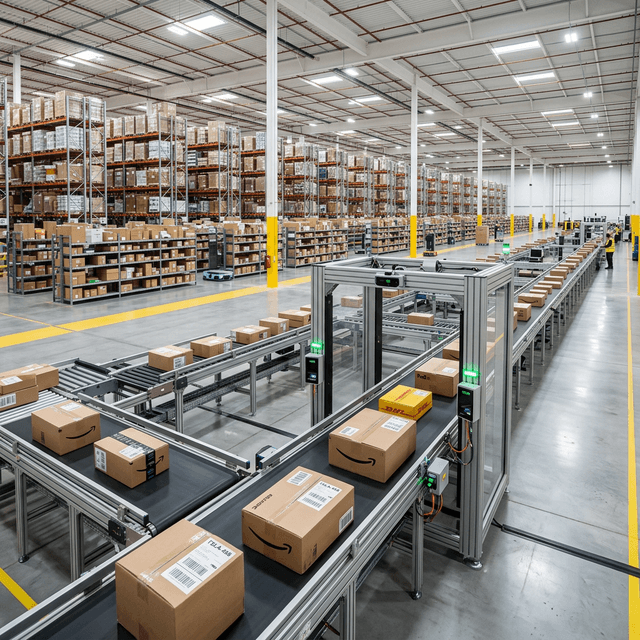
Nextwaves transforms the dock door into a data capture node. We install ruggedized RFID portals equipped with high-gain antennas at every ingress and egress point. As a forklift drives through at full speed, the system energizes the tags on the pallet, the cases, and the items inside.
Within milliseconds, the system compares the read event against the Advanced Shipping Notice (ASN) or the Warehouse Management System (WMS) order. It verifies: Is this the right pallet? Does it have the right cases? Is it going to the right truck? Is it leaving at the right time?
If the load is correct, the driver gets a green light. If there is an error - an extra case, a missing item, or the wrong destination - the system triggers a red light and an audible alarm instantly. The error is caught at the source, before it ever leaves the facility.
Ce que vous obtenez
Excellence opérationnelle
01
Validation d'expédition à 100 %
Éliminez les rétrofacturations. La preuve d'expédition est numérique et incontestable.
02
Traitement 20× plus rapide
Vérifiez plus de 50 colis en 1 seconde. Pas d'arrêt. Pas de scan manuel. Juste le flux.
03
Récupération d'actifs
Suivez les RTI à travers la chaîne d'approvisionnement. Tenez les partenaires responsables des bacs perdus.
04
Visibilité en temps réel
Mettez à jour votre ERP instantanément. Sachez exactement quand les marchandises sont arrivées et parties.
Étude de cas
Étude de cas : 3PL et pièces automobiles
Un important prestataire logistique tiers (3PL) traitant des pièces automobiles faisait face à de lourdes pénalités pour l'expédition de pièces erronées vers les usines d'assemblage. Les exigences de séquencement juste-à-temps (JIS) signifiaient qu'une pièce erronée arrêtait la ligne automobile.
A dock door is one of the harshest environments for RFID. metal walls, forklifts moving at speed, and tags on pallets packed tight together. We design for this chaos from the ground up. Directional antennas and motion sensors ensure the reader fires only when a vehicle is crossing the threshold, and only captures tags moving in the right direction.
Our software integrates directly with your ASN data. It doesn't just log 'tag seen'. it checks that the right cases are in the right pallet, that the pallet is headed to the right truck, and that nothing is missing from the expected load. A discrepancy triggers an instant alert before the doors close.
The result is a verifiable, timestamped record of every shipment. When a customer disputes a delivery, you have the proof.
Prochaine étape
L'entrepôt auto-géré
The next step is a warehouse that doesn't need someone walking the floor to know what's in it. RFID-equipped drones and robots can run cycle counts on high-bay racking overnight, updating the WMS by morning without a single employee touching a scanner.
We are already integrating RFID sensor data with predictive replenishment models. so the system doesn't just track inventory, it anticipates what you will need and initiates purchase orders before you run out.
Obtenir un devis
Arrêtez les erreurs d'expédition.
Automatisez votre processus de validation. Sécurisez votre chaîne d'approvisionnement.