L'ère de la visibilité totale

Arrêtez de perdre des ventes à cause de l'inventaire fantôme. Sachez exactement ce que vous avez, où il se trouve, à chaque heure de chaque jour.

For over fifty years, the Universal Product Code (UPC) barcode has been the backbone of retail. It standardized commerce, allowed for scanning at the register, and enabled the first generation of computerized inventory management. But the barcode has a fatal flaw: it is blind. It requires line-of-sight, it requires manual intervention, and it cannot distinguish between two identical items. This limitation has led to a global crisis known as 'Inventory Distortion' - a trillion-dollar problem where retailers simply do not know what they have.
Visibilité des stocks en distributionEPC Gen2Démarrer un pilote
100 %Précision d'inventaire atteinte
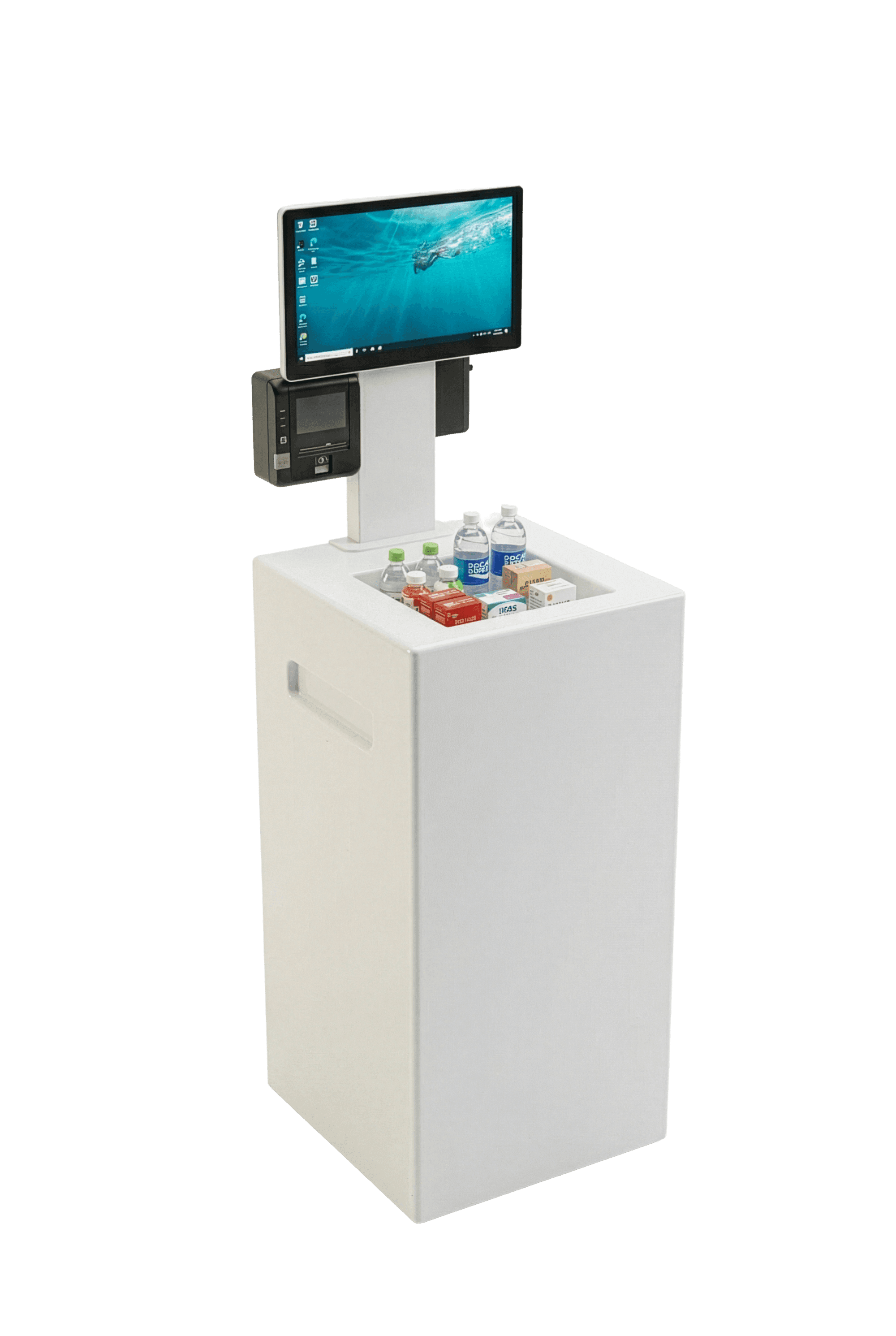
Libre-serviceBacs automatisés sans friction
ÉliminésRuptures de stock dans les magasins
Visibilité des stocks en distribution
Notre approche
Visibilité des stocks en distribution
Ce que vous obtenez
Visibilité des stocks en distribution
Étude de cas
Le problème

Le problème de distorsion des stocks

For over fifty years, the Universal Product Code (UPC) barcode has been the backbone of retail. It standardized commerce, allowed for scanning at the register, and enabled the first generation of computerized inventory management. But the barcode has a fatal flaw: it is blind. It requires line-of-sight, it requires manual intervention, and it cannot distinguish between two identical items. This limitation has led to a global crisis known as 'Inventory Distortion' - a trillion-dollar problem where retailers simply do not know what they have.

In the modern omnichannel era, this blindness is existential. When a customer orders an item online for pickup in-store (BOPIS), the system checks the inventory database. The database says 'Quantity: 1'. But is it there? Is it in the backroom? Is it in a fitting room? Has it been stolen? Or was it sold yesterday and the database didn't update?

The result is a fragile supply chain buffered by 'safety stock' - excess inventory bought just to cover up the inaccuracies of the data. Retailers are drowning in inventory they can't sell, while losing sales on items they strictly 'have' but cannot find. The manual cycle count - the traditional remedy - is too slow, too expensive, and too error-prone to solve this. The industry needs a paradigm shift from 'scanning' to 'sensing'.

Points de difficulté clés 01

Inventaire fantôme

La dérive des données implique le découplage progressif de la réalité physique par rapport aux enregistrements numériques. L''inventaire fantôme' se produit lorsque les systèmes affichent des stocks qui n'existent pas, entraînant 22% des commandes BOPIS annulées et détruisant la fidélité des clients.

Points de difficulté clés 02

Utilisation de la main-d'œuvre

Dans un magasin sans RFID, le personnel passe 20-30% de son temps à chercher des produits ou à effectuer des comptages manuels. Il s'agit de main-d'œuvre coûteuse détournée de l'objectif principal : le service client et les ventes.

Points de difficulté clés 03

Pertes & Marchés parallèles

Sans identité sérialisée (EPC), un article volé est simplement 'moins un'. Les détaillants ne peuvent pas suivre les schémas de criminalité organisée en distribution (ORC) ou identifier si les marchandises retournées sont effectivement des contrefaçons achetées sur des marchés parallèles.

Notre approche

L'architecture du jumeau numérique

Nextwaves implements a 'Source-to-Store' architecture based on the EPC Gen2 V2 standard. It begins not at the store, but at the point of manufacture. By embedding a passive UHF RFID inlay into the care label or price ticket at the factory, we give every unique item a digital soul - a serialized Electronic Product Code (EPC).

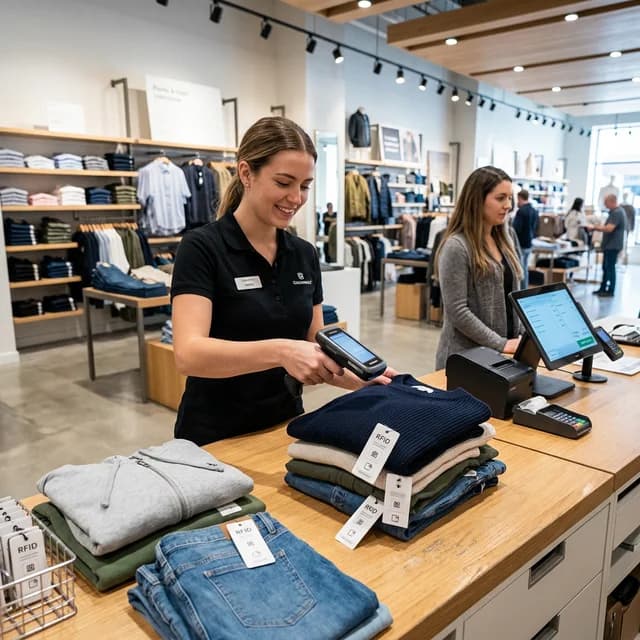
As these items travel through the supply chain, they pass through 'Read Points' - tunnel readers at distribution centers, overhead arrays in staging areas, and eventually, handheld sweeps in the retail store. Unlike barcodes, these scanners use radio waves to energize the tags, allowing them to read hundreds of items per second without visual contact.

This creates a real-time 'Digital Twin' of the inventory. When a shipment arrives at the store, it isn't manually counted; it is verified instantly. When a customer tries on a shirt, a smart fitting room detects it. When an item leaves the store, the EAS gates update the inventory instantly. We move from 'Inventory Estimation' to 'Inventory Certainty'.

Visibilité des stocks en distribution
Ce que vous obtenez

ROI stratégique et impact

01

99,9% de précision

Atteignez une confiance absolue en inventaire. Activez 'Disponible à la promesse' (ATP) pour le e-commerce sans stock tampon.

02

Hausse de la conversion

Les données pilotes montrent une augmentation constante des ventes de 5-15%. S'il est en rayon, il se vend. S'il est en réserve, non.

03

Intelligence des pertes

Ne vous contentez pas de biper à la porte. Sachez exactement CE qui a été volé, QUAND, et réapprovisionnez immédiatement.

04

Expériences intelligentes

Activez les « Miroirs Magiques » qui recommandent des articles coordonnés en fonction de ce que le client a apporté dans la cabine d'essayage.

Étude de cas

Étude de cas : La transformation RFID d'Uniqlo

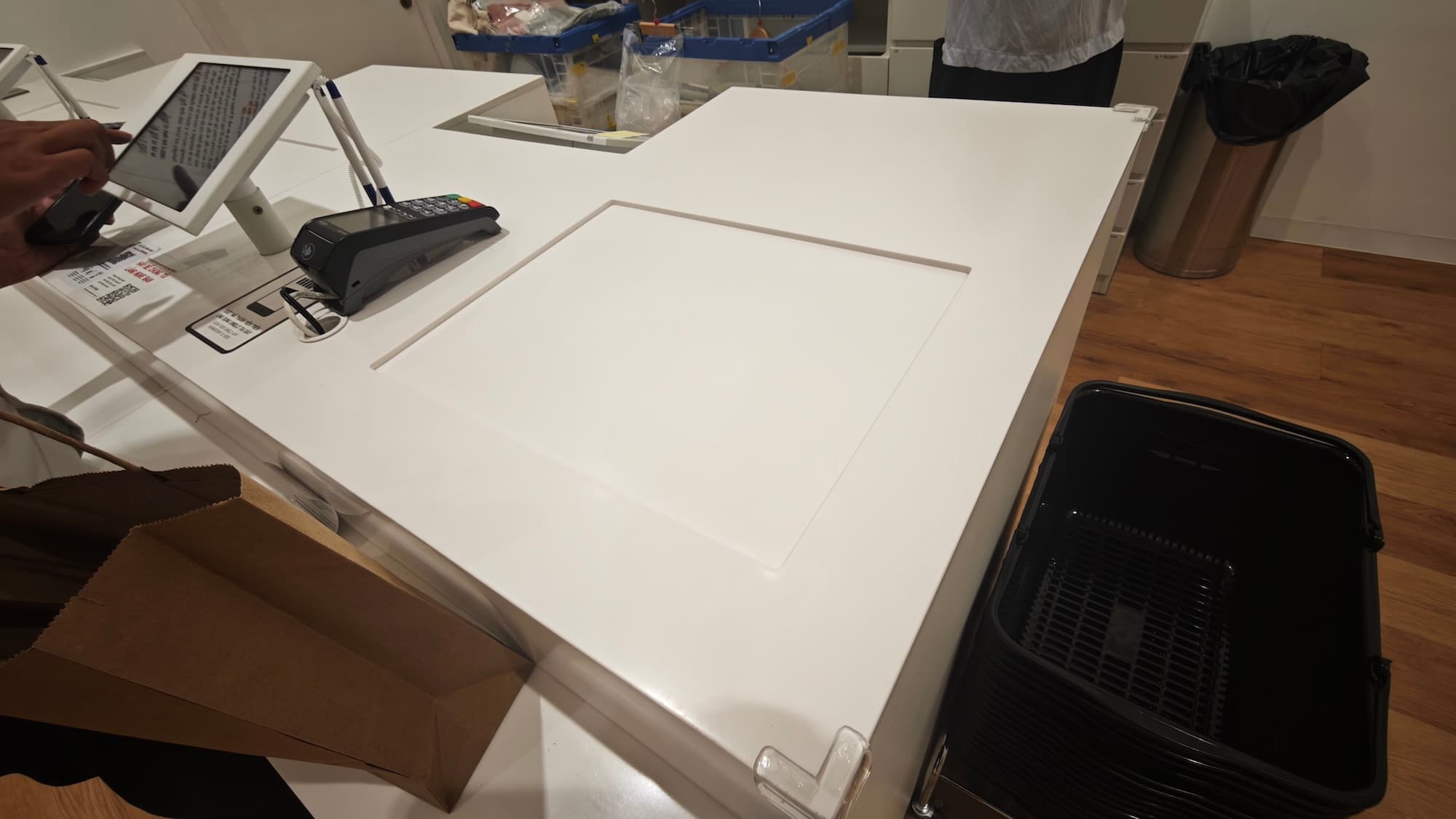
En intégrant des étiquettes RFID dans chaque produit, Uniqlo a atteint une précision d'inventaire proche de 100 %. Mais la vraie magie opère à la caisse : les clients déposent simplement leurs articles dans un bac automatisé qui lit instantanément tous les tags RFID simultanément. Cette expérience sans friction a considérablement réduit les temps d'attente, éliminé les files d'attente aux caisses et permis au personnel de se concentrer sur le service client plutôt que sur le scan de codes-barres. L'intelligence des données recueillies signifie également qu'ils savent exactement quand une taille ou une couleur spécifique nécessite un réapprovisionnement, éliminant virtuellement les ruptures de stock et améliorant les ventes globales.

Comment ça marche

Comment ça fonctionne réellement

  1. Every item gets a unique digital identity at the point of manufacture. a passive UHF RFID tag that costs less than a paper label but carries a serialized code that can never be duplicated. When a handheld reader sweeps across a rack of 500 shirts, all 500 are counted in under 3 seconds. No unloading, no scanning one-by-one.

  2. The system uses standard GS1 EPC Gen2 V2 tags, which include anti-cloning authentication. important for high-value and luxury items where counterfeits are a real risk. Our edge software filters out noise (tags read from the wrong zone, partial reads from metal fixtures) so what reaches your dashboard is clean, actionable data.

  3. Everything connects back to your existing WMS or ERP in real time. Think of it as giving your inventory a heartbeat. the system always knows what moved, where it is, and when it arrived.

Prochaine étape

Ce qui vient après la précision

Once inventory is accurate, the next transformation is removing friction entirely. We are piloting 'Grab-and-Go' store formats where customers walk out without stopping at a register. the system reads their basket at the exit and charges their account automatically.

The same infrastructure powers smart fitting rooms that surface outfit recommendations, dynamic restocking alerts that trigger before a shelf goes empty, and loss prevention that tells you exactly what was taken and when. Accuracy was the foundation. The real value is what you build on top of it.

Obtenir un devis

Prêt pour 99 % de précision ?

Déployez l'infrastructure de demain. Arrêtez de deviner, commencez à savoir.