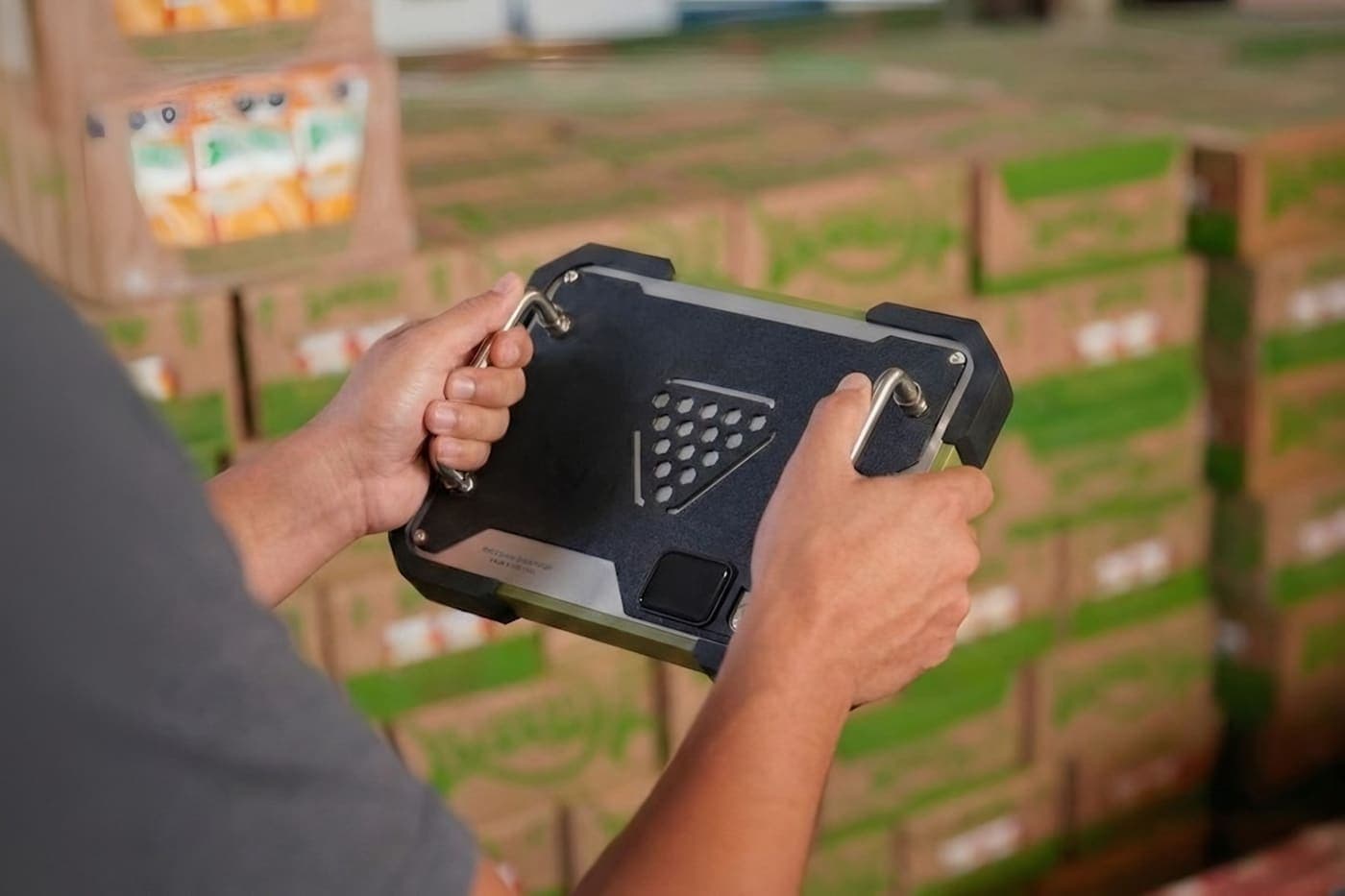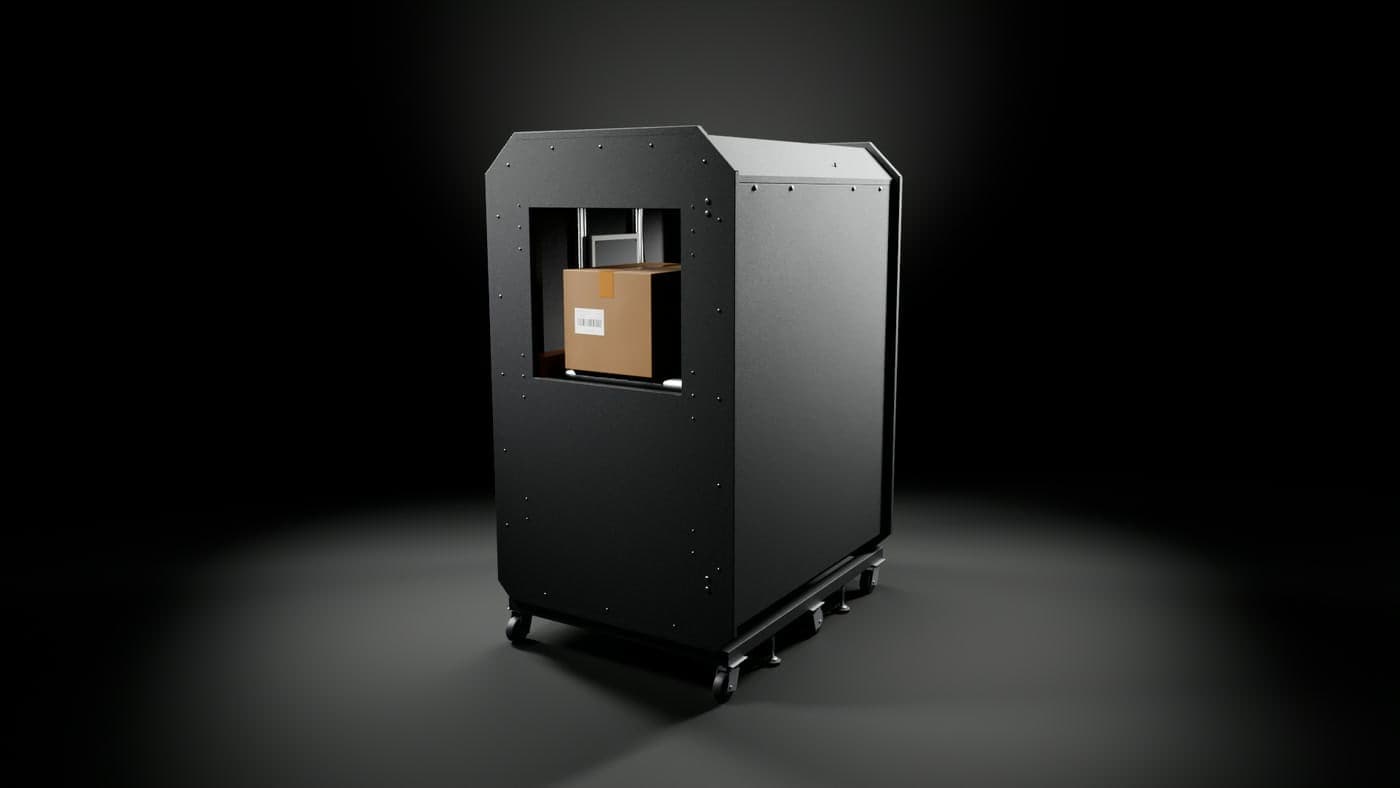
Nextwaves has launched RFID Tunnel, an RFID reader for cartons. A carton rides into the machine on a conveyor, the doors close, the machine reads the RFID tags on the goods inside, then the doors open and the carton rides out. No opening the box, no counting items by hand.
RFID Tunnel is designed and made by Nextwaves. It is built for warehouses that receive and ship many cartons of RFID-tagged goods every day: the central warehouse of a store chain, a distributor's warehouse, a factory's packing area.
In short
- RFID Tunnel reads the RFID tags on goods inside a carton or plastic crate without opening it.
- Every carton goes through the same cycle: in, doors close, read, doors open, out.
- The doors stay closed while reading, which helps keep out tags on goods sitting near the machine.
- It can be used at receiving, when checking cartons before shipping, for returns and for transfers between locations.
- Goods need a UHF RFID tag on each item. Nextwaves supplies the tags, readers, handheld scanners and RFID Tunnel.
Why a carton needs its own RFID reader
In many warehouses, checking a carton still means opening it, taking each item out to count or scan its barcode, writing it down, packing it back and taping it shut. A few cartons are fine. Many cartons a day take extra people and time, and the more you count by hand, the easier it is to slip.
A mistake in one carton usually shows up later: a store reports a short delivery, a supplier shipped short but the warehouse signed for the full amount, stock in the software no longer matches the shelves. Then someone has to dig through cartons and paperwork to find where it went wrong.
Once goods carry RFID tags, a handheld scanner reads them without seeing a code, which is faster than scanning barcodes one item at a time. Scanning carton by carton by hand still has two weak spots: everyone scans a little differently, and RFID signals travel far, so the scanner can pick up tags from the next carton. RFID Tunnel deals with both: every carton is read in the same place, the same way, inside a read chamber with closed doors.
How RFID Tunnel works
Each carton goes through three steps:
- In. Put the carton on the conveyor at the entry; the conveyor carries it into the read chamber.
- Doors close, tags are read. The doors at both ends close and the machine reads the RFID tags on the goods in the carton.
- Out. When the read is done, the doors open and the conveyor carries the carton out the far side.

The list of tags read is then checked against the goods expected in or out, to show whether the carton is off on product codes or quantities.
The closed doors are what set it apart from a handheld scanner. UHF RFID signals pass through cardboard and travel quite far, so when goods sit close together, a reader can also pick up tags outside the carton being checked. That is why RFID Tunnel closes the doors at both ends while reading, to limit reads of tags on goods outside.

Where RFID Tunnel fits in the warehouse
- Receiving. Cartons from the factory or supplier run through the machine before they go on the shelves, and the read result is checked against the receiving note right at the receiving area.
- Checking before shipping. Once a carton is packed, run it through the machine to read the tags and check them against the order before it goes to a store or a carrier.
- Returns and transfers. Cartons sent back from stores to the central warehouse, or moved between branches, can be read without opening and recounting them.
RFID Tunnel is worth considering when a warehouse often receives and ships cartons of goods tagged item by item, such as clothing, shoes and bags. If the warehouse only handles a few cartons a day, a handheld scanner is usually enough.
RFID Tunnel or a handheld scanner?
The two do different jobs, and many warehouses need both.
| Criteria | Handheld scanner | RFID Tunnel |
|---|---|---|
| How it is used | A person walks the shelves, an area or each carton with the scanner | Put the carton on the conveyor; the doors close for the read, then open to let it out |
| Best for | Shelf counts, finding one item, store counts | Receiving and shipping many cartons |
| Picking up nearby goods | Depends on position and how you scan | Limited by the doors closing during the read |
If the warehouse has no RFID equipment yet, the first step is usually tagging goods and counting with handheld scanners. The Warehouse Starter Kit includes a desktop reader, two handheld scanners, 2,500 tags, 200 location tags and Sense Inventory software, starting from $1,490 (excluding VAT).
What to prepare before using RFID Tunnel
- Goods tagged with UHF RFID. To know how many items a carton holds, each item needs a tag, linked to its product code in your software. Nextwaves makes UHF RFID tags and desktop readers for tagging goods as they come in.
- Carton details. The carton sizes you use most, the average number of items per carton, and whether they are cardboard or plastic. Carton size decides whether it fits through the machine.
- Type of goods. Metal and liquids weaken RFID signals, so goods in metal packaging or containing liquid need the right tag type and tag position.
- Your process and software. Which steps your cartons go through, where you want to use the machine, and which warehouse software you run.
Talk to Nextwaves about RFID Tunnel
Leave your details below. The Nextwaves team will call to ask about your goods, your cartons, how many you handle a day and the warehouse software you use, then advise and send a quote.
RFID Tunnel FAQ
Does RFID Tunnel need the carton to be opened?
No. UHF RFID signals pass through cardboard and plastic, so the machine reads the tags on the goods inside while the carton stays sealed.
Can I use metal crates?
Better not. Metal blocks UHF RFID signals, so tags on goods inside a metal crate may not be read.
How many items can it read per carton?
It depends on the goods, how they are packed and the carton material. When you ask for advice, send details of your goods and cartons so Nextwaves can assess your case.
Will it read goods outside the machine?
It can happen if tagged goods sit near the machine. That is why RFID Tunnel closes the doors at both ends while reading, to limit reads of tags outside.
Which software does RFID Tunnel connect to?
It depends on the warehouse software you use. When you ask for advice, tell Nextwaves its name so the team can check the connection options and advise on the best approach.
What if my goods are not tagged yet?
The machine only reads goods with UHF RFID tags, so tagging comes first. What is RFID? explains how tags and readers work.
What is the warranty on RFID Tunnel?
12 months from delivery, under the Nextwaves warranty policy.
How much does RFID Tunnel cost?
Leave your details in the form above and Nextwaves will send a quote.