Why "upgrade" is the wrong frame
The upgrade story is comfortable because we have lived it before. Cassette to CD, fax to email, paper map to GPS. In each case the new thing did the old job better and the old thing faded out. That pattern is what makes "barcode to RFID" feel like the same kind of move, and it sets up the wrong expectation: that RFID does everything a barcode does, only better, so the only thing holding you back is budget.
That is not how these two behave. A barcode and an RFID tag overlap in what they are for (identifying and tracking things) but they win on opposite terrain. The barcode wins when you can see the item and you read it on purpose, one at a time, for almost no cost per label. RFID wins when you cannot see the items, or there are too many of them to scan individually, and you need to read them in bulk or hands-free. The rest of this article maps that terrain so you can place your own operation on it.
At a glance
If you only have a minute, this table is the whole argument on one screen. Notice that almost every row is a difference in purpose, not a difference in quality.
Dimension | Barcode | RFID |
|---|---|---|
Built for | Line-of-sight identification, one item at a time | Bulk counting without line of sight, many items at once |
Line of sight | Required | Not required, reads through boxes and bins |
Items per read | One | Tens to hundreds in seconds |
Cost per label or tag | Fractions of a cent, basically printed ink | A few cents and up, a chip plus an antenna |
Reader and infrastructure | Low, a handheld or even a phone camera | Higher, dedicated readers, antennas, sometimes fixed portals |
Human readable | Yes, a person can read the number under the bars | No, it needs a reader |
What it identifies | Usually the product type ("a can of beans") | Each individual unit ("this specific can") |
Data on the carrier | Fixed when it is printed | Can be read and rewritten on the tag |
Best fit | Checkout, documents, single-SKU lookups, low-volume scanning | Pallets, apparel, returnable assets, high-volume counting |
Maturity and reach | Everywhere, readable by almost any device | Growing fast, but needs compatible readers in place |
What a barcode is actually good at
It is easy to treat the barcode as the boring default, but it earns that default. A printed barcode costs close to nothing, because it is just ink on a label or a box you were already printing. Every smartphone and every point-of-sale terminal on the planet can read one, which makes it the closest thing to a universal language for products. A human can read the number underneath, so when the scanner fails you still have a fallback. And because each scan is a deliberate act, the barcode is naturally suited to moments where you want one item read on purpose: a sale, a document pulled from a file, a single SKU checked against a system.
Where the barcode clearly wins is anywhere the read is one item at a time with a clear line of sight, and especially where the item is cheap or high-margin enough that adding a tag would cost more than it saves. Retail checkout is the obvious case. So is document and file tracking, regulated traceability where each scan needs to be intentional and logged, and low-value fast-moving goods where you would never want to spend cents on a tag for something that sells for a little more than that. In those settings, switching to RFID would add cost and complexity to solve a problem you do not have.

What RFID is actually good at
RFID starts to matter exactly where the barcode runs out of room. Because a tag responds to radio waves rather than to a camera, it does not need to be seen. A reader can pick up tags inside a sealed carton, at the bottom of a tote, or buried in a pile, and it can read many of them at the same time. That single property, no line of sight and many at once, is what changes the economics. A count that took a team a full day of pointing a scanner at every item can become a single sweep that takes minutes.
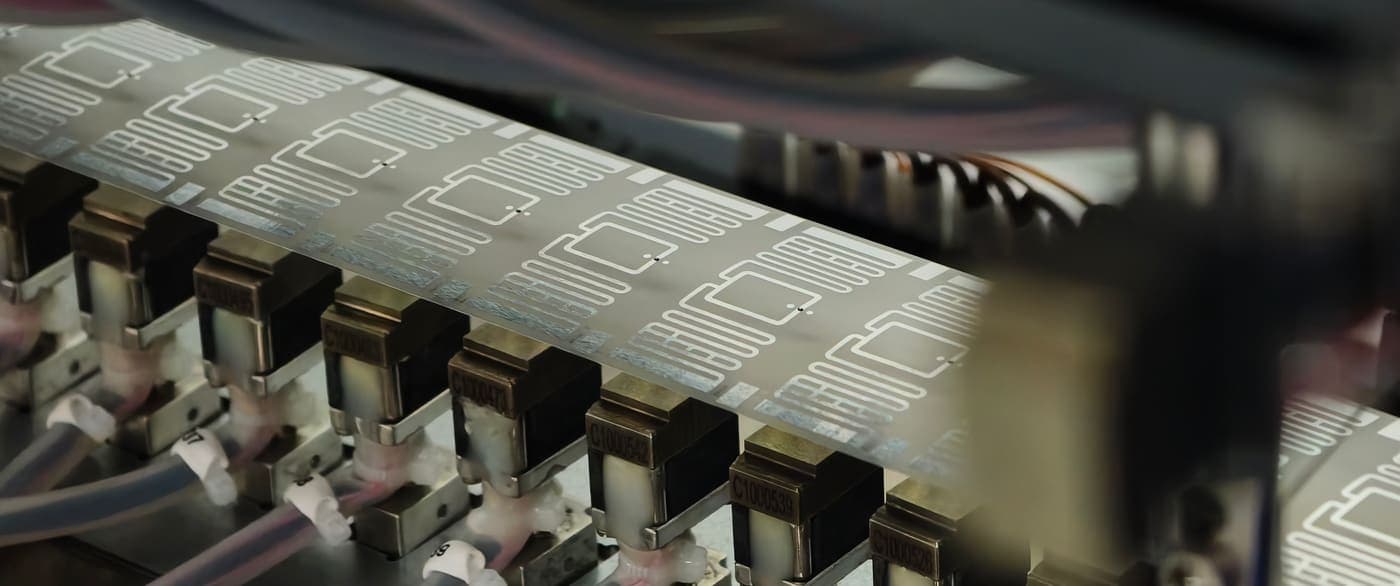
The second thing RFID brings is identity at scale. A barcode usually tells you the product type, while an RFID tag can carry a unique serial number for every individual unit, so you know not just that you have a hundred jackets but which hundred, and which one walked out the door. Tags can also be rewritten, so data can live on the item itself, and fixed readers and portals let you read hands-free as goods move past a doorway. Put those together and the natural home for RFID is pallet receiving, apparel and footwear inventory, laundry and linen, returnable transport assets, tool cribs, and work-in-progress tracking, basically anywhere the volume is high, the items are hard to see, or you want the reading to happen automatically.
One note on flavors, since it matters for range. Most of the high-volume, longer-range work described here uses UHF RFID, which reads items from across a doorway or a few meters away rather than from a centimeter or two. That read range is part of why UHF is the variant retail and warehouse operations reach for when bulk counting is the goal.
The decision quadrant
Two questions separate these technologies more cleanly than any feature list. First, how many items do you need to read in one go? Second, can you get a clear line of sight to each item, or are they boxed, stacked, or packed away? Plot those two axes and four zones appear, each with a sensible default.
Reading the quadrant, the corners are the clear calls and the middle is where judgment comes in. Bottom left, one item with a clear line of sight, is barcode country. There is no reason to spend on tags and readers to solve a problem a printed label already handles. Top right, many items with no line of sight, is RFID country, and it is not really a contest: a barcode operator would have to unpack every box, while a reader takes the whole load at once.
The other two corners are softer. Top left, a few items you cannot easily see or reach, is a place to use RFID selectively, for the specific assets where finding or counting them by eye is painful. Bottom right, many items but each one visible, is the honest "it depends" zone. A barcode on a conveyor can move a lot of volume if labor is available and throughput is fine; RFID earns its keep once scan time becomes the bottleneck rather than the labels. Most operations do not live in a single corner, which leads to the most underrated answer of all, covered further down.
The cost question, told straight
Cost is usually where the upgrade framing quietly falls apart, so it is worth being plain about it. A barcode is almost free per item, because it is printed onto packaging or a label you were going to produce anyway, and the scanner that reads it is cheap and often already on hand. An RFID tag costs more, because it contains a tiny chip and an antenna, and the readers, antennas, and any fixed portals are a real piece of capital spend rather than a rounding error.
That higher cost is not a flaw, it is the price of the capability, and it only makes sense when the capability pays for itself. The math turns on two things: the value of the item and the cost of counting it. Putting a tag on a low-value item you sell a few hundred of rarely pays back. Putting a tag on a higher-value item in an operation that counts stock often, where each count used to burn hours of labor, can pay back quickly, because the saved labor and the recovered sales from accurate stock dwarf the tag cost. The right way to decide is not "which is cheaper per label," it is "where does the read volume or the labor saving justify the per-item cost." When it does, RFID is cheap. When it does not, the barcode was the bargain all along.
Why the best answer is often "both"
Because real operations span more than one corner of the quadrant, the smartest setups rarely pick a side. They layer the two by level. The item a customer buys keeps its barcode, because that is what checkout and almost every other system already speaks. The case, pallet, or asset that moves through the warehouse gets an RFID tag, because that is where bulk, no-line-of-sight reading saves the most. The two systems are not competing in that picture, they are doing different jobs at different points in the same flow.
This shows up physically too. Dual labels exist, where a single sticker carries a printed barcode on the outside and an RFID inlay underneath, so the same item can be read by a phone at the till and by a portal at the dock. If you find yourself torn between the technologies, that tension is usually a signal that you are a hybrid case, not that you have to choose. Mapping each part of your operation to its own corner of the quadrant tends to resolve it.
A two-minute decision check
Run your own operation through these six questions. They turn the quadrant into something you can answer at your desk.
How many items do you need to read in one go? One or a few points toward barcode; dozens or hundreds points toward RFID.
Can you get a clear line of sight to each item, or are they boxed, stacked, or packed? No line of sight points strongly toward RFID.
How often do you count, and what does an hour of that counting labor cost you? Frequent counting that eats labor is where RFID pays back fastest.
What does one item cost compared to one tag? A cheap, high-volume item rarely justifies a tag; a higher-value item easily does.
Do you need to know "what is in this box" or "which exact unit is this"? Item-level identity at scale favors RFID.
Do you need hands-free or automated reads through portals or fixed readers? Only RFID can do that.
The rule for reading your answers is short. If most of them point one way, you have found your default. If they split, you are very likely a hybrid case, which is normal rather than a problem, and you should layer the two by level instead of forcing a single choice.
What it looks like in practice
The quadrant is easier to trust with concrete cases, so here are three that land in different corners.
A small pharmacy or convenience counter
The items are individual, the cashier sees each one clearly, and most products are low cost. This sits in the bottom-left corner, and the barcode at the till is the right call. Tagging every blister pack or bottle with RFID would add cost to every unit to solve a counting problem the shop does not really have at the point of sale.
An apparel store doing weekly stock counts
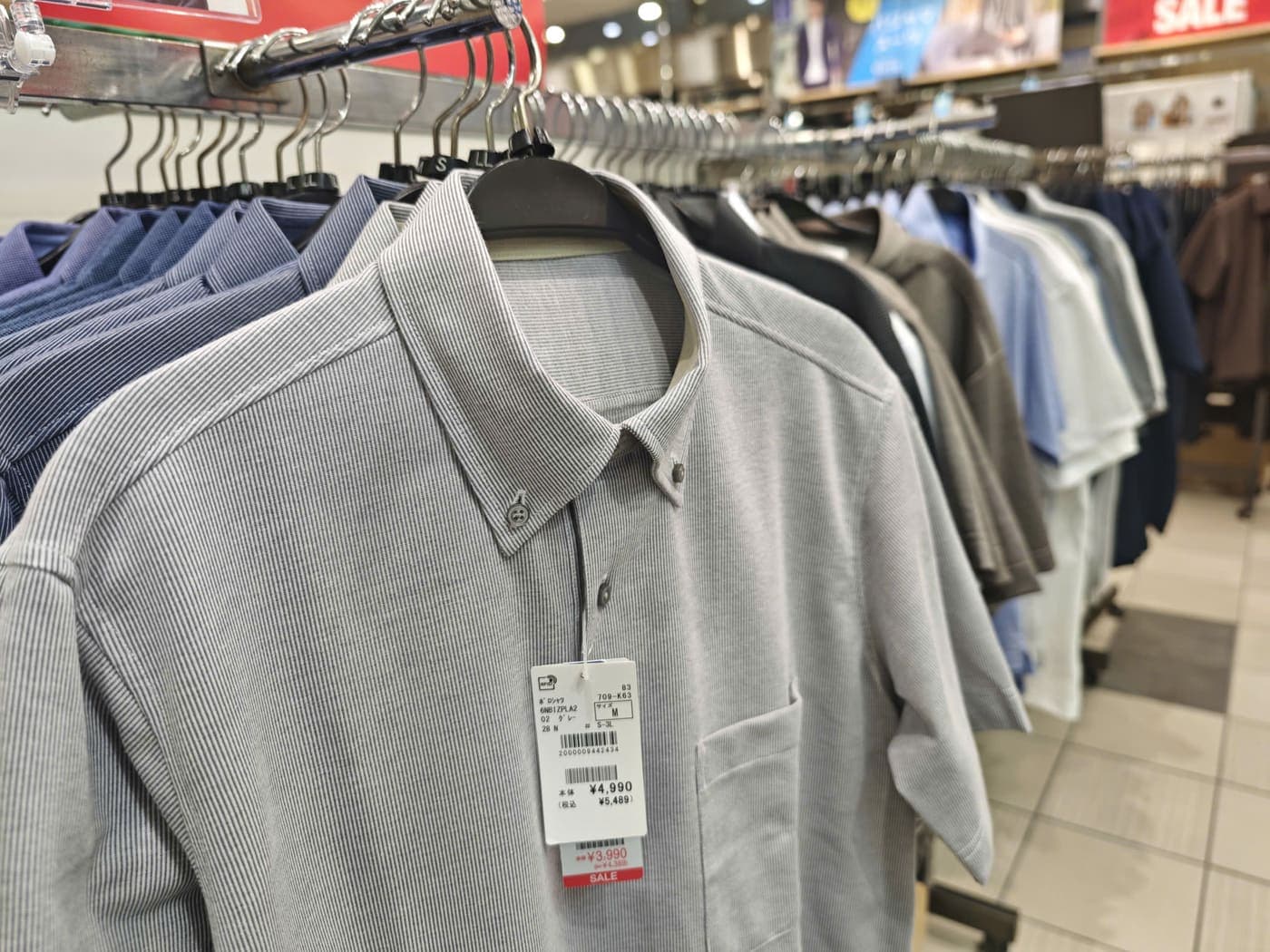
Now there are hundreds of garments packed onto rails and shelves, each worth enough to carry a tag, and a full manual count using a barcode scanner can swallow most of a day. This is the top-right corner. A handheld RFID reader turns that count into a sweep of minutes, and it surfaces the jacket sitting in the wrong size bin that a manual count would have missed. Here RFID clearly earns its place.
A warehouse receiving mixed pallets
Cartons arrive stacked and shrink-wrapped, with no practical way to see each label. A barcode operator would have to break down every pallet to scan its contents. An RFID portal reads the whole load as the forklift drives through, which is something a barcode physically cannot do at that speed. This is the corner where RFID is not just better, it is the only practical option.
Frequently asked questions
Is RFID replacing barcodes?
No, and that framing is the heart of the confusion. RFID is spreading quickly in places where bulk, no-line-of-sight reading matters, but the barcode remains the cheaper and more universal choice for single-item, line-of-sight scanning. In most operations they end up coexisting rather than one displacing the other.
Why are barcodes still everywhere if RFID can read in bulk?
Because cost and reach win at the item level. A barcode is essentially free to print and can be read by almost any device, including a phone, while RFID adds a per-item cost and needs compatible readers. For a single item in clear view, the barcode does the job for less, so there is no reason to replace it.
Can RFID and barcodes work together?
Yes, and that is often the best design. A common pattern keeps barcodes at the item level for checkout and existing systems while adding RFID at the case, pallet, or asset level for bulk counting. Dual labels even combine a printed barcode and an RFID inlay on the same sticker.
Does RFID need line of sight?
No. Unlike a barcode, which a scanner has to see, an RFID tag responds to radio waves and can be read inside boxes, bins, or a pile of items, and many tags can be read at the same time. That is the single biggest practical difference between the two.
How much more does RFID cost than a barcode?
A barcode is fractions of a cent, while an RFID tag is typically several cents and up, plus the cost of readers and any fixed infrastructure. Whether that extra cost is worth it depends on the value of the item and how much counting labor RFID saves. High-volume counting on items worth tagging usually pays it back; cheap, rarely counted items usually do not.
Which is better for retail inventory?
It depends on what you are counting. For checkout and low-value goods, barcodes are hard to beat. For category-wide stock counts, especially in apparel and footwear where items are numerous and packed away, RFID dramatically cuts the time to count and improves accuracy, which is why many retailers layer it on top of barcodes rather than instead of them.
What is UHF RFID, and how is it different?
UHF refers to the ultra-high-frequency band that most longer-range, high-volume RFID uses. Compared with shorter-range variants, UHF reads items from across a doorway or several meters away, which is what makes it the practical choice for warehouse and retail bulk counting and for hands-free portals.
The bottom line
The question was never "should we replace barcodes." It is "which problem, and where." A barcode is built to identify one visible item at a time for almost nothing, and RFID is built to count many hidden items at once and to do it hands-free. Place your operation on the quadrant honestly and the default usually announces itself, and when more than one corner applies, the answer is to layer the two by level rather than to pick a winner.
If your bottleneck is the bulk, no-line-of-sight counting that barcodes simply cannot do, that is where RFID lives, and it is the part Nextwaves focuses on. But the goal is always the right tool for each job, not swapping one tool for another because it is newer. Get that framing right and the technology choice stops being a debate and turns into a map.