Retail Inventory Visibility
The Era of Total Visibility

Stop losing sales to phantom inventory. Know exactly what you have, where it is, every hour of every day.

100%
Inventory Accuracy Achieved
Self-Checkout
Zero-friction automated bins
Eliminated
Out-of-Stocks across stores
The Problem

The Inventory Distortion Problem

For over fifty years, the Universal Product Code (UPC) barcode has been the backbone of retail. It standardized commerce, allowed for scanning at the register, and enabled the first generation of computerized inventory management. But the barcode has a fatal flaw: it is blind. It requires line-of-sight, it requires manual intervention, and it cannot distinguish between two identical items. This limitation has led to a global crisis known as 'Inventory Distortion' - a trillion-dollar problem where retailers simply do not know what they have.

In the modern omnichannel era, this blindness is existential. When a customer orders an item online for pickup in-store (BOPIS), the system checks the inventory database. The database says 'Quantity: 1'. But is it there? Is it in the backroom? Is it in a fitting room? Has it been stolen? Or was it sold yesterday and the database didn't update?

The result is a fragile supply chain buffered by 'safety stock' - excess inventory bought just to cover up the inaccuracies of the data. Retailers are drowning in inventory they can't sell, while losing sales on items they strictly 'have' but cannot find. The manual cycle count - the traditional remedy - is too slow, too expensive, and too error-prone to solve this. The industry needs a paradigm shift from 'scanning' to 'sensing'.

Key Pain Points

Phantom Inventory

Data drift involves the gradual decoupling of physical reality from digital records. 'Phantom Inventory' occurs when systems show stock that doesn't exist, leading to 22% of BOPIS orders being cancelled and destroying customer loyalty.

Labor Utilization

In a non-RFID store, staff spend 20-30% of their time searching for products or performing manual counts. This is high-cost labor diverted from the primary goal: customer service and selling.

Shrink & Gray Markets

Without serialized identity (EPC), a stolen item is just 'minus one'. Retailers cannot track organized retail crime (ORC) patterns or identify if returned goods are actually counterfeits bought from gray markets.

Our Approach

The Digital Twin Architecture

The Digital Twin Architecture

Nextwaves implements a 'Source-to-Store' architecture based on the EPC Gen2 V2 standard. It begins not at the store, but at the point of manufacture. By embedding a passive UHF RFID inlay into the care label or price ticket at the factory, we give every unique item a digital soul - a serialized Electronic Product Code (EPC).

As these items travel through the supply chain, they pass through 'Read Points' - tunnel readers at distribution centers, overhead arrays in staging areas, and eventually, handheld sweeps in the retail store. Unlike barcodes, these scanners use radio waves to energize the tags, allowing them to read hundreds of items per second without visual contact.

This creates a real-time 'Digital Twin' of the inventory. When a shipment arrives at the store, it isn't manually counted; it is verified instantly. When a customer tries on a shirt, a smart fitting room detects it. When an item leaves the store, the EAS gates update the inventory instantly. We move from 'Inventory Estimation' to 'Inventory Certainty'.


What You Get

Strategic ROI & Impact

01

99.9% Accuracy

Achieve absolute inventory confidence. Enable 'Available to Promise' (ATP) for e-commerce with zero buffer stock.

02

Conversion Uplift

Pilot data shows a consistent 5-15% increase in sales. If it's on the floor, it sells. If it's in the back, it doesn't.

03

Loss Intelligence

Don't just beep at the door. Know exactly WHAT was stolen, WHEN, and replenish it immediately.

04

Smart Experiences

Enable 'Magic Mirrors' that recommend matching items based on what the customer brought into the fitting room.

Case Study
Case Study: Uniqlo's RFID Transformation

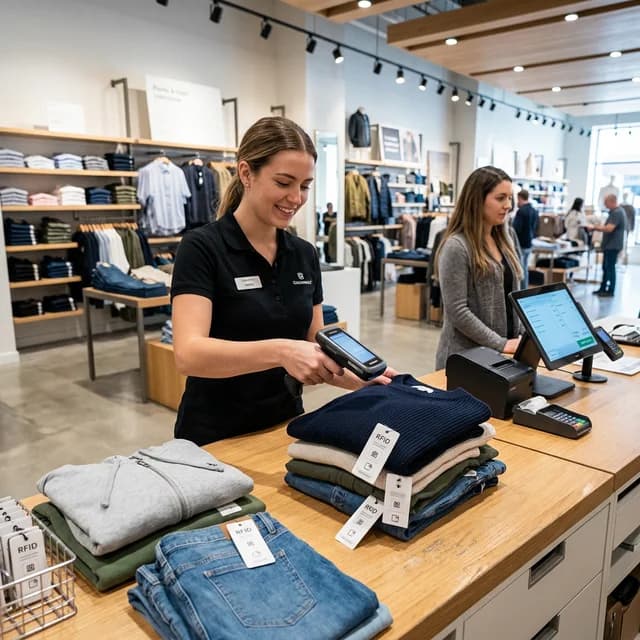
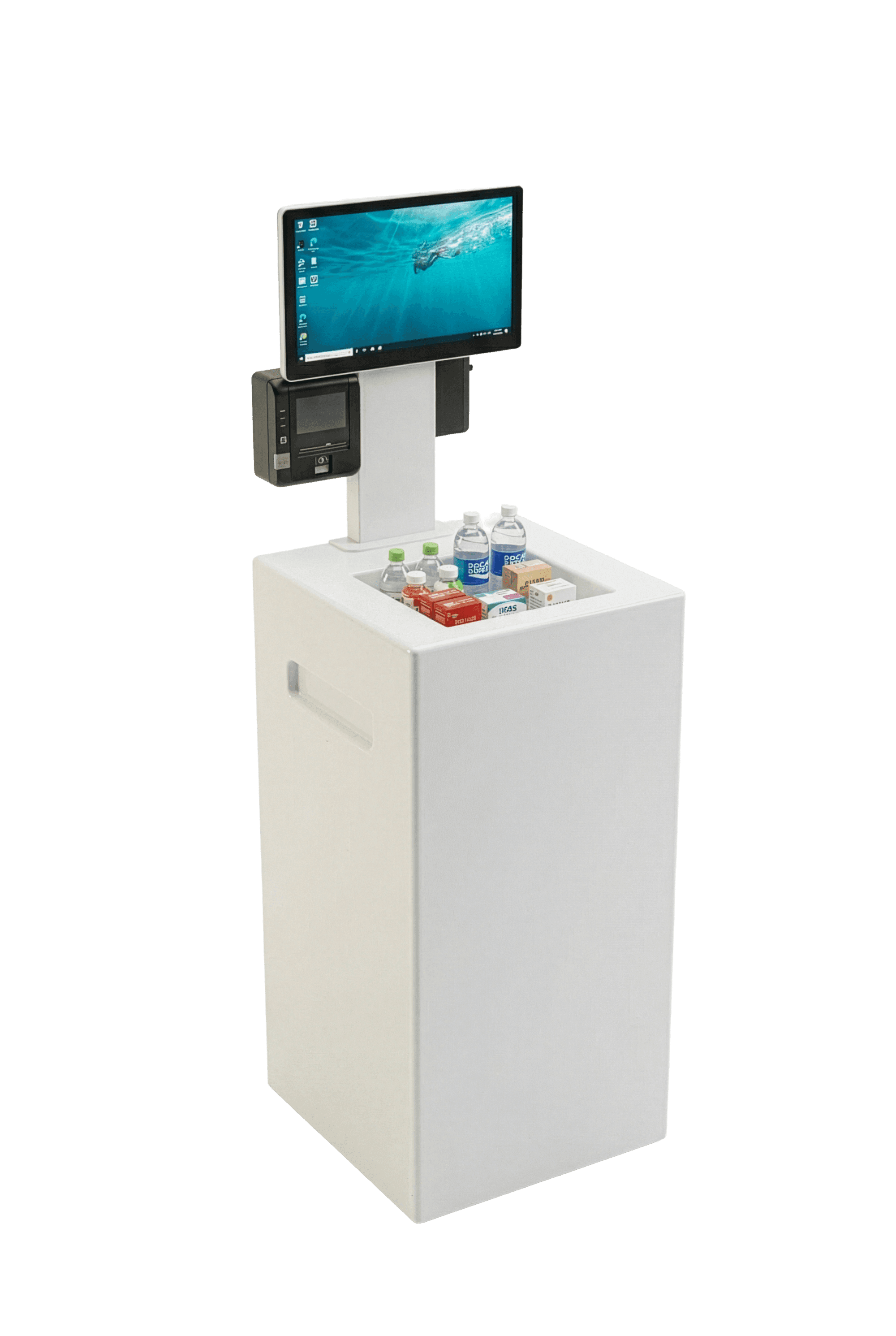
By embedding RFID tags in every single product, Uniqlo achieved nearly 100% inventory accuracy. But the real magic happens at checkout: customers simply drop their items into an automated bin that instantly reads all RFID tags simultaneously. This friction-free experience drastically reduced wait times, eliminated checkout lines, and allowed store staff to focus on customer service instead of scanning barcodes. The resulting data intelligence also means they know exactly when a specific size or color needs restocking, virtually eliminating out-of-stocks and boosting overall sales.

100%
Inventory Accuracy Achieved
Self-Checkout
Zero-friction automated bins
Eliminated
Out-of-Stocks across stores
Uniqlo Store Interior 1
Uniqlo Store Interior 2
How It Works

How It Actually Works

01

Every item gets a unique digital identity at the point of manufacture. a passive UHF RFID tag that costs less than a paper label but carries a serialized code that can never be duplicated. When a handheld reader sweeps across a rack of 500 shirts, all 500 are counted in under 3 seconds. No unloading, no scanning one-by-one.

02

The system uses standard GS1 EPC Gen2 V2 tags, which include anti-cloning authentication. important for high-value and luxury items where counterfeits are a real risk. Our edge software filters out noise (tags read from the wrong zone, partial reads from metal fixtures) so what reaches your dashboard is clean, actionable data.

03

Everything connects back to your existing WMS or ERP in real time. Think of it as giving your inventory a heartbeat. the system always knows what moved, where it is, and when it arrived.

What's Next

What Comes After Accuracy

Once inventory is accurate, the next transformation is removing friction entirely. We are piloting 'Grab-and-Go' store formats where customers walk out without stopping at a register. the system reads their basket at the exit and charges their account automatically.

The same infrastructure powers smart fitting rooms that surface outfit recommendations, dynamic restocking alerts that trigger before a shelf goes empty, and loss prevention that tells you exactly what was taken and when. Accuracy was the foundation. The real value is what you build on top of it.

Ready for 99% accuracy?

Deploy the infrastructure of the future. Stop guessing, start knowing.