RFID replacement dossierUpdated: May 25, 2026

ThingMagic (JADAK) M7e-TeraReview: Specificaties en Alternatieven

The ThingMagic M7e-Tera leverages the extreme Impinj E910 IC for $250. Analyze its integration requirements versus zero-code Nextwaves edge infrastructure.

Nextwaves EngineeringHardwarebeoordeling5 min lezen

Technical verdict

ThingMagic (JADAK) M7e-Tera is a mainstream hardware purchase, but it is not always the best architecture for direct RFID data integration.

Do not evaluate M7e-Tera by list price alone. Its strongest fit is a project that already uses UART Serial / USB, has time for RF tuning, and accepts extra middleware work. If the engineering team needs open APIs, realtime data, and faster edge-to-cloud deployment, Nextwaves NR155 is the stronger replacement path to evaluate.

Initial cost

$250 before deployment accessories

Published throughput

1,300 tags/second

Integration surface

UART Serial / USB

Physical data

46 x 26 x 4 mm; 3 g; IP: Bare PCB (None)

Published specs

Specifications to validate before replacing

Frequentie

Global (860-960 MHz)

Protocol

EPC Gen2v2, ISO 18000-63

Connectiviteit

UART Serial / USB

IP-classificatie

Bare PCB (None)

Afmetingen

46 x 26 x 4 mm

Gewicht

3 g

Voeding

3.3V to 5.25V DC

Leessnelheid

up to ~1300 tags/sec

Geschatte Prijs

$250

Deployment review

Operational strengths and risks

This summary is based on public specifications and does not replace an on-site RF survey.

Fit score

3.5/5

Strengths

  • UART Serial / USB gives network teams a familiar integration surface instead of local-only collection.
  • 3.3V to 5.25V DC can reduce separate power drops when switch PoE budget is available.
  • The $250 hardware baseline is easier to budget than premium fixed-reader configurations.
  • 1,300 tags/second can fit faster inventory lanes when the read zone is tuned correctly.

Validate

  • Quoted hardware price is not installed system cost; include antennas, cables, mounts, power, software, and configuration work.
  • RF performance depends on tag material, antenna position, transmit power, reader orientation, and site interference.
  • Bare PCB (None) must be checked against dust, humidity, temperature, and cleaning requirements.
  • Raw RFID reads still need duplicate filtering, business-event mapping, and ERP/WMS integration before operations can use them.

Deployment review

Buying decision matrix

Best fit

Fixed UHF RFID projects that already use UART Serial / USB and have time for RF tuning.

Weak fit

Do not compare device price only; total cost depends on accessories, software, and integration.

Deployment risk

Bare PCB (None), 3.3V to 5.25V DC, 46 x 26 x 4 mm, and 3 g must match the site layout.

Software risk

Plan for middleware, SDK work, duplicate filtering, and business-event mapping.

Alternative architecture

ThingMagic (JADAK) M7e-Tera vs Nextwaves

01

Hardware Overzicht

De ThingMagic (JADAK) M7e-Tera is een industriële RFID-apparaat. Het werkt binnen het Global (860-960 MHz) bereik en ondersteunt de EPC Gen2v2, ISO 18000-63 standaard, waardoor het op grote schaal wordt ingezet in logistieke toepassingen voor bedrijven.

Met een IP-classificatie van Bare PCB (None) biedt het bescherming tegen specifieke omgevingsomstandigheden die typisch zijn in magazijnen of achterkamers van winkels. De lezer maakt gebruik van 3.3V to 5.25V DC voor continue prestaties, terwijl de maximale leessnelheid up to ~1300 tags/sec bedraagt.

02

Connectiviteit en netwerkintegratie

In moderne implementaties is netwerkintegratie de grootste hindernis. Dit model biedt UART Serial / USB opties voor het overbrengen van gegevens terug naar centrale systemen.

Een belangrijk knelpunt met legacy ThingMagic (JADAK) hardware is echter de sterke afhankelijkheid van eigen SDK's (zoals LLRP) of dure IoT-middleware van derden om onbewerkte taggegevens te verwerken tot zinvolle business intelligence.

03

When to choose Nextwaves instead of another closed reader

Als uw engineeringteam de ThingMagic (JADAK) M7e-Tera evalueert, biedt de Nextwaves NR155 een aanzienlijk superieure cloud-native architectuur. Legacy-systemen drijven inherent hoge kapitaaluitgaven aan door vendor lock-in en eigen software-ecosystemen.

Nextwaves elimineert deze barrière volledig door een standaard MQTT REST API rechtstreeks op het apparaat te leveren. Uw softwareontwikkelaars kunnen het uitlezen van tags in dagen in uw aangepaste ERP- of WMS-backend integreren in plaats van maanden, waarbij terugkerende licentiekosten voor middleware volledig worden omzeild.

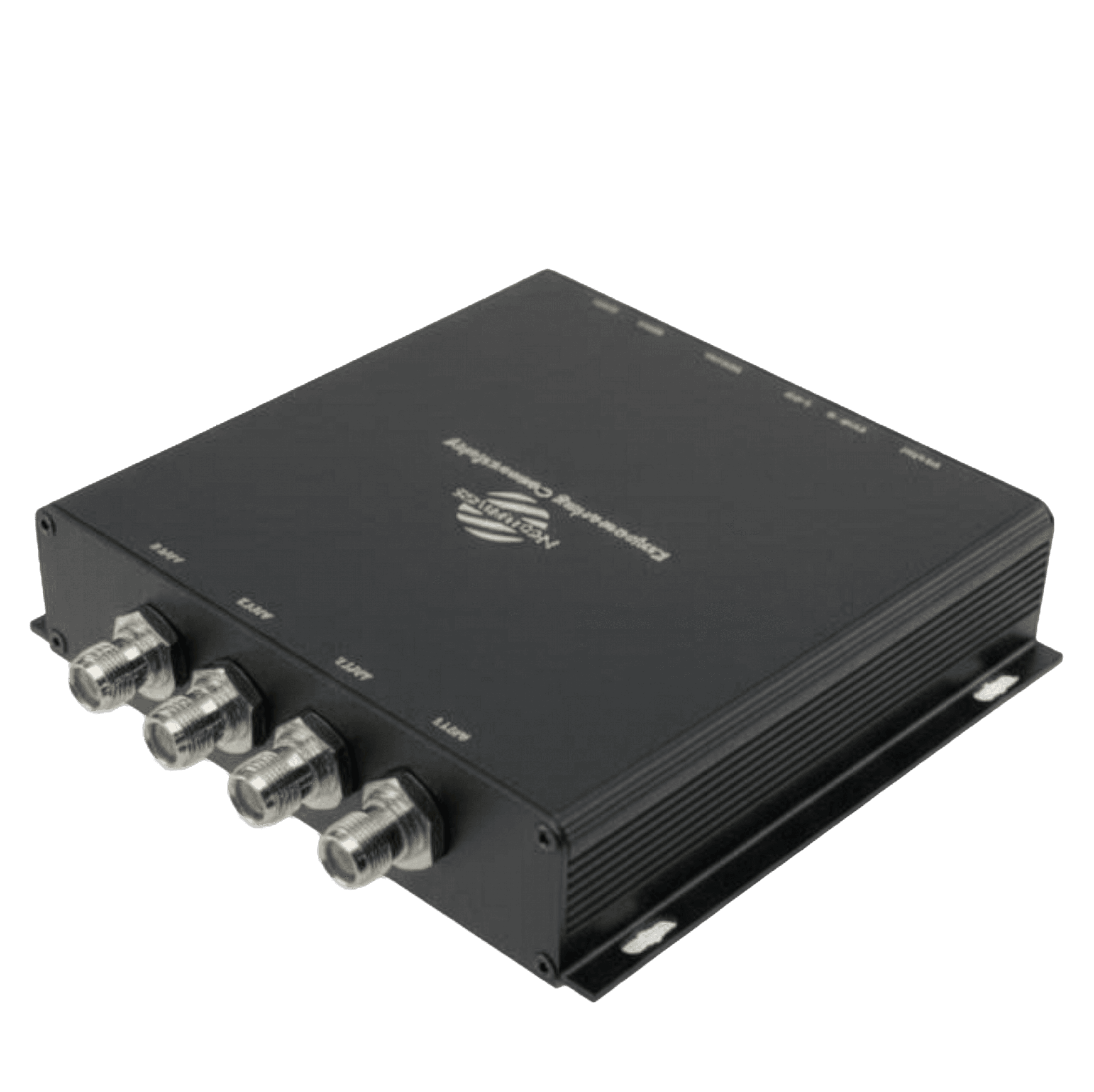
Alternative architecture

NR155 Vaste IoT UHF RFID-lezer

Cloud-native MQTT/REST API's ingebouwd. Geen eigen SDK's, geen middleware-licenties. Integreer binnen enkele dagen rechtstreeks met uw ERP of WMS.

View Nextwaves NR155
Nextwaves NR155 Fixed IoT UHF RFID Reader

Antennepoorten

4 x RP-TNC-poorten

Leessnelheid

Tot 400 tags/seconde

Uitgangsvermogen

0–33 dBm (1dB stappen)

Netwerkprotocol

MQTT / MQTTS

FAQ

Veelgestelde Vragen

These answers help purchasing and engineering teams review cost, integration, and deployment risk.

01

Wat is de M7e-Tera?

The ThingMagic (JADAK) M7e-Tera is an OEM embedded scanning logic board powered by the flagship Impinj E910 IC. Tuned to process dense EPC Gen2v2, ISO 18000-63 tag populations across Global (860-960 MHz) spans, it serves as the core logic block for bespoke industrial dock portal readers.

02

Hoeveel kost deze setup initieel?

Priced near $250 per bare module. Heavy engineering capital must be allocated for fabricating multi-layer PCB housing units, powerful embedded host processors, physical network stacks, and active convection cooling hardware.

03

Waarom zou ik in plaats daarvan voor Nextwaves kiezen?

OEM module embedding creates steep hardware maintenance overheads. Nextwaves eliminates PCB-level engineering entirely by providing fully realized intelligent arrays featuring native HTTPS/MQTT endpoints that skip legacy serial bindings.

04

Is de hardware duurzaam genoeg voor magazijnen?

Being an embedded component weighing only 3 g within a 46 x 26 x 4 mm footprint, it inherently maintains a Bare PCB (None) rating. Deploying this logic into real environments hinges solely upon the IP rating of the OEM-built exterior case.

05

Ondersteunt het meerdere netwerktypes?

Data routing relies strictly on localized UART Serial / USB solder pins. All TCP/IP networking, IoT security protocol management, and connection fallbacks are the direct responsibility of the auxiliary host Microcontroller.

06

Kan mijn team dit intern installeren?

Developers integrate the core by soldering it to a logic board and polling its operation directly via the ThingMagic Mercury API. Proper buffer processing is required to handle the massive asynchronous data streams.

07

Hoe werkt het beheer op afstand?

Utilizing the highest-end E910 core, throughput scales up to ~1300 tags/sec in optimized environments. Managing firmware lifecycles requires specialized UART flashes pushed from the master OEM processor.

08

Heb ik propriëtaire software nodig om het te gebruiken?

Connecting localized reads directly into enterprise clouds requires writing host bridges. The parent Linux or RTOS MCU must translate the high-volume UART hexadecimal dumps into sanitized JSON bundles before firing standard webhooks.

09

Welke garantie zit er op de reader?

The component warranties only reflect direct factory IC defects. OEM integration pipelines that fail to safely restrict power output loads or inadequately dissipate heat can quickly permanently degrade transceiver lifespan.

10

Worden de antennes apart verkocht?

Its embedded U.FL multiplex logic ports handle up to four external antennas across the Global (860-960 MHz) spectrums. Peak power hits +31.5 dBm, capable of penetrating highly dense, interference-heavy factory palettes.