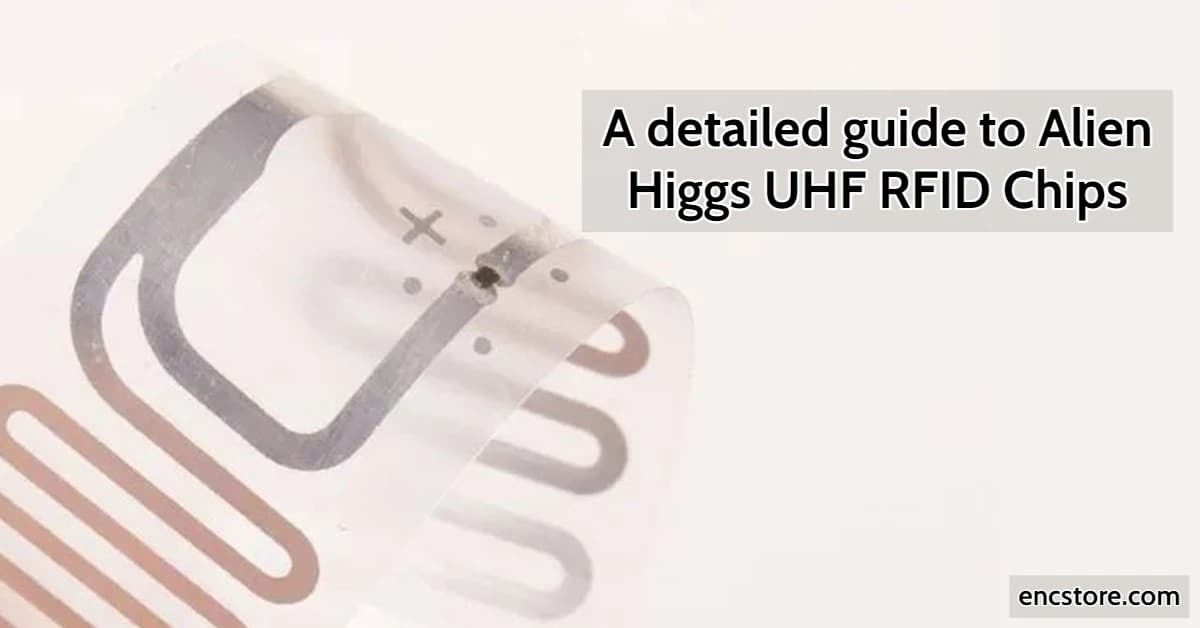
Alien Technology introduces the Higgs 10 chip for high-volume RFID tags. This chip features a read sensitivity of -23.5 dBm. Its performance matches the Impinj M700 and NXP UCODE 9 series. You get 448 bits of memory for EPC and user data. The H10 cuts production costs by 15%.
Compare these specs with current hardware. The H10 maintains steady read speeds in crowded environments. You can increase inventory accuracy. This review analyzes the price and performance of the H10. Choose this chip for your logistics operations.
Introduction: The Successor to the Higgs Throne
The Alien Higgs 10 (H10) succeeds the Higgs 3 and Higgs 4 chips. This hardware is built for high-volume UHF RFID applications. Nextwaves Industries evaluates H10 performance to improve your supply chain tracking.
The H10 balances cost and performance for the Internet of Things (IoT). It brings technical upgrades to your logistics activities.
- Read sensitivity reaches -21.5 dBm.
- Write sensitivity reaches -19 dBm.
- Sentinel Memory protects data integrity for 50 years.
- Write endurance lasts up to 200,000 cycles.
- Memory includes a 96-bit EPC and 32-bit user memory.
Performance Specs: Is the H10 Really Good?
The Alien Higgs 10 (H10) chip brings high performance to mass RFID applications. This chip balances sensitivity with data reliability.
- Read Sensitivity: The H10 has a read sensitivity of -21.5 dBm. This performance beats the -18 dBm standard of the Higgs 3. High sensitivity extends the read range in crowded spaces.
- Write Sensitivity: Write sensitivity hits -19 dBm. This spec allows for fast bulk encoding on production lines.
- Memory Setup: The chip has a 96-bit EPC. You can expand the EPC to 128 bits for specific needs. It contains a unique 48-bit TID and 32 bits of user memory.
Direct Comparison: H10 vs. Impinj M700 & NXP UCODE 9
The Alien Higgs 10 competes with the Impinj M700 and NXP UCODE 9 series. You can choose between extreme sensitivity and data flexibility.
H10 vs. Impinj M730 and M750
- Impinj M700 series chips have a read sensitivity of -24 dBm.
- The H10 has a read sensitivity of -21.5 dBm.
- The H10 offers 32 bits of user memory.
- The Impinj M730 has 0 bits of user memory.
- Use the H10 for applications that need custom data flags.
H10 vs. NXP UCODE 9
Price Analysis: Is the Higgs 10 Affordable?
The Alien Higgs 10 (H10) offers great value for large-scale RFID rollouts. You pay between $0.035 and $0.05 per tag for orders over 50,000 units. This price fills the gap between budget chips and premium options.
- Cost Efficiency: The H10 is cheaper than the Impinj M700 series.
- Performance: It features a read sensitivity of -21.5 dBm.
- Memory: You get 32 bits of user memory for custom data.
- Reliability: Sentinel Memory protects data for 50 years.
High-end chips
Conclusion: Who Should Use the H10?
Choose the H10 for retail, logistics, and asset tracking needs. It balances low cost with high data integrity. This chip leads in value for tags that need more than just an EPC code. Use the H10 for these applications:
- Retail: 32 bits of user memory store product details.
- Logistics: Sentinel Memory architecture fixes single-bit errors.
- Asset Tracking: 200,000 write cycles is double the industry standard.
The H10 keeps data for 50 years. The -21.5 dBm read sensitivity ensures performance in busy environments.
Boost your operational efficiency with Nextwaves RFID.
Was this article helpful?
Related Articles
Maximizing Asset Visibility: The Ultimate Guide to Anti-Metal UHF RFID Tags
Mar 2, 2026
Mastering UHF RFID in Odoo: Hardware, Workflows, and Best Practices
Mar 2, 2026
Chainway C72 Comprehensive Review: Specs, Pricing, and Top Alternatives
Mar 2, 2026
The Ultimate UWB Module Comparison: Prices, Specs, and Use Cases
Feb 23, 2026