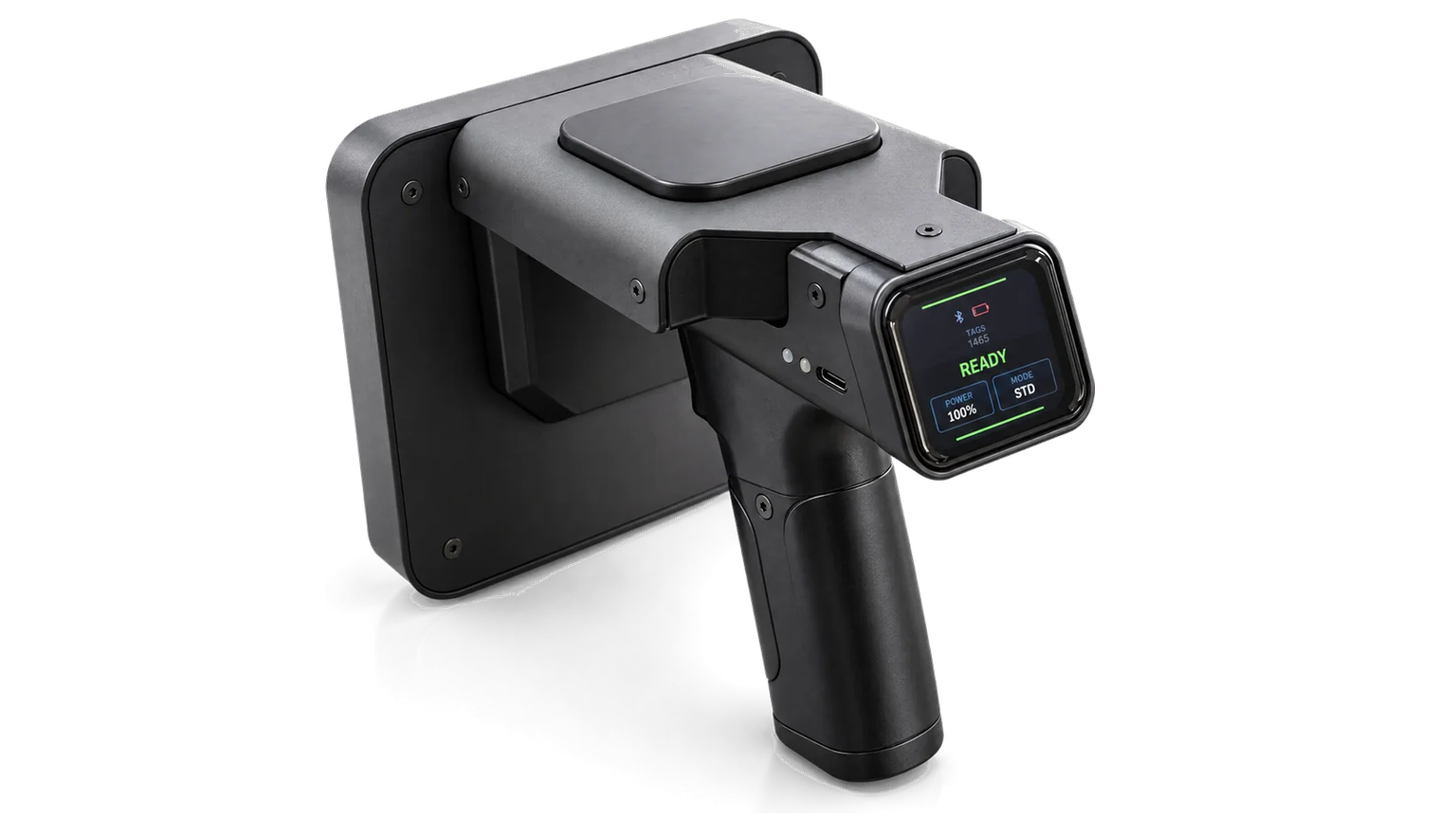
RFID Handheld Single-Hand Reader

RFID Handheld Single-Hand Reader

902 - 928 MHz

Frequenz

6 dBic

Gewinn

220 x 160 x 90 mm

Abmessungen

Gain6 dBic
Weight750 g
Battery5200 mAh Li-ion, 10 hr runtime
ChargingDC, 12 V / 2 A
MaterialReinforced ABS housing, textured grip
ProtokollEPC Class 1 Gen 2 (ISO 18000-6C)
Frequenz902 - 928 MHz
Read SpeedUp to 700 tags/second
Dimensions220 x 160 x 90 mm
Output PowerMax 30 dBm, 1 dBm steps
ConnectivityBluetooth 5.0
PolarizationCircular
Read DistanceUp to 6 m
Ingress ProtectionIP54
Operating Temperature-10 °C ~ +50 °C

Funktionen

Bluetooth 5.0 wireless pairing with phones, tablets and host PCs

6 dBic circular-polarization panel antenna for tag-orientation tolerance

Ergonomic single-hand grip with mechanical trigger for fast one-handed scanning

5200 mAh Li-ion battery for up to 10 hours of continuous read

DC charging at 12 V / 2 A

Single-hand handheld UHF RFID reader built around a 6 dBic circular-polarization panel antenna, tuned to the 902 - 928 MHz US band. Bluetooth 5.0 pairs the reader with phones, tablets and host PCs in seconds, while the mechanical trigger and 5200 mAh Li-ion battery keep teams moving through inventory counts, dock checks, asset audits and receiving sweeps for a full shift.

RESSOURCEN

RFID-Tools & Dokumentation

Nutzen Sie unser SDK, Reader-Verbindungstools und Benutzerhandbücher, um RFID-Lösungen effektiv zu integrieren und bereitzustellen.

Nextwaves NRN Protokoll-SDK

Unsere Open-Source-SDKs für TypeScript, Python und Go bieten eine vollständige Integration mit Nextwaves NRN-Protokoll RFID-Readern. Erstellen Sie Bestandsanwendungen, Asset-Tracking und Echtzeit-Tag-Überwachung mit minimalem Setup.

Auf GitHub ansehen

Reader-Integrationshandbuch

Umfassende Dokumentation zur seriellen Kommunikationseinrichtung, Antennenkonfiguration, Tag-Kodierungsoperationen (EPC Gen2 / ISO 18000-6C) und Energieverwaltung. Enthält Beispiele für Multi-Antennen-Deployments und Hochgeschwindigkeits-Bestands-Scannen.

Handbuch lesen

GS1 EPC-Tag-Kodierungsreferenz

Detaillierte Referenz für SGTIN-96, SSCC-96, GRAI-96 und andere GS1 EPC-Kodierungsschemas. Enthält Prüfziffernberechnung, Unternehmenspräfix-Lookup und Digital Link URI-Generierung für nahtlose Supply-Chain-Integration.

EPC-Encoder testen