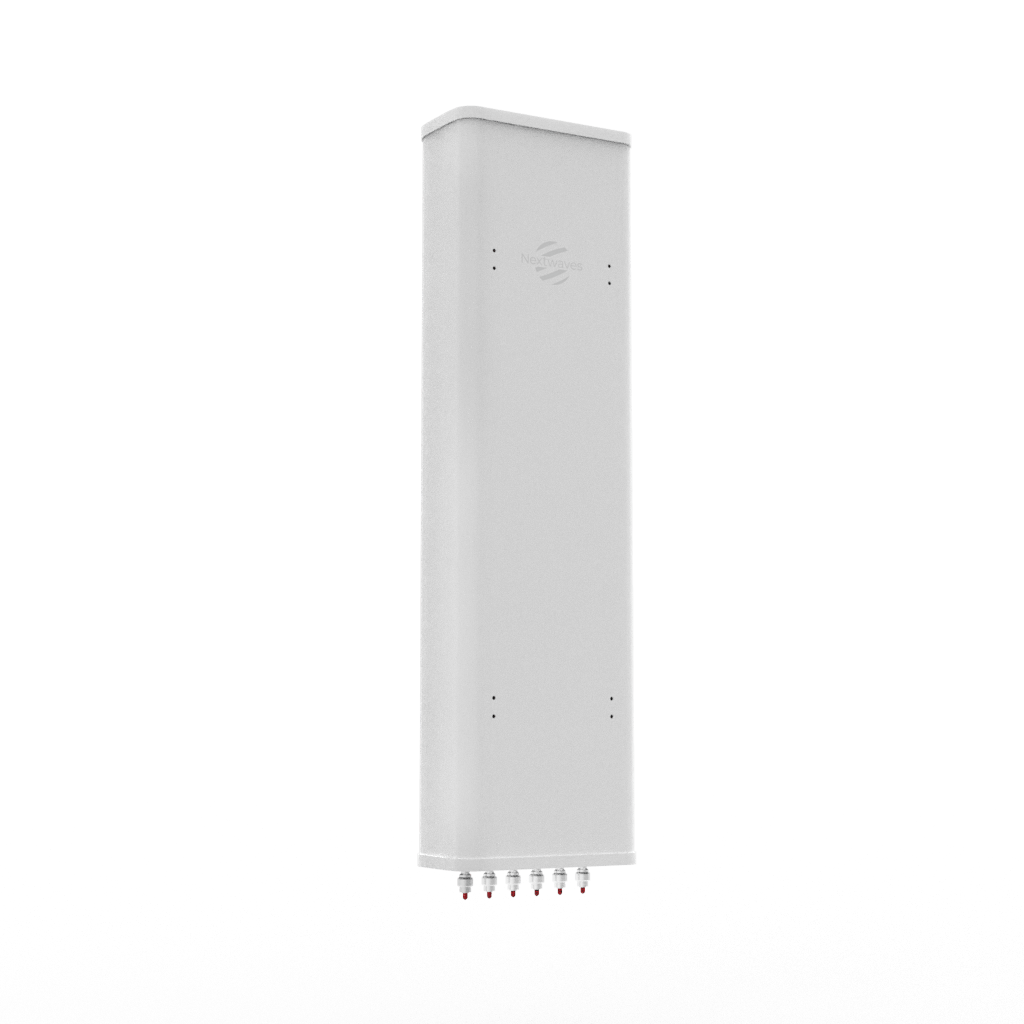
BTS 4G Antenna - Lowband

The BTS 4G Antenna - Lowband is a base station panel antenna covering 698 - 960 MHz with 13.2 - 13.8 dBi gain.

  • Frequency: 698 - 960 MHz
  • Antenna gain: 13.2 - 13.8 dBi
  • Dimensions (WxLxD): 350 x 1380 x 150 mm
Angebot / Kauf

Beschreibung

The BTS 4G Antenna - Lowband is a base station panel antenna covering 698 - 960 MHz with 13.2 - 13.8 dBi gain. Dual ±45° polarization, an adjustable 0° - 10° electrical downtilt via a replaceable internal RET and 0° - 20° mechanical downtilt let operators shape coverage per sector. A 67° horizontal and 15° vertical beamwidth suit 4G/LTE base stations, with six 4.3-10 Female connectors and an ASA+PC UV-resistant radome on a 350 x 1380 x 150 mm body.

Funktionen

  1. 698 - 960 MHz low-band coverage for 4G/LTE base stations
  2. 13.2 - 13.8 dBi antenna gain
  3. Dual ±45° polarization
  4. 0° - 10° adjustable electrical downtilt
  5. 67° ± 4.0° horizontal and 15° ± 2.5° vertical beamwidth

Anwendungen

  • Telecommunications
  • 4G/LTE Base Stations
  • Signal Coverage Extension

Technische Spezifikationen

Frequency
698 - 960 MHz
Antenna gain
13.2 - 13.8 dBi
Polarization
Dual, ± 45°
Electrical downtilt
0° - 10 °
Horizontal beamwidth
67° ± 4.0 °
Vertical beamwidth
15° ± 2.5°
Dimensions (WxLxD)
350 x 1380 x 150 mm
Net Weight
≤ 17 kg
Lightning Protection
DC ground
Connector
6 x 4.3-10 Connector Female (IP67), bottom positioned
E-TILT Adjusting module
Replaceable internal RET, 1 x bottom positioned
Mechanical downtilt
0° - 20°
Mounting interface
Pole mounting (Ø45 - Ø120 mm)
Wind load (at 150 km/h)
Front/Rear: 640 N, Lateral: 350 N
Survival wind speed
200 km/h
Radome material
ASA+PC, UV resistance
Radome color
Gray (RAL 7047)

RESSOURCEN

RFID-Tools & Dokumentation

Nutzen Sie unser SDK, Reader-Verbindungstools und Benutzerhandbücher, um RFID-Lösungen effektiv zu integrieren und bereitzustellen.

Nextwaves NRN Protokoll-SDK

Unsere Open-Source-SDKs für TypeScript, Python und Go bieten eine vollständige Integration mit Nextwaves NRN-Protokoll RFID-Readern. Erstellen Sie Bestandsanwendungen, Asset-Tracking und Echtzeit-Tag-Überwachung mit minimalem Setup.

Auf GitHub ansehen

GS1 EPC-Tag-Kodierungsreferenz

Detaillierte Referenz für SGTIN-96, SSCC-96, GRAI-96 und andere GS1 EPC-Kodierungsschemas. Enthält Prüfziffernberechnung, Unternehmenspräfix-Lookup und Digital Link URI-Generierung für nahtlose Supply-Chain-Integration.

EPC-Encoder testen