RFID replacement dossierUpdated: May 25, 2026

CAEN RFID Slate3 (R1353I)Review: Specifications and Alternatives

The CAEN Slate3 is an ultra-flat $400 checkout pad for retail environments. Analyze its USB-C constraints compared to Nextwaves wireless IoT designs.

Nextwaves EngineeringHardware Review5 min read

Technical verdict

CAEN RFID Slate3 (R1353I) is a mainstream hardware purchase, but it is not always the best architecture for direct RFID data integration.

Do not evaluate Slate3 (R1353I) by list price alone. Its strongest fit is a project that already uses USB Type-C, has time for RF tuning, and accepts extra middleware work. If the engineering team needs open APIs, realtime data, and faster edge-to-cloud deployment, Nextwaves NR155 is the stronger replacement path to evaluate.

Initial cost

$400 before deployment accessories

Published throughput

Not specified

Integration surface

USB Type-C

Physical data

220 x 140 x 17 mm; 275 g; IP: IP30 indoor rating

Published specs

Specifications to validate before replacing

Frequency

865-868 MHz (ETSI) / 902-928 MHz (FCC)

Protocol

EPC C1 G2, ISO 18000-63

Connectivity

USB Type-C

IP Rating

IP30 indoor rating

Dimensions

220 x 140 x 17 mm

Weight

275 g

Power Supply

USB Bus Power

Read Rate

standard read rates

Estimated Price

$400

Deployment review

Operational strengths and risks

This summary is based on public specifications and does not replace an on-site RF survey.

Fit score

3.5/5

Strengths

  • USB Type-C gives network teams a familiar integration surface instead of local-only collection.
  • USB Bus Power can reduce separate power drops when switch PoE budget is available.
  • The $400 hardware baseline is easier to budget than premium fixed-reader configurations.
  • Throughput should be measured with real tags and antennas.

Validate

  • Quoted hardware price is not installed system cost; include antennas, cables, mounts, power, software, and configuration work.
  • RF performance depends on tag material, antenna position, transmit power, reader orientation, and site interference.
  • IP30 indoor rating must be checked against dust, humidity, temperature, and cleaning requirements.
  • Raw RFID reads still need duplicate filtering, business-event mapping, and ERP/WMS integration before operations can use them.

Deployment review

Buying decision matrix

Best fit

Fixed UHF RFID projects that already use USB Type-C and have time for RF tuning.

Weak fit

Do not compare device price only; total cost depends on accessories, software, and integration.

Deployment risk

IP30 indoor rating, USB Bus Power, 220 x 140 x 17 mm, and 275 g must match the site layout.

Software risk

Plan for middleware, SDK work, duplicate filtering, and business-event mapping.

Alternative architecture

CAEN RFID Slate3 (R1353I) vs Nextwaves

01

Hardware Overview

The CAEN RFID Slate3 (R1353I) is an industrial-grade RFID device. It operates within the 865-868 MHz (ETSI) / 902-928 MHz (FCC) range and supports the EPC C1 G2, ISO 18000-63 standard, making it widely deployed across enterprise logistics applications.

With an IP rating of IP30 indoor rating, it offers protection against specific environmental conditions typical in warehouses or retail backrooms. The reader utilizes USB Bus Power for continuous performance, while its stated maximum read rate peaks at standard read rates.

02

Connectivity and Network Integration

In modern deployments, network integration is the most significant hurdle. This model offers USB Type-C options for transferring data back to central systems.

However, a major bottleneck with legacy CAEN RFID hardware is the heavy reliance on proprietary SDKs (like LLRP) or expensive third-party IoT middleware to process raw tag data into meaningful business intelligence.

03

When to choose Nextwaves instead of another closed reader

If your engineering team is evaluating the CAEN RFID Slate3 (R1353I), the Nextwaves NR155 presents a vastly superior cloud-native architecture. Legacy systems inherently drive high capital expenditure through vendor lock-in and proprietary software ecosystems.

Nextwaves completely eliminates this barrier by providing a standard MQTT REST API directly on the device. Your software developers can integrate tag reading directly into your custom ERP or WMS backend in days instead of months, completely bypassing recurring middleware licensing fees.

Alternative architecture

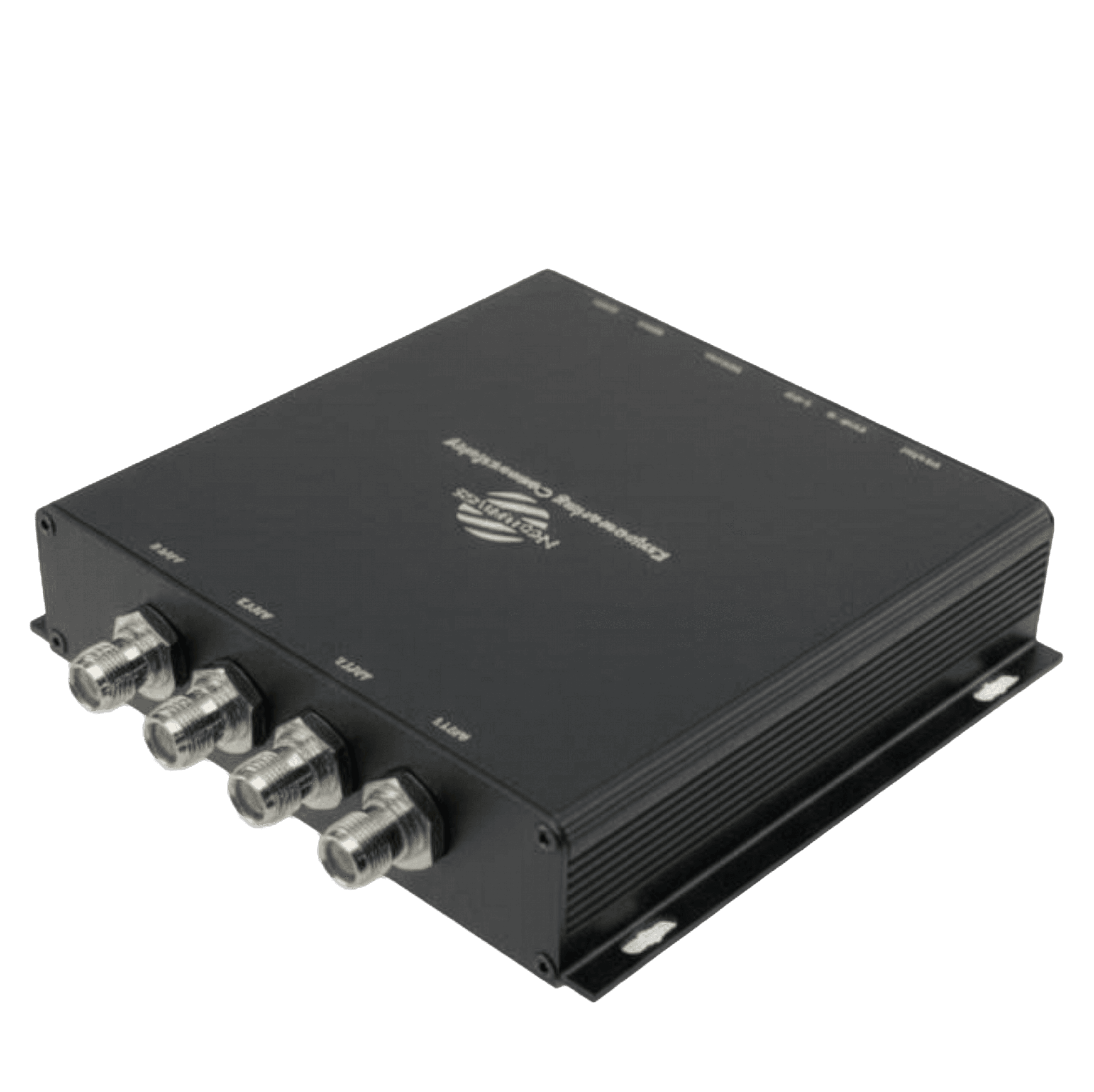
NR155 Fixed IoT UHF RFID Reader

Cloud-native MQTT/REST APIs built-in. No proprietary SDKs, no middleware licensing. Integrate directly with your ERP or WMS in days.

View Nextwaves NR155
Nextwaves NR155 Fixed IoT UHF RFID Reader

Antenna Ports

4 x RP-TNC Ports

Read Speed

Up to 400 tags/second

Output Power

0–33 dBm (1dB steps)

Network Protocol

MQTT / MQTTS

FAQ

Frequently Asked Questions

These answers help purchasing and engineering teams review cost, integration, and deployment risk.

01

What is the Slate3 (R1353I)?

The CAEN RFID Slate3 (R1353I) is a low-profile desktop UHF RFID scanning mat. Engineered to decode EPC C1 G2, ISO 18000-63 labels across 865-868 MHz (ETSI) / 902-928 MHz (FCC) bandwidths, it is primarily used at retail cash registers to tag apparel.

02

How much does this setup cost initially?

Typical pricing sits around $400. Due to its desktop POS orientation, integrators do not need separate external antennas. Power is drawn exclusively through its USB Bus Power connection to a standard PC.

03

Why should I choose Nextwaves instead?

Nextwaves hardware features localized wireless nodes running native MQTT protocols. Nextwaves processors seamlessly route event data directly to your ERP, cutting out the requirement to install intermediate polling software on your POS tills.

04

Is the hardware durable enough for warehouses?

The slimline pad weighs 275 g and boasts dimensions of 220 x 140 x 17 mm. Rated strictly to an IP30 indoor rating, the reader is built for clean retail checkout desks and offers zero protection against heavy factory environments.

05

Does it support multiple network types?

Networking operates strictly over a wired USB Type-C connection. The hardware contains zero routing logic; all enterprise security firewalls and traffic monitoring occur within the OS of the attached checkout computer.

06

Can my team install this internally?

Integration paths require utilizing the CAEN API SDKs on your host Windows/Linux POS system. Programming teams must write localized software routines to instruct the pad to burst RF power and read returned identifier arrays.

07

How does the remote management work?

The embedded read logic operates at standard read rates suited for capturing piles of folded apparel resting directly on the scanner surface. Management settings are localized entirely to the connected physical PC.

08

Do I need proprietary software to run it?

Since data pushes through a USB Type-C interface, software engineers are responsible for building applications that translate the incoming UART serial stream into logical formats sent into central cloud databases.

09

What warranty comes with the reader?

The product usually ships with an industry-standard 12-month defect warranty. Given the fragile nature of low-profile plastics on retail desks, specialized accidental protection coverage is frequently recommended.

10

Are the antennas sold separately?

Its chassis integrates an ultra-flat antenna engineered for 865-868 MHz (ETSI) / 902-928 MHz (FCC) bands. The near-field focus ensures the RF cloud remains within a strict 6-inch vertical bubble above the pad.