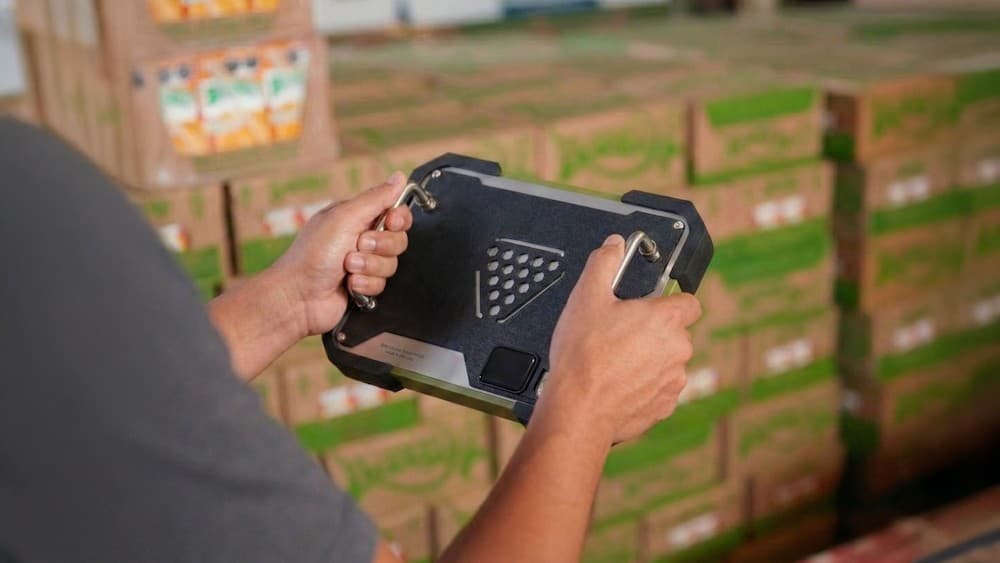
What is RFID?

Radio Frequency Identification (RFID) is a wireless technology that uses radio waves to automatically identify and track tags attached to objects.

Core Components

The RFID Tag

Consists of a microchip and antenna. It stores data and transmits it when activated.

The Reader

Also known as an interrogator. It emits radio waves to power tags and read their data.

The RFID Antenna

Transmits the reader's signal and receives the tag's response. It can be integrated or separate.

Backend System

Software and database that processes the read data and turns it into actionable insights.

How It Works

  • 1

    Signal Transmission

    The reader emits radio waves to scan for tags.

  • 2

    Activation

    The tag enters the field and uses the energy to wake up.

  • 3

    Data Exchange

    The tag transmits its unique ID back to the reader.

  • 4

    Processing

    The reader sends data to the host system for action.

Frequency Types

BandRead RangeCommon Use Cases
LF (Low Frequency)< 10 cmAnimal tracking, access control
HF (High Frequency / NFC)1 cm - 1 mPayments, ticketing, libraries
UHF (Ultra-High Frequency)Up to 12 m+Retail inventory, logistics, asset tracking

1. Executive Introduction

The Invisible Revolution: RFID (Radio Frequency Identification) has quietly woven itself into the fabric of daily life, often operating unseen behind the scenes of the world's most critical infrastructures. From the transit card you tap to commute, to the seamless inventory tracking in modern retail stores, RFID is the silent engine of efficiency.

High-Level Definition: At its core, RFID is not merely a 'barcode replacement'. While barcodes require line-of-sight and manual scanning, RFID enables non-line-of-sight, bulk data capture. It transforms physical items into digital assets that can 'announce' their presence to the network.

The Value Proposition: The true power of RFID lies in its ability to bridge the physical and digital worlds. It offers unprecedented inventory accuracy (often boosting ranges from 65% to 99%), automates labor-intensive processes, and provides real-time visibility that empowers data-driven decision-making.

2. The Physics and Mechanics of RFID

Understanding RFID requires looking at the fundamental physics of radio waves and energy harvesting. The system relies on the principle of 'Backscatter' or 'Inductive Coupling', depending on the frequency.

How it Works

Most passive RFID systems operate on the 'Reader-Talks-First' principle. The reader emits a continuous wave (CW) of RF energy. When a tag enters this field, it powers up and modulates the reflection of this wave to communicate back.

Coupling Methods

  • Inductive Coupling (LF/HF): Uses a magnetic field. The reader coil and tag coil form a transformer. Works only at close range (Near Field).
  • Radiative Coupling (UHF): Uses electromagnetic waves. The tag reflects a portion of the incoming energy back to the reader (Backscatter). Allows for long-range communication (Far Field).

Components of the System

1

Tag (Transponder)

The Tag (Transponder): Composed of a microchip (IC) that stores data and logic, attached to an antenna which harvests energy and transmits signals. The chip and antenna are bonded to a substrate (PET/Paper).

2

Reader (Interrogator)

The Reader (Interrogator): The brain of the operation. It generates the RF signal, receives the tag's response, and decodes the binary data. Readers can be fixed (mounted at dock doors) or handheld (for mobile inventory).

3

Antenna

The Antenna: The reader's voice and ears. It shapes the RF field. Circularly polarized antennas are versatile and can read tags in any orientation, while lineary polarized antennas offer longer range but require specific tag alignment.

3. Frequency Spectrum Breakdown

125 – 134 kHz

Low Frequency (LF)

Uses inductive coupling. Extremely robust near metals and liquids but has very short range and low data rates. Standard for animal tagging and simple access control.

13.56 MHz

High Frequency (HF) & NFC

Also uses inductive coupling. Regulated globally. NFC (Near Field Communication) is a subset of HF. Ideal for secure payments, ticketing, and consumer engagement ('tap-to-connect').

860 – 960 MHz

Ultra-High Frequency (UHF - RAIN RFID)

Uses radiative coupling. The standard for supply chain and retail. Offers long read ranges (up to 12m+), fast data transfer, and bulk reading capabilities (hundreds of tags per second).

Power Sources

Passive: No battery. Powered entirely by the reader's field. Infinite lifespan, low cost.
Active: On-board battery for broadcasting. Longest range (100m+) but expensive and limited life.
BAP: Battery boosts the return signal but doesn't initiate it. Specialized use cases.

4. Hardware Deep Dive: Anatomy of a Tag

5. Software Architecture and Data Management

The hardware sees every tag 100 times a second. Software's job is to filter this 'noise' into meaningful business events.

Middleware

Middleware (like the ALE standard) sits between readers and apps. It configures reader settings, manages firmware, and translates raw RF signals into logical data.

Filtering and Edgeware

Raw reads are filtered at the edge. Algorithms de-duplicate reads, filter out stray tags, and aggregate data into logical events like 'Item Arrived' or 'Item Departed' before sending to the cloud.

Integration

Clean data is pushed to ERPs (SAP, Oracle) or WMS via APIs, Webhooks, or MQTT. This real-time sync ensures the 'Digital Twin' matches physical reality.

6. Industry-Specific Use Cases

Retail & Apparel

Boosts inventory accuracy to 99% with weekly cycle counts that take minutes, not hours. Enables smart fitting rooms, magic mirrors, and seamless BOPIS (Buy Online, Pickup In Store) operations.

Logistics & Supply Chain

Automated verification at dock doors ('ASNs'). Real-time tracking of Returnable Transport Items (pallets, totes). Cross-docking without manual breakdown.

Manufacturing & Industrial

Full traceability of Work-in-Progress (WIP). Tool tracking to prevent FOD (Foreign Object Debris). Automated genealogy of assembled parts.

Healthcare & Pharma

Serialized tracking of medications to prevent counterfeiting. Asset tracking for high-value equipment like IV pumps. Surgical instrument tracking for sterilization compliance.

Cold Chain & Food

Temperature-logging tags monitor perishables from farm to fork. If limits are breached, the tag flags the item, ensuring food safety and compliance.

7. Implementation Strategy: From Pilot to Scale

Site Survey

Before buying tags, analyze the environment. RF interference (metal shelving, water pipes, Wi-Fi networks) must be mapped to position readers correctly.

The Tagging Decision

Where does the tag go? 'Item-Level' tagging gives full visibility but costs more. 'Case-Level' or 'Pallet-Level' is cheaper but less granular. The tag placement is consistent to ensure readability.

Physics Challenges

Tagging liquids (water absorbs RF) and metals (metal reflects/detunes RF) requires special tags. On-metal tags use a spacer to create a mini-chamber for the signal.

ROI Calculation

ROI comes from labor savings (96% less time counting stock), shrinkage reduction (knowing what was stolen and when), and increased sales (items are actually on the shelf).

8. Security, Privacy, and Standards

Data Security
Tags can be locked or 'Killed' (permanently deactivated) at Point of Sale. Cryptographic tags prevent cloning for anti-counterfeiting.
Global Standards
The world runs on GS1 EPC Gen2 (ISO 18000-6C). This ensures a tag bought in Vietnam can be read by a reader in the US.
Privacy Concerns
Unlike GPS, passive RFID cannot track people over long distances. However, consumer privacy is protected by 'Kill' features and clear signage.

9. The Future: RFID in the Era of IoT and AI

Digital Product Passports (DPP)

Upcoming EU regulations will require products to have a digital record of their sustainability. RFID will carry this data for recycling and circular economy.

Printable Electronics

Moving towards 'chipless' or printed carbon antennas to reduce cost and environmental impact, making RFID viable for even low-cost food items.

AI Integration

Machine Learning models analyze the millions of data points from RFID readers to predict supply chain bottlenecks before they happen.

Comprehensive RFID FAQ

Fundamentals of RFID

What does RFID stand for?

RFID stands for Radio Frequency Identification. While the name might sound technical, the concept is quite simple: it is a wireless technology that uses radio waves to automatically identify and track tags attached to objects. Think of it like a wireless version of a barcode. However, unlike a barcode that needs to be seen to be scanned, RFID uses radio waves to 'talk' to the reader, allowing it to be identified without a direct line of sight.

What are the main components of an RFID system?

An RFID system isn't just one single device; it's a team of three main players working together. First, you have the RFID Tag (or transponder), which is a tiny microchip attached to an antenna that gets placed on the item you want to track. Second, you have the RFID Reader (or interrogator), which acts as the brain that sends out radio signals to find the tags. Finally, there's the Antenna, which acts as the voice and ears of the reader, broadcasting the signal and listening for the tag's reply. Together, they create a seamless communication loop.

How does RFID technology work?

The magic of RFID happens through a process called 'backscatter' or 'coupling'. It starts when the Reader sends out a radio wave signal through its antenna, looking for any tags nearby. When a passive RFID tag enters this zone, its antenna picks up that energy from the reader's signal. This energy wakes up the tiny chip inside the tag. The tag then uses that same energy to reflect a signal back to the reader, carrying its unique identification number. The reader catches this reflection, decodes the number, and sends it to a computer system for processing - all happening in a fraction of a second.

What is the difference between a passive and an active tag?

The main difference is where they get their power. Passive tags are the most common and affordable type; they have no battery inside. They sit dormant until they are 'woken up' by the energy from an RFID reader's radio waves. Because they don't have a battery, they are cheaper and last essentially forever. Active tags, on the other hand, have their own built-in battery. This allows them to shout their signal much louder and farther, reaching over 100 meters, but they are larger, more expensive, and will eventually run out of battery.

What is a semi-passive (or battery-assisted) tag?

A Semi-passive (also called Battery-Assisted Passive or BAP) tag is a hybrid. It has a small battery, but unlike an active tag, it doesn't use that battery to broadcast a signal. Instead, the battery is used only to keep the chip running or to power onboard sensors (like a temperature logger). It still relies on the reader's signal to communicate back. This design gives it better sensitivity and reading reliability than a standard passive tag, without the high cost and power drain of a fully active tag.

Frequencies and Performance

What are the common RFID frequency ranges?

RFID isn't 'one size fits all'; it operates in different 'lanes' or frequency ranges depending on the job. Low Frequency (LF) operates at 125–134 kHz; it's short-range but tough, great for animal tracking. High Frequency (HF) runs at 13.56 MHz; this includes NFC technology used for payments and keycards. Finally, Ultra-High Frequency (UHF) operates at 860–960 MHz; this is the powerhouse for supply chain and retail because it offers long read ranges (up to 12m) and fast data transfer speeds.

How far can an RFID tag be read?

The reading distance varies greatly depending on the type of tag and frequency used. For LF and HF/NFC tags, the range is intentionally short - usually touching distance up to 1 meter - for security and precision. Passive UHF tags, the standard for inventory, can be typically read from 5 to 12 meters away. If you need extreme range, Active tags with batteries can easily be read from 100+ meters away, making them ideal for tracking trucks or shipping containers in large yards.

Can RFID read multiple items at once?

Absolutely! This is one of RFID's superpowers compared to barcodes. A barcode scanner can only read one code at a time, but an RFID reader can identify hundreds of tags simultaneously in just a few seconds. This capability is called 'bulk scanning' or 'anti-collision'. It means you can wave a handheld reader over a box full of 50 shirts and count them all instantly without ever opening the box.

Does RFID require a direct line of sight?

No, and that is a major advantage. Radio waves have the ability to penetrate most common materials. This means an RFID reader can 'see' a tag even if it's inside a cardboard box, buried in a stack of clothes, or hidden behind a plastic panel. As long as the material isn't metal (which reflects signals) or water (which absorbs them), the radio waves will travel through it to read the tag.

Do metal and liquid affect RFID performance?

Yes, they are the natural enemies of standard RFID signals. Metal surfaces act like a mirror for radio waves, reflecting them away and preventing the tag from charging. Liquids (like water in a bottle or the human body) absorb the energy, dampening the signal. However, engineers have solved this with specialized 'On-Metal' tags that act as a spacer to lift the antenna off the metal surface, and by tuning tags specifically to work better near liquids. So, while it is a challenge, it is a solvable one.

RFID vs. Other Technologies

How is RFID different from a barcode?

Think of a barcode like a license plate that you have to take a clear photo of to read - you need good light and a direct line of sight. RFID is like an E-ZPass toll transponder; it just needs to be near the reader to be detected. Barcodes are 'read-only' and generic (identifying the product type), whereas RFID tags can be scanned in bulk without being seen, can store unique serial numbers for every single item, and some can even be rewritten with new data.

What is the difference between RFID and NFC?

This is a common point of confusion: NFC (Near Field Communication) is actually a specific type of RFID. It operates in the High Frequency (HF) range. The key difference lies in usage and range. General RFID (especially UHF) is built for range and volume - tracking boxes in a warehouse from 10 meters away. NFC is designed for proximity and security - securely transferring data over just a few centimeters, like tapping your phone to pay or pairing a Bluetooth speaker.

Is RFID more expensive than barcodes?

On a per-tag basis, yes. A barcode is essentially free - it's just ink on paper. A passive RFID tag includes a microchip and antenna, costing anywhere from 5 to 15 cents. However, looking only at the tag cost misses the bigger picture. The value of RFID comes from the massive labor savings (scanning inventory in minutes instead of days) and the accuracy gain (reducing lost sales from out-of-stock items). For most businesses, these operational savings far outweigh the cost of the tags.

Applications and Usage

What are common uses for RFID in retail?

Retailers use RFID for real-time inventory management, theft prevention, and faster checkout processes. It helps ensure that shelves are always stocked and reduces the time needed for manual stocktaking. Instead of manual counts that happen once a year, store staff can perform weekly cycle counts in minutes using a handheld wand. This ensures that the system knows exactly what is in stock, enabling features like 'Smart Fitting Rooms' (which recommend matching items) and making 'Buy Online, Pickup In Store' (BOPIS) reliable because the stock data is actually correct.

How is RFID used in logistics and supply chains?

In logistics, speed and accuracy are everything. RFID portals are placed at dock doors so that as a forklift drives a pallet of goods onto a truck, the system automatically reads every single item on that pallet, verifying the shipment against the order instantly. It creates a digital trail for every carton, ensuring that the right goods go to the right destination without needing a person to stop and aim a barcode scanner at every box.

Are there applications for RFID in healthcare?

In healthcare, RFID can quite literally be a lifesaver. It is used to track high-value assets like infusion pumps and wheelchairs so nurses don't waste time searching for them. It's critical for medication management, ensuring that drugs are authentic and haven't expired. It's also used for patient safety via wristbands to confirm identity before surgeries, and even for tracking surgical sponges to ensure nothing is left behind after an operation.

How is RFID used for access control?

You likely use this every day without realizing it! The keycard you tap to enter your office or the fob you use for your apartment building uses LF or HF RFID. When you hold the card near the reader on the wall, the reader powers up the card's chip, checks its unique ID code against a database of authorized users, and if it finds a match, it unlocks the door. It's secure, easy to manage (cards can be deactivated instantly), and convenient.

Security, Privacy, and Future

Is data on an RFID tag secure?

Security varies by tag type, but modern RFID has robust options. Basic inventory tags act like a license plate - publicly readable but meaningless without access to the backend database. However, for sensitive applications, we use crypto-tags with high-level encryption that can't be cloned. Additionally, tags can be password-protected to prevent unauthorized writing, meaning no one can overwrite your data. For consumer privacy, tags can receive a 'Kill Command' at the point of sale, permanently deactivating them.

Can someone 'skim' or steal my information from an RFID card?

This is a popular myth fueled by movies, but the reality is much less scary. While older proximity cards were simpler, modern contactless credit cards and passports use sophisticated encryption and dynamic rolling codes. This means the data changes with every transaction. Even if someone with a powerful reader managed to interact with your card, the data they captured would be a one-time code that is useless for making a future transaction. The risk is vanishingly small in the real world.

What is the future of RFID technology?

The future is about ubiquitous connectivity. We are moving towards a world where almost every physical item - from the clothes you wear to the food you buy - has a digital identity. We are moving toward 'Integrated IoT', where RFID data is combined with AI and cloud analytics to create smart warehouses and fully automated retail environments. We are also seeing the rise of Eco-friendly tags made of paper rather than plastic to reduce plastic waste.