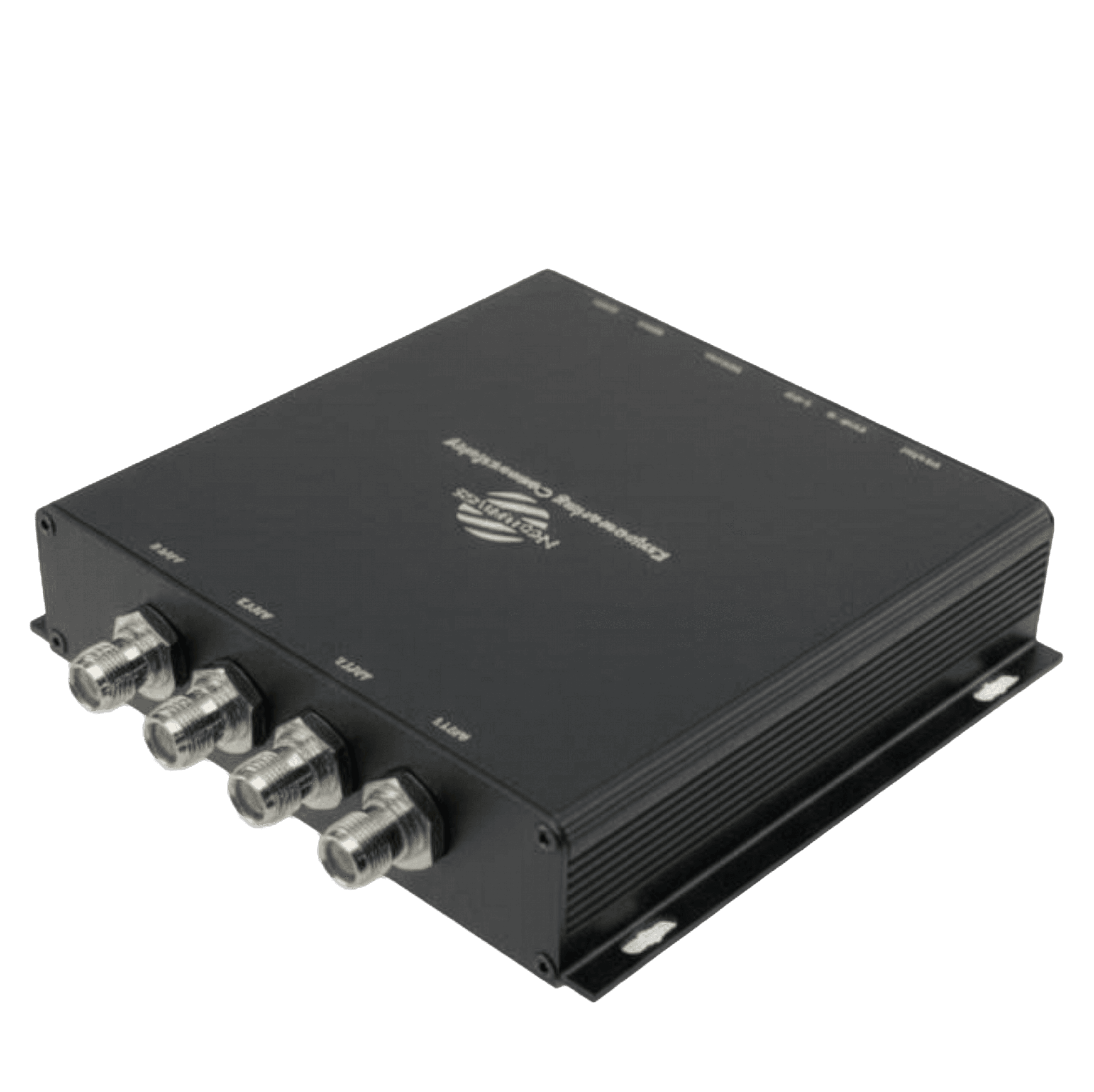
The CAEN RFID qID is a pocket-sized Bluetooth scanner with a $500 MSRP. Review its capabilities and physical limits compared to integrated reader architectures.
Especificacións técnicas
Visión xeral do hardware
O CAEN RFID qID (R1170I Ion) é un dispositivo RFID de grao industrial. Funciona dentro do rango de 865-868 MHz (ETSI) / 902-928 MHz (FCC) e admite o estándar EPC C1 G2, ISO 18000-6C, o que o fai amplamente despregado en aplicacións loxísticas empresariais.
Cunha clasificación IP de IP54, ofrece protección contra condicións ambientais específicas típicas en almacéns ou almacéns de venda polo miúdo. O lector utiliza Li-Ion 3.7V 570mAh para un rendemento continuo, mentres que a súa velocidade máxima de lectura declarada alcanza standard read rates.
Conectividade e integración de rede
Nas implementacións modernas, a integración da rede é o obstáculo máis importante. Este modelo ofrece Bluetooth 2.1, USB opcións para transferir datos aos sistemas centrais.
Non obstante, un importante problema cos hardware CAEN RFID herdados é a forte dependencia de SDKs propietarios (como LLRP) ou middleware de IoT de terceiros caros para procesar datos de etiquetas en bruto en información empresarial significativa.
A alternativa Nextwaves
Se o seu equipo de enxeñaría está a avaliar o CAEN RFID qID (R1170I Ion), o Nextwaves NR155 presenta unha arquitectura nativa da nube moito superior. Os sistemas herdados impulsan inherentemente un alto gasto de capital a través do bloqueo do provedor e os ecosistemas de software propietarios.
Nextwaves elimina completamente esta barreira proporcionando unha API REST MQTT estándar directamente no dispositivo. Os seus desenvolvedores de software poden integrar a lectura de etiquetas directamente no seu backend ERP ou WMS personalizado en días en lugar de meses, evitando por completo as taxas de licenza de middleware recorrentes.
Preguntas frecuentes
Que é o qID (R1170I Ion)?
The CAEN RFID qID (R1170I Ion) is an extremely compact, Bluetooth-paired UHF RFID reader designed for short-range logistics tracking on the EPC C1 G2, ISO 18000-6C standards over 865-868 MHz (ETSI) / 902-928 MHz (FCC) waves.
Canto custa esta configuración inicialmente?
Typically priced at $500 MSRP. Financial deployments must account for multi-unit docking stations, the limited lifespan of its embedded Li-Ion 3.7V 570mAh battery, and requisite host smartphones to orchestrate processing.
Por que debería escoller Nextwaves no seu lugar?
Nextwaves hardware integrates embedded processing and network uplinks within a single chassis. Operators completely eliminate the Bluetooth tethering bottleneck, pushing real-time tracking data directly to cloud systems securely.
É o hardware o suficientemente duradeiro para os almacéns?
Built as a fob scanner, it weighs incredibly only 57 g and measures 99 x 54 x 20 mm. The chassis meets IP54 dust and splash ratings, intended primarily for ad-hoc barcode/RFID scanning inside dry retail floors or vehicles.
Admite varios tipos de rede?
The module relies entirely on Bluetooth 2.1, USB profiles (like HID keyboard emulation or SPP serial data) to route raw asset hex codes strictly to a localized host tablet or PC.
Pode o meu equipo instalar isto internamente?
Initial configuration requires pairing the hardware physically to an OS host. Developers utilize the CAEN RFID API wrappers natively within their own host software logic to intercept triggered reads securely.
Como funciona a xestión remota?
Designed as a short-range identification tool rather than an inventory sweeper, read rates sit heavily dependant on local Bluetooth interference. Battery cycles dictate actual hardware availability rather than pure reading speeds.
Necesito software propietario para executalo?
Deployments generally mandate utilizing the Bluetooth 2.1, USB serial port profiles alongside third-party middleware packages to transcribe hex arrays into HTTPS webhooks for remote delivery.
Que garantía inclúe o lector?
Standard CAEN warranty protocols generally cover factory issues for twelve months. Because its small battery is permanently encapsulated, fleet lifecycle limits are inextricably tied to chemical degradation.
As antenas véndense por separado?
The internal mini-antenna is deeply constrained by its size block across the 865-868 MHz (ETSI) / 902-928 MHz (FCC) limits. Transmit power is drastically restricted (around 500mW ERP) to prevent immediate battery drain.