RFID replacement dossierUpdated: May 25, 2026

Times-7 A5010Análise: Especificações e Alternativas

The Times-7 A5010 is a $200 slim profile passive antenna. Analyze its required coaxial cabling logistics against Nextwaves active integrated panels.

Engenharia NextwavesAnálise de Hardware5 min de leitura

Technical verdict

Times-7 A5010 is a mainstream hardware purchase, but it is not always the best architecture for direct RFID data integration.

Do not evaluate A5010 by list price alone. Its strongest fit is a project that already uses SMA Female, has time for RF tuning, and accepts extra middleware work. If the engineering team needs open APIs, realtime data, and faster edge-to-cloud deployment, Nextwaves NR155 is the stronger replacement path to evaluate.

Initial cost

$200 before deployment accessories

Published throughput

Not specified

Integration surface

SMA Female

Physical data

250 x 250 x 14 mm; 0.75 kg; IP: IP67

Published specs

Specifications to validate before replacing

Frequência

864-868 MHz / 902-928 MHz

Protocolo

N/A (Passive Antenna Element)

Conectividade

SMA Female

Classificação IP

IP67

Dimensões

250 x 250 x 14 mm

Peso

0.75 kg

Fonte de Alimentação

N/A (Passive)

Taxa de Leitura

N/A (Passive)

Preço Estimado

$200

Deployment review

Operational strengths and risks

This summary is based on public specifications and does not replace an on-site RF survey.

Fit score

3.5/5

Strengths

  • SMA Female gives network teams a familiar integration surface instead of local-only collection.
  • N/A (Passive) can reduce separate power drops when switch PoE budget is available.
  • The $200 hardware baseline is easier to budget than premium fixed-reader configurations.
  • Throughput should be measured with real tags and antennas.

Validate

  • Quoted hardware price is not installed system cost; include antennas, cables, mounts, power, software, and configuration work.
  • RF performance depends on tag material, antenna position, transmit power, reader orientation, and site interference.
  • IP67 must be checked against dust, humidity, temperature, and cleaning requirements.
  • Raw RFID reads still need duplicate filtering, business-event mapping, and ERP/WMS integration before operations can use them.

Deployment review

Buying decision matrix

Best fit

Fixed UHF RFID projects that already use SMA Female and have time for RF tuning.

Weak fit

Do not compare device price only; total cost depends on accessories, software, and integration.

Deployment risk

IP67, N/A (Passive), 250 x 250 x 14 mm, and 0.75 kg must match the site layout.

Software risk

Plan for middleware, SDK work, duplicate filtering, and business-event mapping.

Alternative architecture

Times-7 A5010 vs Nextwaves

01

Visão Geral do Hardware

O Times-7 A5010 é um dispositivo RFID de nível industrial. Ele opera na faixa de 864-868 MHz / 902-928 MHz e suporta o padrão N/A (Passive Antenna Element), tornando-o amplamente implantado em aplicações de logística empresarial.

Com uma classificação IP de IP67, ele oferece proteção contra condições ambientais específicas típicas em armazéns ou áreas de estoque de lojas. O leitor utiliza N/A (Passive) para desempenho contínuo, enquanto sua taxa máxima de leitura declarada atinge N/A (Passive).

02

Conectividade e Integração de Rede

Em implementações modernas, a integração de rede é o obstáculo mais significativo. Este modelo oferece SMA Female opções para transferir dados de volta aos sistemas centrais.

No entanto, um grande gargalo com o hardware legado do Times-7 é a forte dependência de SDKs proprietários (como LLRP) ou middleware IoT de terceiros caros para processar dados brutos de tags em informações comerciais significativas.

03

When to choose Nextwaves instead of another closed reader

Se sua equipe de engenharia está avaliando o Times-7 A5010, o Nextwaves NR155 apresenta uma arquitetura nativa da nuvem muito superior. Os sistemas legados inerentemente impulsionam altos gastos de capital por meio de vendor lock-in e ecossistemas de software proprietários.

A Nextwaves elimina completamente essa barreira, fornecendo uma API REST MQTT padrão diretamente no dispositivo. Seus desenvolvedores de software podem integrar a leitura de tags diretamente em seu backend ERP ou WMS personalizado em dias, em vez de meses, contornando completamente as taxas recorrentes de licenciamento de middleware.

Alternative architecture

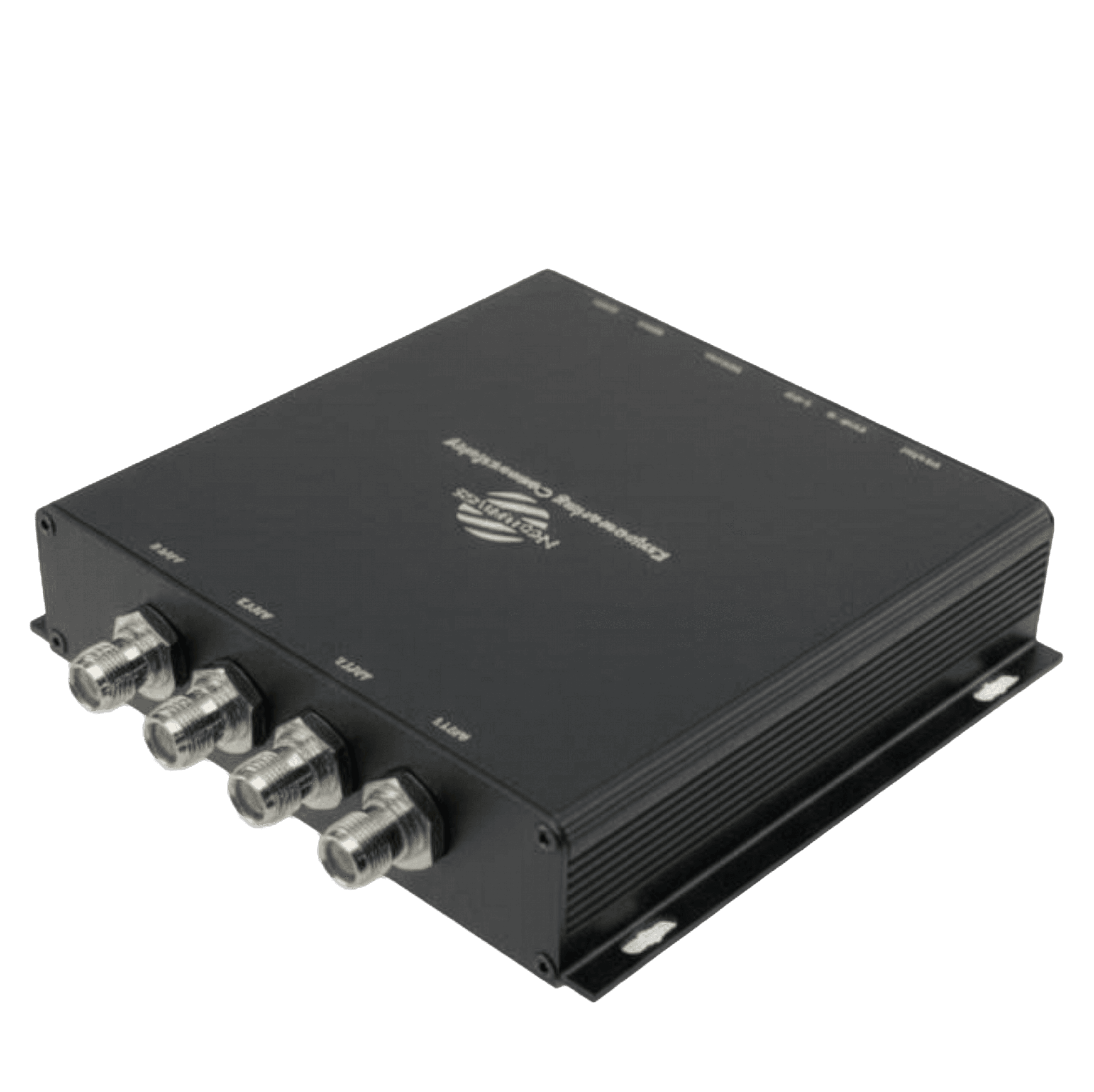
Leitor RFID UHF IoT Fixo NR155

APIs MQTT/REST nativas da nuvem integradas. Sem SDKs proprietários, sem licenciamento de middleware. Integre diretamente com seu ERP ou WMS em dias.

View Nextwaves NR155
Nextwaves NR155 Fixed IoT UHF RFID Reader

Portas de Antena

4 x Portas RP-TNC

Velocidade de Leitura

Até 400 tags/segundo

Potência de Saída

0–33 dBm (incrementos de 1dB)

Protocolo de Rede

MQTT / MQTTS

FAQ

Perguntas Frequentes

These answers help purchasing and engineering teams review cost, integration, and deployment risk.

01

O que é o A5010?

The Times-7 A5010 is an ultra-low profile linear/circular passive UHF antenna plate. Specifically tuned across the 864-868 MHz / 902-928 MHz band, it broadcasts energy outwards pushed from an external interrogator setup.

02

Quanto custa esta configuração inicialmente?

Base hardware units cost roughly $200. This does not factor in the requisite enterprise reader unit or the thick low-loss SMA coaxial cables required to link the panel into an active system.

03

Por que devo escolher a Nextwaves em vez de outras?

Deploying distributed passive plates creates massive cable management challenges. Nextwaves solves this by housing the antenna, logic controller, and IP gateway inside a singular chassis driven simply by PoE.

04

O hardware é durável o suficiente para armazéns?

Enclosed in IP67 fire-retardant ABS plastic, it measures 250 x 250 x 14 mm while weighing a minimal 0.75 kg. It easily withstands damp logistics environments without failure.

05

Ele suporta vários tipos de rede?

Networking is non-existent on the plate itself. Electrical continuity is managed entirely through its SMA Female RF input port connected back to a centralized reader block.

06

Minha equipe pode instalar isso internamente?

Installers screw the panel flush onto walls or ceiling trusses. Technicians must utilize VNA (Vector Network Analyzers) to ensure coaxial line impedance accurately matches the module output.

07

Como funciona o gerenciamento remoto?

Serving solely as an electromagnetic broadcast plate, it possesses a N/A (Passive) rating. High-speed decoding remains exclusively driven by the attached interrogator matrix.

08

Preciso de software proprietário para executá-lo?

Software teams do not interact with the plate. Data routing, REST integration, and buffer management are configured exclusively on the backend reader connected to the array.

09

Qual garantia acompanha o leitor?

Times-7 standard warranties cover manufacturing defects on the internal patch array. Assuming reasonable physical treatment, passive antennas reliably broadcast for decades.

10

As antenas são vendidas separadamente?

Delivering up to 8.5 dBic circularly polarized gain over the 864-868 MHz / 902-928 MHz threshold, it excels in reading arbitrarily rotated tags traveling through high-speed conveyor belts.