Repetitive belastninger
Manuell skanning av tusenvis av bøker forårsaker belastningsskader (RSI) for ansatte.


Biblioteker er møteplasser for lokalsamfunnet, men bibliotekarer føler ofte at de jobber som lagerarbeidere. Timer brukes på manuell inn-/utlånshåndtering, sortering av retur og leting etter feilplasserte gjenstander med strekkodeskannere som krever direkte sikt.
Brukerne ønsker bekvemmelighet. De vil bare ta en bok og gå, eller levere 24/7 uten å vente i kø. Tradisjonelle EM-sikkerhetsstriper beskytter mot tyveri, men gir ingen innsikt i lagerbeholdning.
Resultatet er en friksjonsfylt opplevelse der ansatte begraves i administrative oppgaver i stedet for å engasjere seg med lokalsamfunnet.
Manuell skanning av tusenvis av bøker forårsaker belastningsskader (RSI) for ansatte.
En feilplassert bok er en tapt bok. Uten RFID er det som å lete etter en nål i en høystakk å finne en bok plassert på feil hylle.
Høytider skaper lange køer ved sirkulasjonsskranken, noe som frustrerer lånerne.
Nextwaves tar biblioteket inn i den moderne tidsalder med HF/NFC- og UHF RFID-løsninger. Vi setter inn en tynn, usynlig RFID-brikke i ryggen (spine) eller omslaget til hver bok.
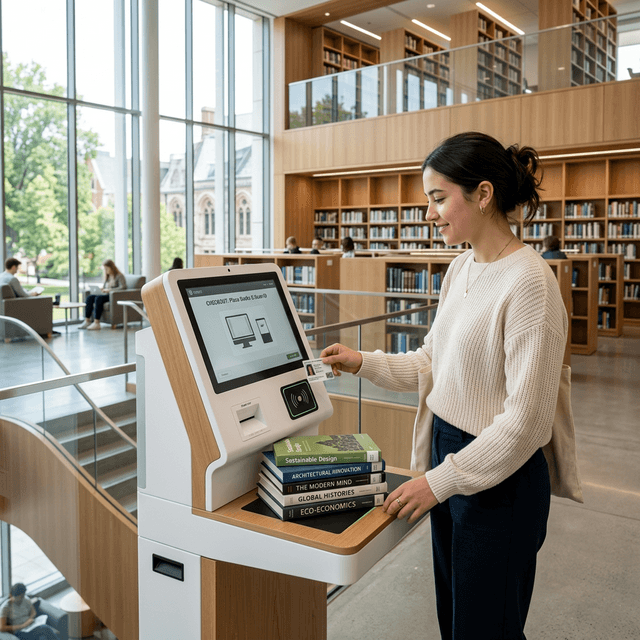
Selvbetjeningskiosker (Self-Checkout) lar brukerne stable 5–10 bøker samtidig på leseflaten. Systemet leser alt umiddelbart, deaktiverer sikkerhetsbiten og skriver ut en kvittering på få sekunder.
Smartsatte returrenner (AMH) tar imot bøker 24/7. Når boken sklir ned i renna, skannes den, registreres som innlevert og kan til og med sorteres automatisk i brønner for ny utplassering. Personalet kan bruke håndholdte staver for å skanne hyllene – og finne bortkomne bøker raskt, samtidig som de verifiserer plasseringen.
Gi lånerne mulighet til å sjekke ut og returnere varer umiddelbart, noe som reduserer køer.
Finn en feilplassert bok i løpet av sekunder ved å bare gå nedover gangen med en stav.
Automatiske bokinnleveringer oppdaterer lånerens konto umiddelbart.
Bibliotekarer går fra 'bokhåndterere' til 'informasjonspesialister'.
Et nytt sentralbibliotek ønsket å åpne med en 'ansattløs' sirkulasjonsmodell for å maksimere budsjettet for fellesskapsprogrammer.
Å overføre hele et biblioteks samling er en stor jobb, og derfor designer vi for sameksistens. Våre hybride brikker inneholder både den eksisterende strekkoden og en ny RFID-chip i samme etikett. Slik fortsetter ditt eksisterende ILS å fungere, mens ansatte gradvis går over til RFID-arbeidsflyter i sitt eget tempo.
For de fleste folkebibliotek anbefaler vi HF (13,56 MHz). Den samme frekvensen som brukes av betalingskort og NFC-telefoner, som gir svært god presisjon og vern av lesernes personvern. Store akademiske arkiver som håndterer store beholdninger på titusener av gjenstander, har nytte av UHFs hastighet. Vi vurderer samlingen din og anbefaler riktig frekvens – ikke en «one-size-fits-all»-tilnærming.
RFID gjør modellen med «timer uten bemanning» mulig. Registrerte brukere får tilgang til bygningen med medlemskortet, kan bla i samlingen og låne bøker selvstendig, og returnere via automatiske innleveringsluker. kl. 22:00 en tirsdag, eller kl. 06:00 en søndag.
Den samme infrastrukturen gir personalet lagerinnsikt: et håndholdt skannebesøk (wand-scan) av en hel hyllegang tar minutter og avdekker alle feilplasserte gjenstander. Det som tidligere tok en bibliotekar en hel vakt, tar nå bare noen få minutter ved dagens start.
Beskytt laptoper og IT-utstyr med RFID sikkerhetsporter, anti-metall-tags og automatiserte revisjoner.
Skap en sømløs, moderne opplevelse for dine lånerne.