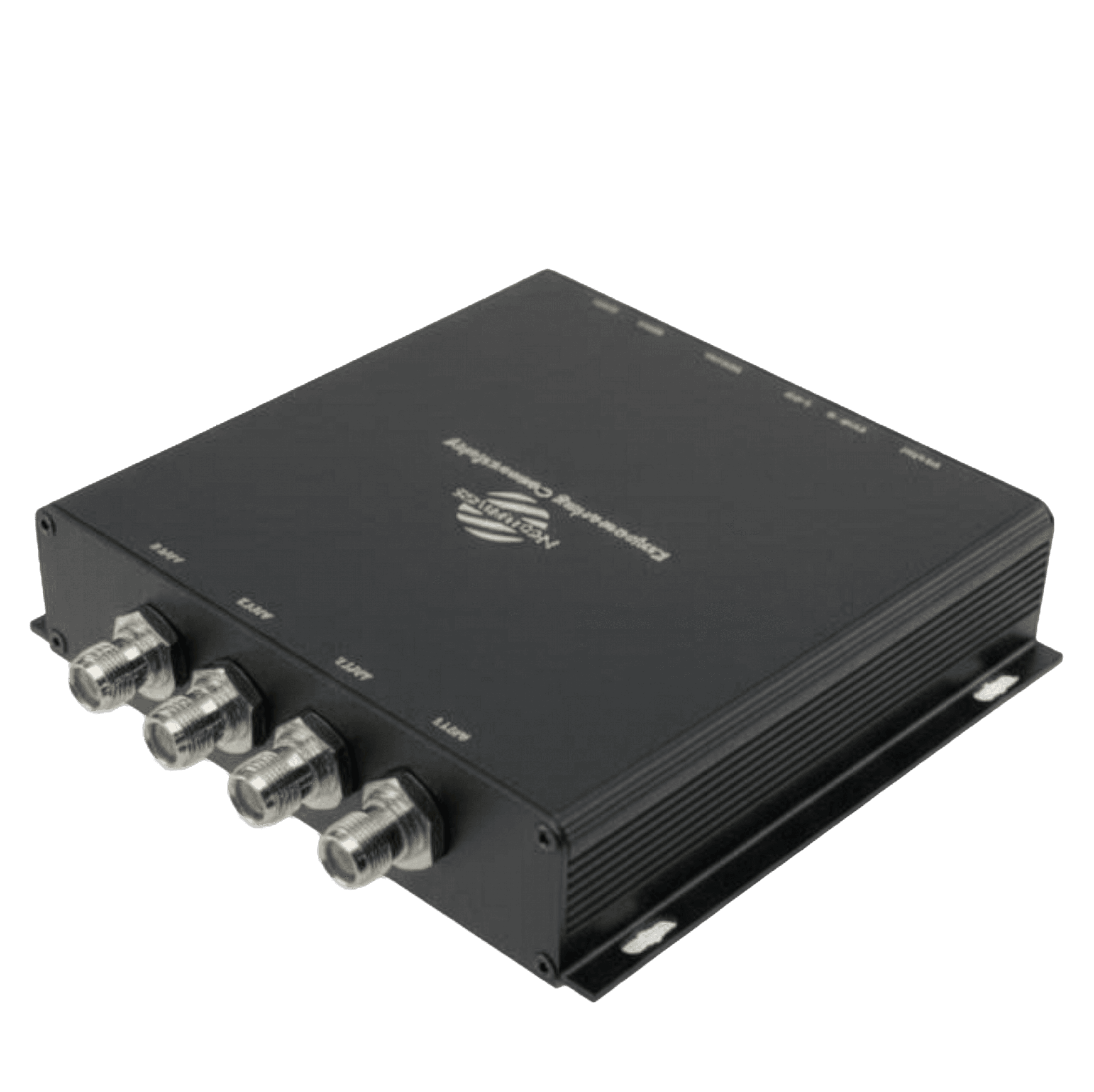
Chainway UR4 is an industrial 4-port reader operating on 865-868 MHz / 920-925 MHz / 902-928 MHz. Starting at $600. Look closely at how Nextwaves can bypass middleware costs.
Specifiche tecniche
Panoramica hardware
Il Chainway UR4 è un dispositivo RFID di livello industriale. Funziona nell'intervallo di 865-868 MHz / 920-925 MHz / 902-928 MHz e supporta lo standard EPC Global UHF C1 Gen 2, ISO 18000-6C, rendendolo ampiamente utilizzato nelle applicazioni logistiche aziendali.
Con un grado di protezione IP di IP53, offre protezione contro specifiche condizioni ambientali tipiche di magazzini o retrobottega. Il lettore utilizza PoE (optional), DC per prestazioni continue, mentre la sua velocità di lettura massima dichiarata raggiunge 1,300+.
Connettività e integrazione di rete
Nelle implementazioni moderne, l'integrazione di rete è l'ostacolo più significativo. Questo modello offre RS-232, RJ45, PoE (optional) opzioni per il trasferimento dei dati ai sistemi centrali.
Tuttavia, un importante collo di bottiglia con l'hardware Chainway legacy è la forte dipendenza da SDK proprietari (come LLRP) o costosi middleware IoT di terze parti per elaborare i dati grezzi dei tag in informazioni aziendali significative.
L'alternativa Nextwaves
Se il tuo team di ingegneri sta valutando il Chainway UR4, Nextwaves NR155 presenta un'architettura cloud-native di gran lunga superiore. I sistemi legacy comportano intrinsecamente un'elevata spesa in conto capitale attraverso il vendor lock-in e gli ecosistemi software proprietari.
Nextwaves elimina completamente questa barriera fornendo un'API REST MQTT standard direttamente sul dispositivo. I tuoi sviluppatori software possono integrare la lettura dei tag direttamente nel tuo backend ERP o WMS personalizzato in pochi giorni anziché mesi, bypassando completamente le commissioni di licenza middleware ricorrenti.
Domande frequenti
Cos'è il UR4?
The Chainway UR4 is a 4-port, fixed RFID edge device. Based on Impinj E710 / R2000 chips, it supports EPC Global UHF C1 Gen 2, ISO 18000-6C over the 865-868 MHz / 920-925 MHz / 902-928 MHz frequency bands for high-speed tracking.
Quanto costa inizialmente questa configurazione?
Hardware costs begin around $600. Keep in mind that a full deployment budget must account for up to 4 antennas, low-loss cables, integration middleware, and setting up the PoE (optional), DC infrastructure.
Perché dovrei scegliere Nextwaves invece?
Nextwaves provides embedded REST API and MQTT endpoints natively on the device. This allows web and software developers to map tag reads directly to REST payloads, bypassing complex legacy C# or Java middleware servers.
L'hardware è abbastanza resistente per i magazzini?
The unit weighs approximately 0.7 kg and measures 164 x 164 x 39 mm. An IP53 structural rating provides reasonable protection against dust and water spray, suitable for loading docks and covered warehouses.
Supporta più tipi di rete?
Network integration relies on RS-232, RJ45, PoE (optional) ports. RS-232 serial is maintained for legacy programmable logic controller (PLC) connections, while RJ45 manages modern IP traffic.
Il mio team può installarlo internamente?
Hardware installation uses standard mounting hole layouts. However, optimizing RF performance requires trained engineers to correctly map the 4 distinct antenna channels to prevent signal overlap and optimize tag orientation capture.
Come funziona la gestione remota?
Under optimal test conditions, the internally integrated chip logic is rated to process up to 1,300+ tag reads per second. Real-world speeds vary significantly based on Gen2 memory mapping.
Ho bisogno di un software proprietario per eseguirlo?
In a traditional setup, the RS-232, RJ45, PoE (optional) interfaces transmit binary or low-level hex data. This requires an external application to filter out duplicate tag events before sending the data to cloud storage.
Quale garanzia viene fornita con il lettore?
The standard warranty covers physical malfunctions for one year. Extended engineering support is recommended for teams unfamiliar with low-level UHF Gen2 memory protocols.
Le antenne sono vendute separatamente?
You are required to supply external antennas (circular or linear). Selecting the exact gain and polarization over the 865-868 MHz / 920-925 MHz / 902-928 MHz band determines the actual width of your read portal.