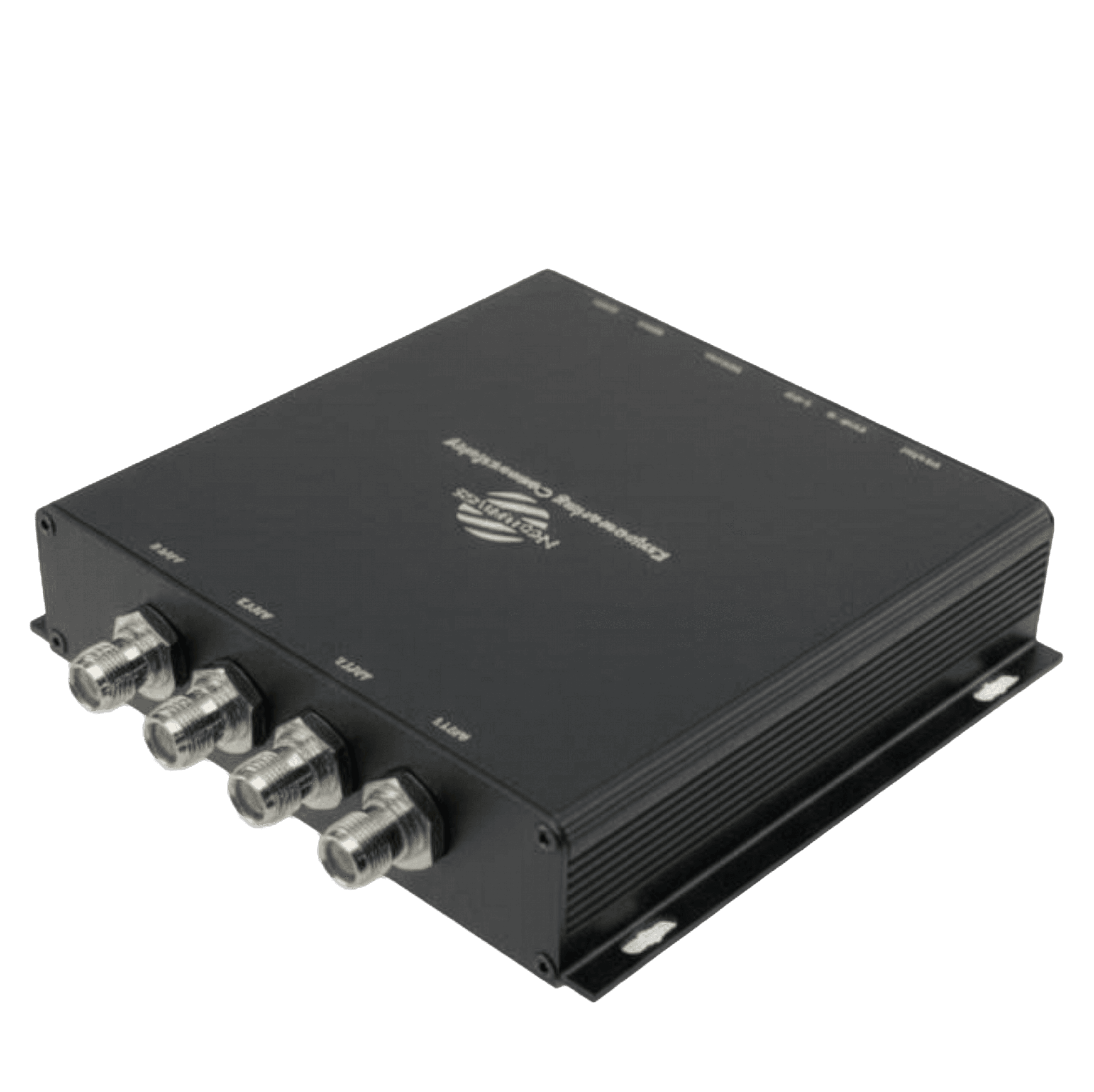
The CAEN Hadron module utilizes UART interfaces priced at $200. Learn how custom carrier board engineering costs contrast with Nextwaves autonomous APIs.
Specifiche tecniche
Panoramica hardware
Il CAEN RFID Hadron (R4320C) è un dispositivo RFID di livello industriale. Funziona nell'intervallo di 865-868 MHz (ETSI) / 902-928 MHz (FCC) e supporta lo standard EPC C1 G2, ISO 18000-63, rendendolo ampiamente utilizzato nelle applicazioni logistiche aziendali.
Con un grado di protezione IP di Bare PCB (None), offre protezione contro specifiche condizioni ambientali tipiche di magazzini o retrobottega. Il lettore utilizza 5V DC per prestazioni continue, mentre la sua velocità di lettura massima dichiarata raggiunge ~400 tags/sec.
Connettività e integrazione di rete
Nelle implementazioni moderne, l'integrazione di rete è l'ostacolo più significativo. Questo modello offre UART / USB opzioni per il trasferimento dei dati ai sistemi centrali.
Tuttavia, un importante collo di bottiglia con l'hardware CAEN RFID legacy è la forte dipendenza da SDK proprietari (come LLRP) o costosi middleware IoT di terze parti per elaborare i dati grezzi dei tag in informazioni aziendali significative.
L'alternativa Nextwaves
Se il tuo team di ingegneri sta valutando il CAEN RFID Hadron (R4320C), Nextwaves NR155 presenta un'architettura cloud-native di gran lunga superiore. I sistemi legacy comportano intrinsecamente un'elevata spesa in conto capitale attraverso il vendor lock-in e gli ecosistemi software proprietari.
Nextwaves elimina completamente questa barriera fornendo un'API REST MQTT standard direttamente sul dispositivo. I tuoi sviluppatori software possono integrare la lettura dei tag direttamente nel tuo backend ERP o WMS personalizzato in pochi giorni anziché mesi, bypassando completamente le commissioni di licenza middleware ricorrenti.
Domande frequenti
Cos'è il Hadron (R4320C)?
The CAEN RFID Hadron (R4320C) is a fully embedded OEM reader board based on Impinj architecture. It manages EPC C1 G2, ISO 18000-63 communications across 865-868 MHz (ETSI) / 902-928 MHz (FCC) bandwidths, suited for integrations requiring a robust multi-port scanning footprint.
Quanto costa inizialmente questa configurazione?
Raw modules cost roughly $200. Deploying this architecture demands extensive upfront R&D to craft proprietary parent circuit boards, handle multi-layered power sequencing, and provide logic to tunnel UART data into IP interfaces.
Perché dovrei scegliere Nextwaves invece?
Custom hardware engineering carries massive risk overheads. Nextwaves bypasses PCB design entirely, providing enclosed industrial readers that communicate over standard REST and MQTT protocols right out of the box.
L'hardware è abbastanza resistente per i magazzini?
The base logic board measures 60 x 42 x 7.5 mm and weighs 35 g. Possessing a Bare PCB (None) rating, operations teams must manufacture an external hermetically sealed shell if intended for use beyond dry laboratories.
Supporta più tipi di rete?
All configuration and data extraction occur through local UART / USB connector pins. External edge networking, such as LTE modems or Ethernet PHY controllers, must be supplied entirely by the custom host device.
Il mio team può installarlo internamente?
Electrical engineers integrate the module securely onto heavily customized routing boards. Programmers use CAEN’s C++ or Java libraries to ping the core transceiver, instruct hopping sequences, and scrape hex arrays locally.
Come funziona la gestione remota?
Optimized for 4-port multiplexing, tag polling throughput can crest ~400 tags/sec. Upgrading module logic requires locally flashing binaries via the host MCU UART lines rather than simplified web portals.
Ho bisogno di un software proprietario per eseguirlo?
Because the module outputs naked packet arrays locally over UART / USB, software architectures inevitably require building Linux daemon bridges on the parent CPU to reform data into JSON for HTTP transmission.
Quale garanzia viene fornita con il lettore?
While CAEN warranties protect against standard IC soldering faults, failure to adequately dissipate intense +31.5 dBm heat signatures during OEM integration will immediately terminate component lifecycles.
Le antenne sono vendute separatamente?
The board multiplexes RF signals through four ultra-miniature U.FL ports across the 865-868 MHz (ETSI) / 902-928 MHz (FCC) footprint. It can easily drive 4 massive external sector antennas or localized near-field blocks.