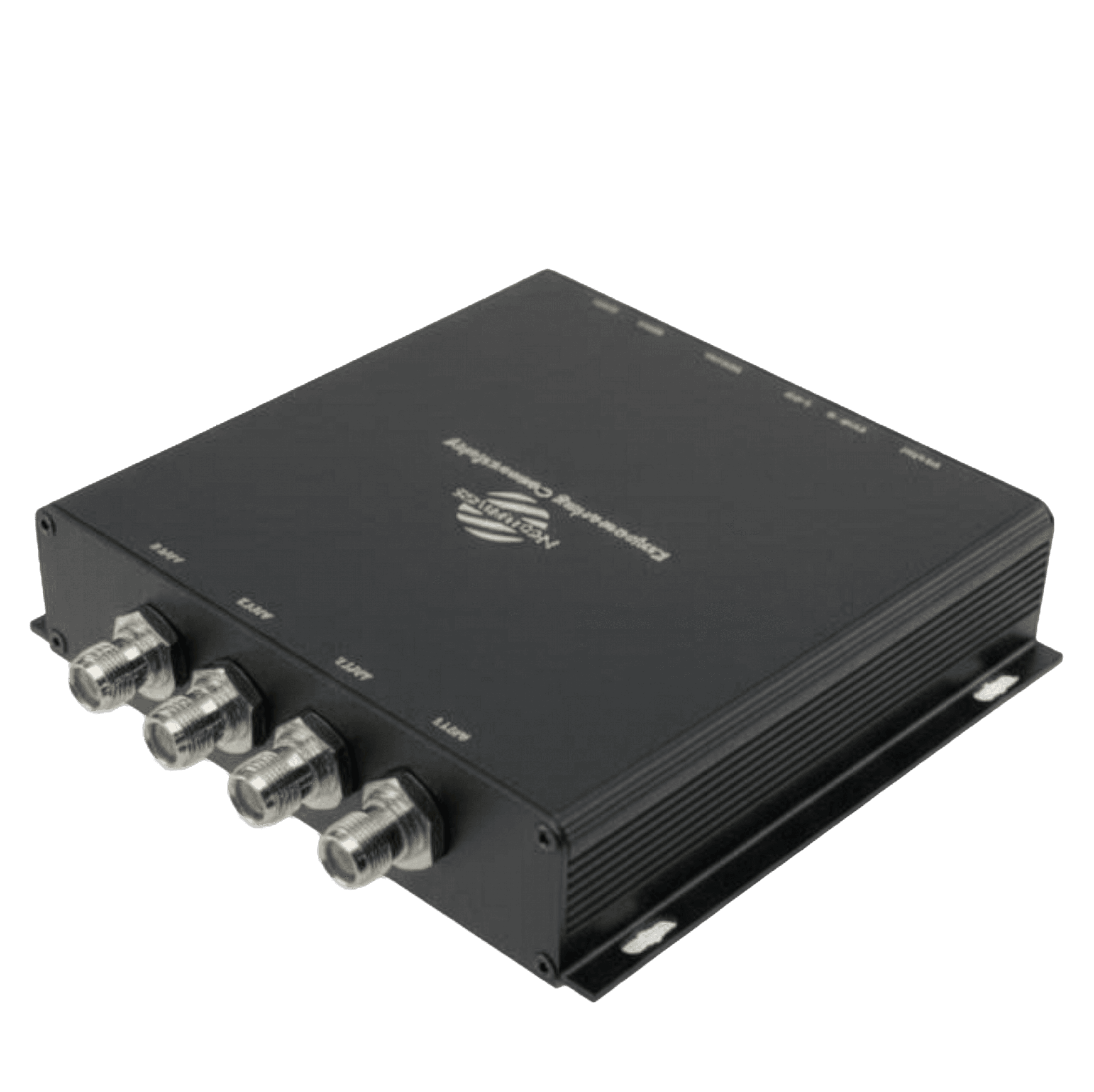
The ThingMagic M7e-Tera leverages the extreme Impinj E910 IC for $250. Analyze its integration requirements versus zero-code Nextwaves edge infrastructure.
Especificaciones técnicas
Descripción general del hardware
El ThingMagic (JADAK) M7e-Tera es un dispositivo RFID de grado industrial. Opera dentro del rango de Global (860-960 MHz) y es compatible con el estándar EPC Gen2v2, ISO 18000-63, lo que lo hace ampliamente implementado en aplicaciones de logística empresarial.
Con una clasificación IP de Bare PCB (None), ofrece protección contra condiciones ambientales específicas típicas en almacenes o trastiendas minoristas. El lector utiliza 3.3V to 5.25V DC para un rendimiento continuo, mientras que su velocidad máxima de lectura declarada alcanza up to ~1300 tags/sec.
Conectividad e integración de red
En las implementaciones modernas, la integración de la red es el obstáculo más importante. Este modelo ofrece UART Serial / USB opciones para transferir datos a los sistemas centrales.
Sin embargo, un cuello de botella importante con el hardware ThingMagic (JADAK) heredado es la gran dependencia de los SDK (como LLRP) propietarios o middleware de IoT de terceros costosos para procesar datos de etiquetas sin procesar en inteligencia empresarial significativa.
La alternativa Nextwaves
Si su equipo de ingeniería está evaluando el ThingMagic (JADAK) M7e-Tera, el Nextwaves NR155 presenta una arquitectura nativa de la nube muy superior. Los sistemas heredados impulsan inherentemente un alto gasto de capital a través del bloqueo del proveedor y los ecosistemas de software propietarios.
Nextwaves elimina por completo esta barrera al proporcionar una API REST MQTT estándar directamente en el dispositivo. Sus desarrolladores de software pueden integrar la lectura de etiquetas directamente en su backend ERP o WMS personalizado en días en lugar de meses, evitando por completo las tarifas recurrentes de licencias de middleware.
Preguntas frecuentes
¿Qué es el/la M7e-Tera?
The ThingMagic (JADAK) M7e-Tera is an OEM embedded scanning logic board powered by the flagship Impinj E910 IC. Tuned to process dense EPC Gen2v2, ISO 18000-63 tag populations across Global (860-960 MHz) spans, it serves as the core logic block for bespoke industrial dock portal readers.
¿Cuánto cuesta esta configuración inicialmente?
Priced near $250 per bare module. Heavy engineering capital must be allocated for fabricating multi-layer PCB housing units, powerful embedded host processors, physical network stacks, and active convection cooling hardware.
¿Por qué debería elegir Nextwaves en su lugar?
OEM module embedding creates steep hardware maintenance overheads. Nextwaves eliminates PCB-level engineering entirely by providing fully realized intelligent arrays featuring native HTTPS/MQTT endpoints that skip legacy serial bindings.
¿Es el hardware lo suficientemente duradero para almacenes?
Being an embedded component weighing only 3 g within a 46 x 26 x 4 mm footprint, it inherently maintains a Bare PCB (None) rating. Deploying this logic into real environments hinges solely upon the IP rating of the OEM-built exterior case.
¿Admite múltiples tipos de red?
Data routing relies strictly on localized UART Serial / USB solder pins. All TCP/IP networking, IoT security protocol management, and connection fallbacks are the direct responsibility of the auxiliary host Microcontroller.
¿Puede mi equipo instalar esto internamente?
Developers integrate the core by soldering it to a logic board and polling its operation directly via the ThingMagic Mercury API. Proper buffer processing is required to handle the massive asynchronous data streams.
¿Cómo funciona la gestión remota?
Utilizing the highest-end E910 core, throughput scales up to ~1300 tags/sec in optimized environments. Managing firmware lifecycles requires specialized UART flashes pushed from the master OEM processor.
¿Necesito software propietario para ejecutarlo?
Connecting localized reads directly into enterprise clouds requires writing host bridges. The parent Linux or RTOS MCU must translate the high-volume UART hexadecimal dumps into sanitized JSON bundles before firing standard webhooks.
¿Qué garantía viene con el lector?
The component warranties only reflect direct factory IC defects. OEM integration pipelines that fail to safely restrict power output loads or inadequately dissipate heat can quickly permanently degrade transceiver lifespan.
¿Se venden las antenas por separado?
Its embedded U.FL multiplex logic ports handle up to four external antennas across the Global (860-960 MHz) spectrums. Peak power hits +31.5 dBm, capable of penetrating highly dense, interference-heavy factory palettes.