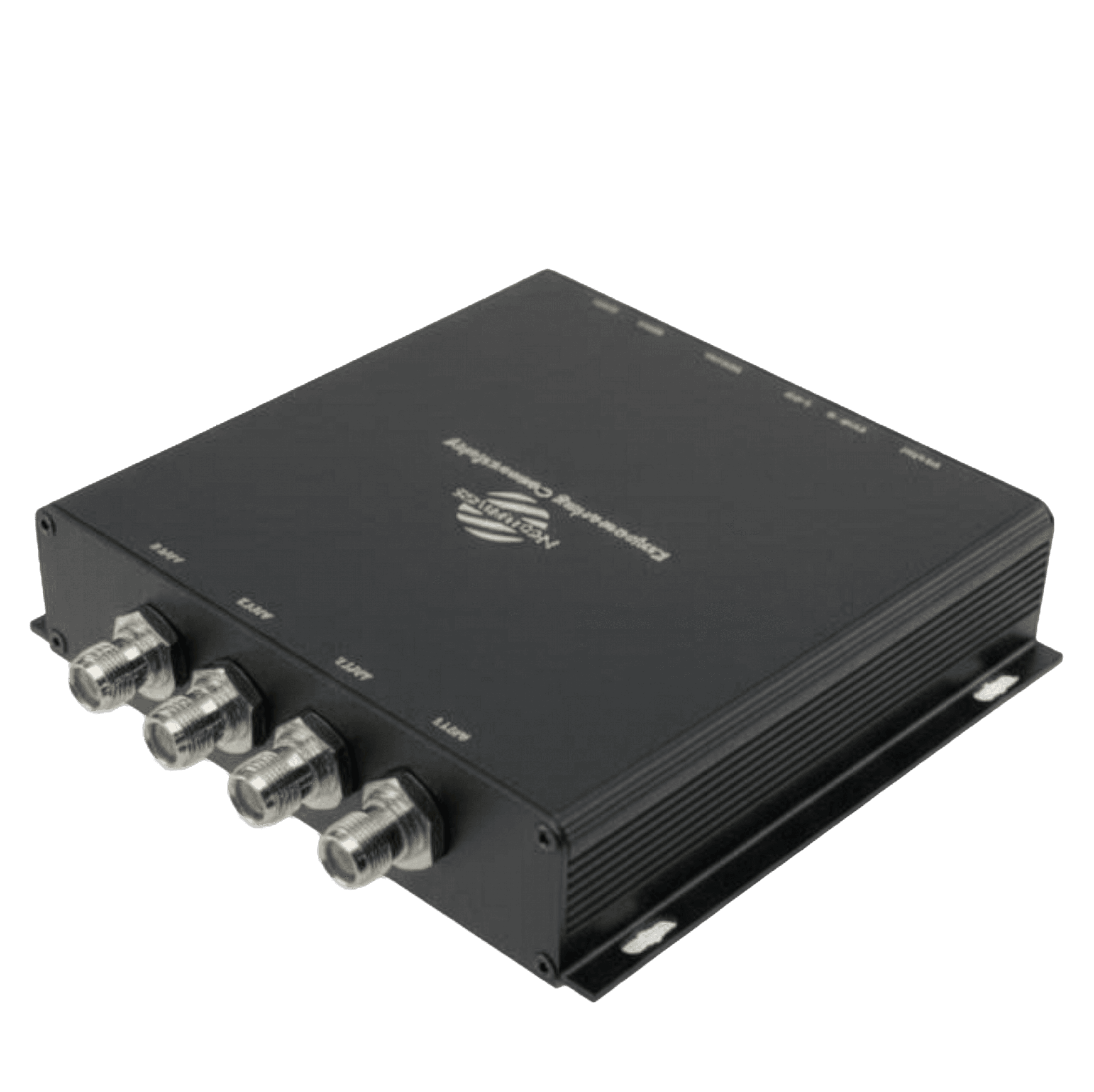
ThingMagic (JADAK) M7e-Mega Revisión: Especificaciones y alternativas

Ingeniería Nextwaves··Revisión de hardware·3 min de lectura
ThingMagic (JADAK) M7e-Mega

The ThingMagic M7e-Mega is an $200 Impinj E710 OEM module. Evaluate its raw UART integration requirements against Nextwaves standalone IP gateways.

Especificaciones técnicas

FrecuenciaGlobal (860-960 MHz)
ProtocoloEPC Gen2v2, ISO 18000-63
ConectividadUART Serial / USB
Clasificación IPBare PCB (None)
Dimensiones46 x 26 x 4 mm
Peso3 g
Fuente de alimentación3.3V to 5.25V DC
Velocidad de lecturaup to ~800 tags/sec
Precio estimado$200

Descripción general del hardware

El ThingMagic (JADAK) M7e-Mega es un dispositivo RFID de grado industrial. Opera dentro del rango de Global (860-960 MHz) y es compatible con el estándar EPC Gen2v2, ISO 18000-63, lo que lo hace ampliamente implementado en aplicaciones de logística empresarial.

Con una clasificación IP de Bare PCB (None), ofrece protección contra condiciones ambientales específicas típicas en almacenes o trastiendas minoristas. El lector utiliza 3.3V to 5.25V DC para un rendimiento continuo, mientras que su velocidad máxima de lectura declarada alcanza up to ~800 tags/sec.

Conectividad e integración de red

En las implementaciones modernas, la integración de la red es el obstáculo más importante. Este modelo ofrece UART Serial / USB opciones para transferir datos a los sistemas centrales.

Sin embargo, un cuello de botella importante con el hardware ThingMagic (JADAK) heredado es la gran dependencia de los SDK (como LLRP) propietarios o middleware de IoT de terceros costosos para procesar datos de etiquetas sin procesar en inteligencia empresarial significativa.

La alternativa Nextwaves

Si su equipo de ingeniería está evaluando el ThingMagic (JADAK) M7e-Mega, el Nextwaves NR155 presenta una arquitectura nativa de la nube muy superior. Los sistemas heredados impulsan inherentemente un alto gasto de capital a través del bloqueo del proveedor y los ecosistemas de software propietarios.

Nextwaves elimina por completo esta barrera al proporcionar una API REST MQTT estándar directamente en el dispositivo. Sus desarrolladores de software pueden integrar la lectura de etiquetas directamente en su backend ERP o WMS personalizado en días en lugar de meses, evitando por completo las tarifas recurrentes de licencias de middleware.


Preguntas frecuentes

¿Qué es el/la M7e-Mega?

The ThingMagic (JADAK) M7e-Mega is a high-grade surface mount module leveraging the flagship Impinj E710 IC design. Sweeping over Global (860-960 MHz) spans, it targets EPC Gen2v2, ISO 18000-63 tags intended to build bespoke fixed overhead portal or tunnel systems.

¿Cuánto cuesta esta configuración inicialmente?

Single raw modules cost roughly $200. The OEM assumes significant financial risk managing mass PCB assembly processes, specialized thermal chassis designs, embedded Linux processor routing, and full FCC testing protocols.

¿Por qué debería elegir Nextwaves en su lugar?

Integrating raw modules ties engineering resources directly to hardware debugging. Nextwaves provides out-of-the-box sealed edge IP readers equipped with secure web APIs, letting developers focus solely on backend dashboarding.

¿Es el hardware lo suficientemente duradero para almacenes?

Physically, the wafer is unshielded, holding a strict Bare PCB (None) rating over its 46 x 26 x 4 mm and 3 g footprint. The enclosure engineered by the OEM dictates its ultimate moisture and dust tolerances.

¿Admite múltiples tipos de red?

Data routing on the board is bottlenecked directly through UART Serial / USB surface pins. Bridging into a standard network necessitates marrying the module to a robust Raspberry Pi or similar generic MCU.

¿Puede mi equipo instalar esto internamente?

Setup demands surface-mount soldering the transceiver array logic. Programmers must use the ThingMagic Mercury SDK to interface directly with the module and orchestrate the tight RF hopping intervals and anti-collision windows.

¿Cómo funciona la gestión remota?

Because it utilizes the robust E710 IC, read throughput can theoretically hit up to ~800 tags/sec. Maintaining this relies inherently on the host CPU preventing localized serial buffer choke points.

¿Necesito software propietario para ejecutarlo?

Software routing mandates building daemon processes running on a parent Linux/RTOS box that translates localized hex streams passing out of the UART logic into compliant JSON packages shot towards cloud REST APIs.

¿Qué garantía viene con el lector?

While the base silicon holds standard defect warranties, guaranteeing the lifecycle of customized high-power RF electronics relies entirely upon how effectively the OEM dissipates +30 dBm thermal build up.

¿Se venden las antenas por separado?

Equipped with up to four U.FL multiplexed antenna connectors operating within Global (860-960 MHz) constraints. Delivering up to +30 dBm natively, it provides the core engineering block required for enterprise zone monitoring.