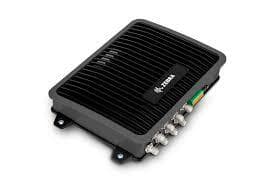
Zebra FX9600 Alternative: Why the Nextwaves NR-155 Fixed IoT Reader is the Smart Replacement
The world of logistics, manufacturing, and retail is in a constant state of evolution. The need for greater visibility, efficiency, and automation has never been more critical. In this landscape, Radio Frequency Identification (RFID) technology has emerged as a cornerstone for tracking assets, managing inventory, and optimizing supply chains. For years, the Zebra FX9600 has been a dominant force in the fixed UHF RFID reader market, known for its ruggedness and reliability. However, as the demands of the industry shift towards the Internet of Things (IoT), a new generation of readers is emerging, challenging the status quo. One such contender is the Nextwaves Fixed IoT Reader NR-155, a device designed from the ground up for the connected era. This article will provide an in-depth comparison of these two readers, exploring their features, performance, and suitability for modern applications. We will delve into the technical specifications, the ease of integration, and the total cost of ownership, ultimately making a case for why the NR-155 represents a significant step forward and a compelling alternative to the venerable FX9600.
Understanding RFID Technology: A Quick Primer
Before diving into the comparison, it helps to understand what RFID actually is and why it matters. RFID stands for Radio Frequency Identification. It is a technology that uses radio waves to automatically identify and track objects. An RFID system consists of three main components: a tag (also called a transponder), a reader (also called an interrogator), and an antenna. The tag is attached to the object you want to track, and it contains a small chip that stores data, such as a unique identifier. The reader sends out radio waves through the antenna, and when a tag enters the reader's field, it responds by transmitting its stored data back to the reader. There are three main types of RFID, and they differ based on the frequency of the radio waves they use. Low Frequency (LF) RFID operates at around 125 to 134 kHz. It has a short read range of just a few centimeters, and it is commonly used for animal tracking and access control cards. High Frequency (HF) RFID operates at 13.56 MHz. It has a slightly longer read range of up to about one meter, and it is the technology behind NFC (Near Field Communication), which is used in contactless payment systems and smart cards. Ultra-High Frequency (UHF) RFID operates in the 860 to 960 MHz range. It has the longest read range, often reaching several meters, and it can read hundreds of tags per second. This makes UHF RFID the technology of choice for supply chain management, warehouse operations, and retail inventory tracking. Both the Zebra FX9600 and the Nextwaves NR-155 are UHF RFID readers, which means they are designed for high-volume, long-range applications.
The Incumbent: Zebra FX9600 - A Legacy of Reliability
The Zebra FX9600 has earned its reputation as a workhorse in the RFID industry. Its robust design and consistent performance have made it a popular choice for a wide range of applications, from warehouse and dock door portals to production line monitoring. The FX9600 is available in both 4-port and 8-port configurations, providing flexibility for different deployment scenarios. Its die-cast aluminum housing and IP53 rating ensure that it can withstand the rigors of industrial environments, including dust, moisture, and extreme temperatures ranging from -20 degrees Celsius to +55 degrees Celsius. The FX9600 boasts high read rates and long read ranges, enabling it to capture tag data quickly and accurately, even in challenging RF environments. With a maximum transmit power of +33 dBm and a receive sensitivity of -86 dBm, the FX9600 delivers solid RF performance. It supports Power over Ethernet (PoE and PoE+), which simplifies installation and reduces cabling costs. The FX9600 also has a host of connectivity options, including 10/100 BaseT Ethernet, USB Host and Client (Type A and B), and a serial port (DB9), as well as GPIO with 4 inputs and 4 outputs for connecting to external devices such as light stacks and sensors.
However, the FX9600 was designed in an era before the widespread adoption of IoT. While it can be integrated into modern systems, it often requires middleware and custom software development to connect to cloud platforms and other IoT devices. This can add complexity and cost to a project, and it can limit the scalability and flexibility of the solution. Furthermore, the FX9600 is a relatively large and heavy device, measuring 273 by 184 by 51 millimeters and weighing 2.13 kilograms. This can make it difficult to install in space-constrained environments. Its 10/100 Ethernet interface, while sufficient for many applications, does not include any native IoT protocol support. As the industry moves towards a more connected and data-driven future, the limitations of the FX9600 are becoming increasingly apparent. There have also been reports from users in the field about the FX9600 periodically stopping tag reads, requiring reboots or power cycles to restore functionality. Some users have even noted that the FX9600 does not perform as well as its predecessor, the FX9500, in certain scenarios. These issues, combined with the aging architecture, have led many system integrators and end users to start looking for alternatives.
The Challenger: Nextwaves NR-155 - A Native IoT Solution
The Nextwaves NR-155 is a new breed of RFID reader, designed specifically for the age of IoT. It is a compact, lightweight, and powerful device that is packed with features that make it easy to integrate into modern systems. The NR-155 is built around a powerful industrial dual-core 32-bit RISC MCU running a Real-Time Operating System (RTOS) and a high-performance UHF RFID engine, which gives it the ability to read up to 400 tags per second with exceptional sensitivity. It has four RP-TNC antenna ports, which provide flexibility for creating precise read zones. The output power is adjustable from 0 dBm to 33 dBm in fine 1 dB steps, giving integrators precise control over the read zone. The receiver sensitivity is rated at -85 dBm, and the reader supports the full global UHF RFID band from 860 MHz to 960 MHz.
The NR-155's most significant differentiator is its native support for MQTT and MQTTS, the standard messaging protocols for IoT. This allows the reader to connect directly to cloud platforms and local brokers without the need for middleware. The NR-155 publishes tag data using standard MQTT topics with JSON payloads, which makes it easy to consume and process by other applications. This dramatically simplifies the integration process and reduces the time and cost of development. The NR-155 also has a 10/100 Ethernet port, a USB Type-B virtual COM port, and an RS232 serial port, as well as 6 channels of GPIO (2 digital inputs and 4 digital outputs). It supports over-the-air (OTA) firmware updates, which makes it easy to keep the device up-to-date with the latest features and security patches. The NR-155 is also designed for 24/7 continuous operation, with an aluminum enclosure that provides durability and effective thermal management. At just 155 by 155 by 32 millimeters and weighing only 650 grams, the NR-155 is dramatically smaller and lighter than the FX9600, making it easy to install in a variety of environments. Priced at around $380, the NR-155 is also a fraction of the cost of the FX9600, which typically sells for $1,274 to $2,359 depending on the configuration.
Head-to-Head: A Detailed Specification Comparison
To provide a clearer picture of the differences between these two readers, let's compare them across a range of key specifications and features in a structured format.
Hardware and System
| Processor | Proprietary (described as "best-in-class") | Industrial Dual-Core 32-bit RISC MCU | Operating System | Linux | Real-Time Operating System (RTOS) | Network Protocol | TCP/IP (requires middleware for IoT) | Native MQTT / MQTTS | API / Integration | Proprietary Zebra SDK | Standard MQTT Topics with JSON Payload | Firmware Upgrade | Manual via host application | Over-The-Air (OTA) |
RFID Characteristics
| RF Engine | Proprietary | High-Performance UHF RFID Engine | Air Protocols | ISO 18000-63 (EPC Class 1 Gen 2 V2) | ISO/IEC 18000-6C / EPC Global C1Gen2 | Frequency | 902-928 MHz (US), 865-868 MHz (EU) | Full Band 860-960 MHz (Global) | Antenna Ports | 4 or 8 monostatic (RP-TNC) | 4 monostatic (RP-TNC) | Transmit Power | 0 to +33.0 dBm | 0 to +33.0 dBm (1 dB steps) | Receive Sensitivity | -86 dBm | -85 dBm | Read Speed | High (exact rate varies by configuration) | Up to 400 tags/second | Channel Bandwidth | Not specified | Less than 200 KHz | Work Mode | Fixed Frequency / Frequency Hopping | Fixed Frequency / Frequency Hopping (FHSS) |
Connectivity and I/O
| Ethernet | 10/100 BaseT (RJ45) | 10/100 Base-T (RJ45) with native MQTT | USB | USB Host and Client (Type A and B) | 1x USB Type-B (Virtual COM) | Serial | DB9 RS232 | 1x RS232 | GPIO | 4 inputs, 4 outputs (optically isolated) | 2 digital inputs, 4 digital outputs | IoT Protocol | None (requires middleware) | Native MQTT / MQTTS | Visual Indicators | Standard LEDs | 1x Power LED, 1x Connection LED (MQTT/Network Status) |
Physical and Environmental
| Dimensions | 273 x 184 x 51 mm | 155 x 155 x 32 mm | Weight | 2.13 kg (4.4 lbs) | 650 g (1.43 lbs) | Housing Material | Die-cast aluminum | Aluminum alloy box | IP Rating | IP53 | Indoor use recommended | Operating Temperature | -20 to +55 degrees Celsius | -20 to +70 degrees Celsius | Power Supply | PoE (802.3af), PoE+ (802.3at), +24V DC | DC 12V/5A | Power Consumption | Not specified (higher due to PoE support) | Max 9W at 33 dBm output |
Pricing
| Zebra FX9600 (4-port) | $1,274 to $1,800 | Zebra FX9600 (8-port) | $2,300 to $2,400 | Nextwaves NR-155 (4-port) | $370 to $380 |
Connectivity and Integration: The Core Difference
The most significant difference between the FX9600 and the NR-155 lies in their connectivity and integration capabilities. The FX9600 was designed as a traditional RFID reader, and it relies on a host computer or middleware application to process and manage tag data. It can be connected to a network via its 10/100 Ethernet port, but it does not have any built-in IoT capabilities. To connect the FX9600 to a cloud platform like AWS IoT, Azure IoT Hub, or Google Cloud IoT, you will need to use middleware, such as a gateway device or a custom software application running on a separate server. This can add complexity and cost to your project, and it can also introduce a single point of failure. If the middleware goes down, your entire RFID system goes dark.
The NR-155, on the other hand, is a native IoT device. It has built-in support for MQTT and MQTTS, which allows it to connect directly to cloud platforms and local brokers without the need for any middleware whatsoever. MQTT is a lightweight messaging protocol that was specifically designed for IoT applications. It uses a publish/subscribe model, where the reader publishes tag data to a topic on the broker, and any application that is subscribed to that topic receives the data. The NR-155 publishes tag data using standard MQTT topics with JSON payloads, which makes it incredibly easy to consume and process by other applications. A developer can write a simple Python script, a Node.js application, or use any other programming language that supports MQTT to start receiving and processing tag data from the NR-155 in a matter of minutes. This is a stark contrast to the FX9600, where the integration process can take days or even weeks, depending on the complexity of the deployment. For legacy and hybrid systems, the NR-155 also supports USB virtual COM and RS232, ensuring backward compatibility with older infrastructure.
The Software Ecosystem and Developer Experience
Beyond the hardware, the software ecosystem and developer experience are critical factors in the success of any RFID deployment. This is another area where the Zebra FX9600 and the Nextwaves NR-155 diverge significantly.
Zebra's Proprietary Ecosystem
Zebra has a long history in the enterprise mobility and data capture market, and they have built a comprehensive, albeit complex, software ecosystem around their products. For the FX9600, this includes the Zebra RFID SDK, which provides a set of APIs for developers to interact with the reader. While the SDK is powerful, it has a steep learning curve and requires specialized knowledge of Zebra's proprietary protocols, including LLRP (Low Level Reader Protocol). Developers often need to spend a significant amount of time reading documentation and experimenting with code to get the reader to perform as expected. Furthermore, the FX9600's Linux-based operating system, while offering some flexibility for running embedded applications directly on the reader, also requires developers to have a strong understanding of embedded Linux development. This can be a significant barrier for developers who are more accustomed to working with modern web technologies and cloud-native tools. The result is that developing for the FX9600 can be a slow and expensive process, often requiring the expertise of specialized consultants or system integrators who charge premium rates for their knowledge.
Nextwaves' Open and Modern Approach
Nextwaves has taken a completely different approach with the NR-155. Instead of creating a proprietary ecosystem, they have embraced open standards and modern technologies. The NR-155's native support for MQTT is a prime example of this philosophy. MQTT is a lightweight and easy-to-use messaging protocol that is widely supported by virtually every cloud platform and IoT framework in existence. This means that developers can use their existing skills and tools to integrate the NR-155 into their applications without learning any new proprietary protocols. The reader's use of JSON for data payloads further simplifies the integration process, as JSON is a human-readable and machine-friendly format that is supported by virtually every programming language. Nextwaves also provides a comprehensive set of documentation, an SDK, and a user-friendly Reader Connect Tool for configuring the reader. This makes it easy for developers to get up and running quickly, without the need for specialized training or expertise. The result is a developer experience that is far more streamlined and efficient than that of the FX9600. This can lead to significant savings in development time and cost, and it can also help to accelerate the time-to-market for new RFID applications.
Integration Challenges: The Hidden Costs of Legacy Systems
When evaluating the total cost of ownership of an RFID system, it is important to look beyond the initial purchase price of the hardware. The cost of integration can often be a significant, and sometimes hidden, expense. This is particularly true when dealing with legacy systems like the Zebra FX9600.
The Middleware Trap
The biggest integration challenge with the FX9600 is its lack of native IoT capabilities. To connect the reader to a cloud platform or other IoT devices, you will need to use middleware. This can take the form of a gateway device, a custom software application, or a cloud-based service like Zebra's own IoT Connector. Regardless of the approach you choose, middleware adds complexity, cost, and a potential single point of failure to your system. It also requires ongoing maintenance and support, which can further increase the total cost of ownership. The middleware needs to be updated, patched, and monitored, and if it fails, your entire RFID data pipeline stops. The middleware trap is a common problem with legacy RFID systems, and it is one of the main reasons why many companies are now looking for a more modern and streamlined solution.
The Freedom of Native IoT
The Nextwaves NR-155, with its native support for MQTT, completely eliminates the need for middleware. This dramatically simplifies the integration process and reduces the time and cost of development. With the NR-155, you can connect the reader directly to your cloud platform or local broker and start collecting data in minutes. This not only saves you money, but it also gives you more flexibility and control over your data. You are no longer locked into a proprietary ecosystem, and you are free to choose the cloud platform and other IoT devices that best meet your needs. Whether you are using AWS IoT Core, Azure IoT Hub, HiveMQ, Mosquitto, or any other MQTT broker, the NR-155 will connect seamlessly. This freedom and flexibility are essential for building scalable and future-proof RFID solutions.
Security in the Connected Age
As RFID systems become increasingly connected to the internet, security becomes a paramount concern. A breach in an RFID system could lead to data theft, operational disruption, or even physical security risks. The security models of the Zebra FX9600 and the Nextwaves NR-155 reflect the different eras in which they were designed.
The FX9600 was designed with a traditional, perimeter-based security model in mind. The assumption is that the reader will be deployed on a secure corporate network, protected by firewalls and other network security appliances. The reader itself has limited built-in security features for its data communications. To secure the data in transit to a cloud platform, you would need to implement a separate VPN or other network-level encryption solution through your middleware layer. This adds another layer of complexity and cost to the system. The lack of over-the-air (OTA) update capabilities also means that security patches must be applied manually, which can be a time-consuming and error-prone process, especially across a large fleet of readers.
The Nextwaves NR-155, in contrast, was designed with security as a core feature. It supports MQTTS, which is the secure version of MQTT. MQTTS uses TLS encryption to secure the communication channel between the reader and the broker. This ensures that all data is encrypted in transit, protecting it from eavesdropping and man-in-the-middle attacks. The NR-155's support for OTA firmware updates is another key security feature. It allows security patches and other updates to be deployed quickly and easily across the entire fleet, without the need for manual intervention. This helps to ensure that every reader in your deployment is always protected against the latest threats. The NR-155's security-by-design approach provides a much higher level of protection than the FX9600's perimeter-based model. This is essential for modern IoT deployments, where devices are often deployed in distributed environments and are exposed to a wide range of threats.
Scalability and Fleet Management
As businesses grow, their RFID deployments need to scale accordingly. The ability to easily deploy, manage, and maintain a large fleet of readers is a critical factor in the long-term success of any RFID project. This is another area where the architectural differences between the FX9600 and the NR-155 have a significant impact.
Managing a large fleet of Zebra FX9600 readers can be a significant challenge. Each reader needs to be configured and managed individually, which can be a time-consuming and error-prone process. Firmware updates must be applied manually to each reader, which can be a logistical nightmare for a large deployment spread across multiple sites. The lack of a centralized, cloud-based management platform makes it difficult to monitor the health and status of the readers in real time, and it can be difficult to troubleshoot problems when they occur. The need for middleware also adds to the management burden, as the middleware itself needs to be maintained, updated, and monitored. As the number of readers grows, the complexity of managing the system increases significantly. This can lead to a situation where the cost and effort of managing the system outweigh the benefits of the RFID deployment.
The Nextwaves NR-155, with its IoT-native architecture, is designed for scalability and ease of management from the start. Because each reader connects directly to an MQTT broker, the broker itself becomes a centralized point of control for the entire system. It can be used to monitor the health and status of every reader, send configuration commands, and receive data, all from a single dashboard. Firmware updates can be deployed over-the-air to the entire fleet, which ensures that all readers are always running the latest software. The NR-155's lightweight and compact design also makes it easy to deploy new readers as needed, without requiring heavy mounting hardware or complex cabling. The result is a system that is far more scalable and manageable than a traditional RFID deployment based on legacy readers like the FX9600.
Use Case Scenarios: Where the NR-155 Shines
The technical specifications and architectural differences tell part of the story, but to truly understand the impact of the NR-155, let's explore a few real-world scenarios where it excels.
Smart Retail Inventory Management
A large retail chain wants to implement a real-time inventory management system across its hundreds of stores. The goal is to have a continuously updated view of stock levels on the sales floor and in the back room, which will help to reduce stockouts, optimize replenishment, and improve the customer experience. With the Zebra FX9600, this would be a complex and expensive undertaking. Each store would require one or more host computers to manage the readers, and a team of developers would be needed to create the middleware to connect the readers to the cloud-based inventory management system. The total cost of ownership would be high, and the system would be difficult to scale across hundreds of locations. With the Nextwaves NR-155, the deployment would be much simpler and more cost-effective. The readers could be connected directly to the cloud via MQTT, eliminating the need for host computers and middleware at each store. The system would be easy to scale by simply adding more readers and subscribing them to the same MQTT broker. The NR-155's compact size would also make it easy to install in a variety of locations within the store, such as on shelves, in fitting rooms, at receiving docks, and at the point of sale. The cost savings from eliminating middleware and host computers alone could be tens of thousands of dollars across a large retail chain.
Manufacturing Work-in-Progress Tracking
A manufacturing company wants to track its work-in-progress as it moves through the production line. The goal is to have a real-time view of the location and status of each item, which will help to identify bottlenecks, improve efficiency, and reduce lead times. With the Zebra FX9600, this would be a challenging deployment. The readers would need to be mounted in strategic locations along the production line, and the cabling would need to be carefully managed. The readers would also need to be connected to a host computer running middleware, which would add to the complexity and cost of the system. With the Nextwaves NR-155, the deployment would be much simpler. The readers' compact size and light weight (just 650 grams) would make them easy to mount in a variety of locations, even in tight spaces on the production line. The readers could be connected directly to the factory's MQTT broker, which could then feed data into the Manufacturing Execution System (MES) or Enterprise Resource Planning (ERP) system. The system would be easy to manage and scale, and it would provide the real-time visibility that the company needs to optimize its production process. The NR-155's GPIO channels also allow it to interface directly with PLCs and other automation equipment on the factory floor.
Warehouse Dock Door and Portal Monitoring
A distribution center needs to track pallets and cases as they move through dock doors. This is a classic RFID application, and the Zebra FX9600 has been widely used for this purpose. However, the NR-155 offers a compelling alternative. Its four antenna ports are sufficient for most dock door configurations, and its native MQTT connectivity allows the data to be streamed directly to the warehouse management system (WMS) in the cloud. The NR-155's wider operating temperature range (up to +70 degrees Celsius compared to the FX9600's +55 degrees Celsius) also makes it more suitable for dock door environments, which can experience extreme temperature fluctuations. And at a fraction of the cost of the FX9600, the NR-155 allows the distribution center to deploy more readers at more dock doors, improving overall visibility and throughput.
Total Cost of Ownership: The Bigger Picture
When making a technology investment, it is crucial to look beyond the initial purchase price and consider the total cost of ownership (TCO). TCO includes not only the cost of the hardware, but also the cost of software, integration, maintenance, and support over the life of the product. This is an area where the Zebra FX9600 and the Nextwaves NR-155 differ dramatically.
The Zebra FX9600 has a significantly higher initial purchase price than the Nextwaves NR-155. A single 4-port FX9600 reader typically costs between $1,274 and $1,800, while an 8-port model can exceed $2,300. But the hardware cost is just the beginning. The real cost of the FX9600 lies in its complex and proprietary ecosystem. To integrate the FX9600 into a modern IoT application, you will need to invest in middleware, which can range from a few hundred dollars for a basic gateway to thousands of dollars for a full-featured integration platform. You will also need to hire or train developers with specialized knowledge of Zebra's proprietary APIs and protocols. This can add tens of thousands of dollars to the cost of a project. The ongoing maintenance and support costs for the FX9600 can also be substantial. The lack of OTA firmware updates means that security patches and other updates must be applied manually, which requires on-site visits or remote access to each individual reader. The complexity of the system also makes it more difficult to troubleshoot problems, which can lead to longer downtime and higher support costs.
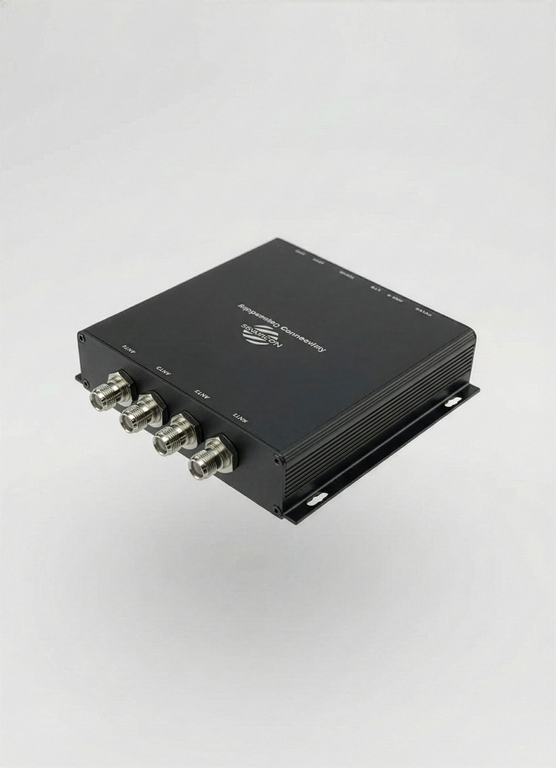
The Nextwaves NR-155, with its open and modern architecture, offers a much lower TCO. The initial purchase price of the NR-155 is around $380, which is roughly 70 to 80 percent less than the FX9600. But the real savings come from the reduced cost of integration and maintenance. The NR-155's native support for MQTT eliminates the need for middleware, which can save you thousands of dollars in software and development costs. The use of open standards and modern technologies also makes it much easier and faster to integrate the NR-155 into your applications. A competent developer can have the NR-155 sending data to a cloud platform in less than an hour. The NR-155's support for OTA firmware updates also helps to reduce the ongoing maintenance costs. Security patches and other updates can be deployed quickly and easily to the entire fleet, without the need for on-site visits. The simplicity of the system also makes it easier to troubleshoot problems, which can lead to shorter downtime and lower support costs. When you consider all of these factors, it is clear that the Nextwaves NR-155 offers a far superior TCO compared to the Zebra FX9600.
The Future is Connected: Why IoT-Native RFID is the Way Forward
The RFID industry is at a crossroads. The traditional model of RFID, which relies on host computers and middleware, is no longer sufficient for the demands of the modern world. Businesses today need real-time data, cloud connectivity, and the ability to scale their deployments quickly and easily. The future of RFID is in the cloud, and the only way to get there efficiently is with IoT-native readers like the Nextwaves NR-155. The convergence of RFID and IoT is not just a trend; it is a fundamental shift in the way that businesses collect, process, and act on data from the physical world. MQTT has become the de facto standard for IoT messaging, and its adoption is growing rapidly across industries. By building native MQTT support directly into the NR-155, Nextwaves has positioned the reader at the center of this trend, ensuring that it will remain relevant and useful for years to come.
The NR-155 is more than just an RFID reader; it is a powerful IoT gateway that can connect your physical assets to the digital world. It is a flexible, scalable, and cost-effective solution that is perfectly suited for a wide range of applications, from smart retail and manufacturing to logistics and asset tracking. If you are looking for an RFID reader that is ready for the future, the Nextwaves NR-155 is the clear choice. It is a device that will not only meet your needs today, but will also grow with you as your business evolves. The era of complex and expensive RFID deployments is over. The future is here, and it is connected.
About Nextwaves Industries
Nextwaves Industries is a Vietnamese designer and manufacturer of RFID components and equipment, headquartered in Ho Chi Minh City, Vietnam. The company specializes in advanced antenna solutions for RFID, marine, and wireless applications. Nextwaves is committed to empowering connectivity through high-quality, innovative products that are designed for real-world deployments. Their product portfolio includes UHF RFID readers, antennas, inlays, labels, and custom antenna solutions. The NR-155 is the company's flagship fixed IoT reader, and it reflects their philosophy of building RFID the way engineers and system integrators actually need it: stable, open, and ready to connect. Nextwaves provides comprehensive support for their products, including documentation, an SDK, and dedicated tools like the Reader Connect Tool and the RFID Code Converter. For more information, visit nextwaves.com or contact them at contact@nextwaves.com.
Take the Next Step
Are you ready to experience the future of RFID? Whether you are building a new RFID system from scratch or looking to replace aging Zebra FX9600 readers, the Nextwaves NR-155 offers a compelling path forward. Contact Nextwaves today to learn more about the NR-155, request a datasheet, or schedule a demo. Their team of engineers will be happy to answer your questions and help you design a solution that meets your specific needs. Do not get left behind with legacy technology. Embrace the future with the Nextwaves NR-155 Fixed IoT UHF RFID Reader.
Was this article helpful?
Related Articles
Maximizing Asset Visibility: The Ultimate Guide to Anti-Metal UHF RFID Tags
Mar 2, 2026
Mastering UHF RFID in Odoo: Hardware, Workflows, and Best Practices
Mar 2, 2026
Chainway C72 Comprehensive Review: Specs, Pricing, and Top Alternatives
Mar 2, 2026
The Ultimate UWB Module Comparison: Prices, Specs, and Use Cases
Feb 23, 2026