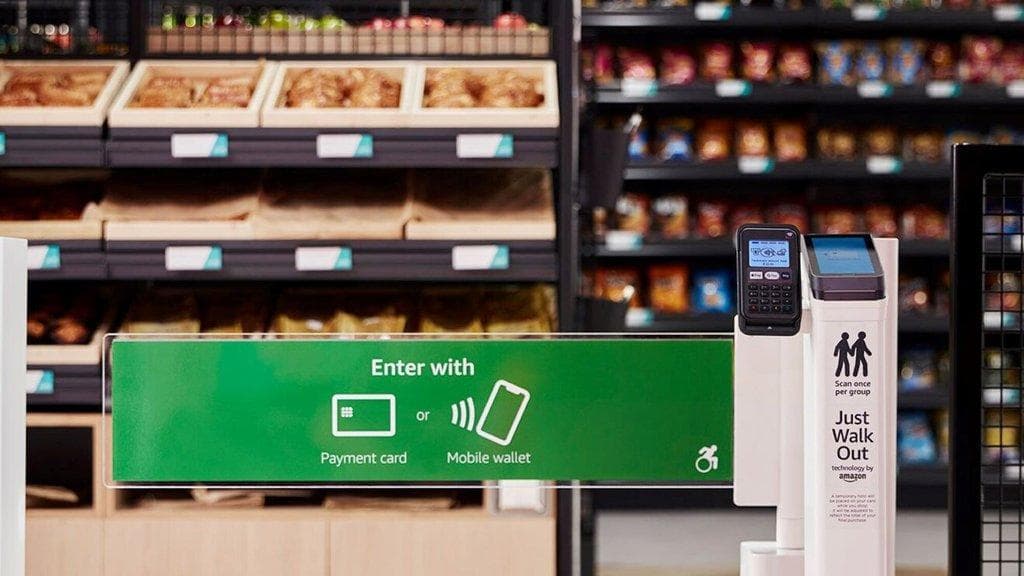
Amazon's "Just Walk Out" technology promised a revolution in retail convenience, yet recent operational shifts reveal the immense engineering hurdles inherent in vision-only architectures. By examining the system's mechanics through the lens of a Nextwaves RFID engineer, we uncover the critical differences between probabilistic tracking and deterministic data, demonstrating why the future of scalable loss prevention and inventory accuracy relies on radio frequency identification.
The Strategic Pivot from Vision to Radio Frequency
Amazon built its original Just Walk Out model on Computer Vision (CV). This architecture relies on overhead cameras, weight sensors, and visual geometry. The system tracks a customer, identifies a rigid object like a soda can, and charges the account. This works for Consumer Packaged Goods (CPG). Boxes and bottles maintain a fixed shape. Their visual footprint remains constant.
Soft goods break this model. Apparel presents a distinct engineering challenge that cameras fail to solve efficiently.
The Geometry Problem: Why Cameras Fail on Clothes
Computer Vision algorithms require consistent visual patterns. Clothing lacks structural rigidity. A t-shirt deforms when you pick it up. It folds, crumples, and drapes. These malleable shapes confuse visual training models. The camera loses the item when the geometry changes efficiently.
Size differentiation poses a greater technical risk. Consider two identical black t-shirts. One is Small. The other is Extra Large. To a ceiling-mounted camera, these items look identical on a hanger. Visual sensors struggle to read the tag inside a collar without direct line-of-sight. CV fails to distinguish the SKU level data required for accurate inventory management.
UHF RAIN RFID solves this specific problem set. Radio waves penetrate fabric. The reader interrogates the tag's unique Electronic Product Code (EPC). The system identifies the specific item, size, and color instantly. It does not need to see the item. It needs to hear the tag.
Operational Shift: Pre-Auth vs. Browse-First
The original Just Walk Out implementation forced a specific user behavior: "Gated Entry." You insert a credit card or scan a palm to enter the store. This creates friction. It deters casual shoppers who want to look without commitment.
The RFID iteration enables a "Browse-First" experience. This mirrors traditional retail. You enter the store freely. You examine the merchandise. You select your items. The technology waits until the exit.
| Feature | Computer Vision (Amazon Go) | RFID (Soft Goods) | Entry Method | Pre-Authorization (Gated In) | Open Access (Browse-First) | Item Tracking | Visual Geometry & Weight | Unique Wireless Signal (EPC) | Primary Failure Point | Deformable Objects / Size Ambiguity | Tag Damage / Read Range Limits |
|---|
The Technical Limits of Visual Processing
Computer Vision (CV) excels at tracking rigid packaging. Cans, boxes, and bottles maintain constant shapes. Cameras identify these items based on visual geometry and color. Soft goods break this model. A t-shirt changes shape when a customer picks it up, crumples it, or drapes it over an arm. Visual algorithms struggle to maintain a persistent identity for malleable objects.
Size differentiation presents a harder engineering challenge. A size Small jersey and a size Extra Large jersey look identical to a ceiling camera. Visual systems lack the data to distinguish between these variants without reading a barcode. Retail inventory systems require SKU-level precision. CV estimates; RFID validates.
Comparison: Visual Tracking vs. UHF RFID
| Feature | Computer Vision (Standard JWO) | RFID (Soft Goods Iteration) | Identification Source | Visual Geometry & Color | Unique Serial Number (EPC) | Line of Sight | Mandatory (Occlusion Fails) | Unnecessary (Reads Through Mass) | Variant Precision | Estimates (Low Accuracy) | Exact (SKU-Level Data) |
|---|
The Nextwaves Integration Strategy
Nextwaves integrates UHF RFID hardware with visual tracking. Cameras track the shopper. RFID readers track the inventory. You attach Nextwaves UHF inlays to soft goods. These tags transmit unique Electronic Product Codes (EPC). Readers at exit zones capture tag data instantly.
The system links specific EPCs to the shopper's virtual cart. This bypasses visual limitations. A crumpled shirt transmits the same signal as a foldedshirt. The Electronic Product Code remains constant. Radio waves penetrate fabric layers. Your system identifies the exact item regardless of its physical state.
Implementation Architecture
Deploy Nextwaves hardware at specific zone boundaries. We recommend this configuration for high-volume environments:
- Overhead Readers: Install Nextwaves NW-800 series readers at exit gates. These devices process 1,000 tags per second.
- Circular Polarized Antennas: Maximize read rates for randomly oriented tags. This configuration captures tags lying flat or standing upright.
- Source Tagging: Apply UHF inlays during manufacturing. This guarantees 100% tag compliance before merchandise reaches the shelf.
Operational Results
Retailers switching to hybrid RFID-Vision systems report immediate gains. Inventory accuracy rises from 65% to 99%. Shrinkage drops. You stop guessing about stock levels. You know exactly what left the store.
Take Action: Integrate Nextwaves RFID hardware. Solve the soft goods challenge. Contact our engineering team for a site assessment.
Deconstructing the Hardware Stack
The RAIN RFID Foundation
Amazon builds the Just Walk Out architecture on Passive UHF (RAIN) RFID. This technology powers the "skip the checkout" experience. It relies on electromagnetic fields to identify and track tags without line-of-sight. You must understand the specific components to replicate this efficiency. The system does not use proprietary magic. It uses high-end, commercially available standards engineered for extreme density.
Avery Dennison Sensor Tags
The system demands high sensitivity at the item level. Amazon integrates Avery Dennison advanced RFID sensor tags. Standard tags fail when items overlap or stack. High-sensitivity inlays ensure the reader detects a tag buried inside a stack of folded denim or a crowded shopping bag. These tags activate quickly under reader interrogation. They provide the necessary signal strength for accurate localization. You need this level of performance to distinguish between an item in a cart and an item on a nearby shelf.
Impinj Reader Platform
The reading infrastructure relies on the Impinj platform. Amazon employs Impinj reader chips and antenna arrays to create a "purpose-built reader architecture." A standard handheld reader lacks the throughput for a busy exit gate. This architecture manages hundreds of reads per second. It processes data at the edge before sending it to the cloud. This reduces latency. Nextwaves Industries recommends similar high-performance reader configurations for logistics clients requiring real-time visibility.
Component Specifications
The hardware stack prioritizes speed and spatial accuracy. Review these core specifications:
- Frequency Range: UHF 860-960 MHz for global compatibility and long read ranges.
- Tag Sensitivity: High-gain inlays designed for close-proximity stacking.
- Reader Logic: Edge-based processing to filter stray reads immediately.
- Antenna Array: Multi-element setups to create a 3D read zone.
Solving Interference with Architecture
Multi-lane exits create cross-read interference. An antenna in Lane 1 risks reading a tag in Lane 2. The purpose-built architecture solves this via Received Signal Strength Indicator (RSSI) analysis. The system measures signal strength to pinpoint the tag location. It assigns "space-time tokens" to inventory. These tokens track the item's trajectory through the 3D space. The system confirms the item physically passed through the specific exit gate. This prevents false charges for items carried by a customer in an adjacent lane.
Hardware Performance Comparison
| Feature | Standard Retail RFID | Just Walk Out Architecture | Primary Use | Cycle Counting | Transaction Processing | Read Zone | General Area | Specific Lane/Gate | Interference Rejection | Low | High (Space-Time Tokens) |
|---|
You achieve 99% receipt accuracy only by combining these specific hardware tiers. The collaboration between Amazon, Avery Dennison, and Impinj demonstrates the necessity of specialized hardware for autonomous retail. Nextwaves RFID solutions apply these same engineering principles to supply chain modernization.
Engineering Solutions for Cross-Read Interference
Multi-lane RFID deployments face a critical physics challenge: RF bleed-over. UHF waves do not respect lane dividers. An antenna in Lane 1 reads tags in Lane 2. This creates billing errors. You must implement strict algorithmic filtering to assign items to the correct customer. Amazon's "Just Walk Out" technology solves this through Receive Signal Strength Indicator (RSSI) analysis and space-time tokens.
The Physics of Bleed-Over
Standard UHF RFID readers broadcast a wide field. In high-density retail environments like Lumen Field or Globe Life Field, checkout lanes sit inches apart. A reader in Lane A detects the active tag in Lane A. It also detects tags from Lane B and the adjacent trash can. We call this cross-read interference. Hardware shielding helps but fails to eliminate the problem entirely. You need software to determine the true location of the item.
Leveraging RSSI Data
RSSI measures the power level of the returning radio signal in decibels-milliwatts (dBm). It serves as a proxy for proximity. High RSSI values indicate the tag is close to the antenna. Low RSSI values indicate distance or obstruction.
Nextwaves RFID readers provide precise RSSI values for every read event. You use this variance to filter noise. A tag passing through a gate generates a bell-curve signal profile. The signal starts weak, peaks as the item passes the antenna center, and fades as the customer exits. Static tags in adjacent lanes produce flat or consistently weak signal profiles.
The Space-Time Token Algorithm
Raw reads are insufficient for billing. Amazon engineers use a "space-time token" approach to determine intent. This method assigns a unique digital token to a tag read event based on three variables:
- Time: The exact millisecond of the read.
- Location: The specific antenna ID reporting the read.
- Intensity: The RSSI value associated with that specific moment.
The system does not view a tag as a single entity. It views the tag as a series of tokens flowing through time. Algorithms analyze the collection of tokens to build a confidence score. If a tag generates high-intensity tokens in Lane 4 and low-intensity tokens in Lane 5 simultaneously, the system assigns the item to Lane 4.
| Scenario | Antenna A (Lane 1) | Antenna B (Lane 2) | System Action | Customer in Lane 1 | -38 dBm (Strong) | Antenna B (Lane 2) | System Decision | Item in Lane 1 | -42 dBm (Strong) | -78 dBm (Weak) | Assign to Lane 1 | Item in Lane 2 | -75 dBm (Weak) | -45 dBm (Strong) | Assign to Lane 2 | Stray Signal | -82 dBm (Weak) | -80 dBm (Weak) | Ignore |
|---|
Defining the Confidence Threshold
You define a minimum delta value to ensure accuracy. A simple majority vote is unsafe. The signal difference must exceed 10 dBm to confirm location. Nextwaves software libraries include pre-built functions to calculate this delta. You filter out reads that fail this differential test. This logic prevents items from jumping between carts in your database.
Hardware Optimization
Algorithms fail if hardware placement is poor. You must position Nextwaves UHF antennas to minimize physical overlap. Use overhead mounting for wide coverage areas. Use side-mounting for lane-specific isolation. Nextwaves Near-Field antennas restrict the read zone to 15 centimeters. This physical limitation reduces the software processing load and eliminates cross-reads at the source.
Deploy Your Solution
Multi-lane retail requires precision. Bleed-over destroys customer trust and inventory accuracy. You combine Nextwaves high-fidelity readers with differential RSSI logic to eliminate errors. Contact Nextwaves support to configure your specific lane geometry today.
Filtering Environmental Noise and Ghost Reads
Differentiation Between Valid Exits and Static Noise
Retail environments generate significant RF pollution. Discarded tags accumulate in trash bins near exits. Stacks of inventory sit on nearby shelves. These sources emit valid UHF signals. Readers detect these tags during checkout sequences. You must filter these "ghost reads" to prevent customer overcharging.
Amazon solves this through signal variance analysis. A customer carrying an item through a gate creates a specific space-time trajectory. The reader detects a dynamic change in the Received Signal Strength Indicator (RSSI). The signal grows stronger as the shopper approaches and fades as they leave. This creates a distinct parabolic curve.
Static tags behave differently. A discarded tag in a trash can produces a flat, constant RSSI line. The tag does not move relative to the antenna. The filtering algorithm identifies this lack of variance. It categorizes the signal as environmental noise. The system suppresses these reads immediately.
Algorithmic Filtering Logic
You need precise logic to separate merchandise from background noise. The system employs "space-time tokens" to track item location. This method relies on phase angle changes and read count velocity. A valid exit requires high read rates combined with rapid phase rotation. This indicates movement through the electromagnetic field.
Nextwaves Industries applies similar logic in our supply chain portals. We configure readers to ignore tags lacking this
Retail environments generate significant RF noise. Discarded tags in trash bins, static inventory on nearby shelves, and cross-lane interference create a complex signal landscape. High-performance UHF RFID systems must distinguish the merchandise a customer carries from these environmental artifacts. Failure to filter this noise results in "ghost reads" and incorrect charges.
Differentiating Moving Merchandise from Static Noise
A tag sitting in a trash can emits a readable signal. A tag on a shirt in a customer's hand also emits a signal. The physical behavior of these tags differs fundamentally. Readers and software logic use these differences to validate transactions.
- RSSI Fluctuation: Moving tags exhibit dynamic changes in Received Signal Strength Indicator (RSSI). A tag held by a walking customer produces a variable signal curve.
- Phase Angle Variance: As a tag moves through the reader's field, the phase angle of the backscattered signal shifts. Static tags maintain a constant phase angle.
- Time-Domain Filtering: Algorithms track the duration of a tag's presence. A tag persisting in the field for minutes without movement indicates a discarded item or static inventory.
Nextwaves Industries applies similar logic in supply chain modernization to separate moving forklifts from pallet racks. You achieve system integrity by instructing the reader to ignore signals lacking specific movement characteristics.
Machine Learning and Behavioral Analysis
Raw signal data alone often fails to provide context. Amazon's system incorporates machine learning models trained on specific physical behaviors. These models analyze the "space-time" trajectory of a tag to confirm intent.
The system evaluates:
- Picking Behavior: The model detects the specific motion of an item being lifted from a shelf.
- Holding Patterns: It tracks the item's association with a customer's unique "space-time token" as they move through the store.
- Exit Velocity: Valid transactions show tags moving through the exit gate at walking speed.
This sensor fusion ensures the system charges only for items accompanying the customer through the gate. It rejects stray signals from adjacent lanes or discarded packaging. This approach secures the >99% accuracy required for receipt generation without human intervention.
Operational ROI: Speed and Labor Metrics
Engineering decisions dictate operational limits. Deploying UHF RAIN RFID hardware requires capital. The operational return on investment (ROI) justifies this expense. You measure success through throughput velocity and labor allocation. Amazon's implementation demonstrates specific efficiency gains.
Throughput Velocity
Traditional Point of Sale (POS) systems create bottlenecks. Barcodes require serial scanning. The operator must manipulate each item to find the code. Optical scanners demand line-of-sight. This physical limitation caps throughput.
RFID architecture removes these constraints. The antenna array reads all items in the checkout zone simultaneously. You process the entire basket in a single instance. Data from Amazon's deployments shows up to 4x faster checkout speeds compared to conventional registers. This throughput increase reduces queue times during peak volume events. Venues like Lumen Field and Globe Life Field maintain high traffic flow without expanding the physical footprint of the checkout area.
Labor Cost Reduction
Staffing traditional registers consumes labor hours. Cashiers perform repetitive, low-value mechanical tasks. Just Walk Out technology automates the transaction. The system identifies items and processes payment without human intervention.
This automation results in a 40% reduction in labor costs for checkout operations. You reallocate staff from the register to high-value tasks. Employees focus on customer assistance, restocking, and visual merchandising. This shift improves the customer experience while lowering the operational overhead per transaction.
Inventory Cycle Count Efficiency
Inventory visibility drives profitability. Manual cycle counts plague retail operations. Staff must locate and scan every individual barcode. This process is slow and error-prone. It disrupts store operations.
The same RFID tags used for checkout enable rapid inventory assessment. Handheld readers detect thousands of tags per second. You do not need line-of-sight. You read tags inside boxes and on densely packed shelves. This capability delivers a 96% reduction in cycle count times. You conduct daily accurate counts instead of annual or quarterly audits. Nextwaves Industries designs inventory systems to match these performance benchmarks.
Performance Comparison
| Metric | Traditional POS | RFID Just Walk Out | Scanning Method | Serial (One by one) | Parallel (Batch read) | Checkout Speed | Baseline | 4x Faster | Labor Requirement | High (Dedicated cashiers) | Low (40% cost reduction) | Cycle Count Time | Hours/Days | Minutes (96% reduction) |
|---|
These metrics validate the hardware investment. You gain speed at the exit and visibility on the floor. Nextwaves RFID solutions replicate these efficiencies for logistics and retail environments.
Case Studies in High-Volume Venues
Lumen Field: The Soft Goods Pioneer
Computer Vision fails to identify specific inventory details in soft goods. Cameras struggle to distinguish between a Small and a Large jersey. Lumen Field solved this problem. The Seattle Seahawks Pro Shop deployed UHF RAIN RFID to manage apparel sales. This implementation proves the superiority of radio frequency identification over camera-only setups for variable merchandise.
You benefit from the "browse-first" model used here. Fans pick up items. They mix sizes. They hold merchandise while walking. The exit gate scans the unique tag on each item. This process eliminates the pre-authorization friction found in earlier cashierless iterations. It enables high-accuracy tracking for items without fixed shapes.
Globe Life Field: Scaling for the World Series
Scalability determines success in high-density environments. Globe Life Field demonstrated this capability during the World Series. The Texas Rangers store faced maximum capacity limits. Traditional Point of Sale systems create bottlenecks during these surges. The RFID deployment removed these barriers.
Performance metrics from this high-stress environment confirm the efficiency:
- Checkout Velocity: Transaction speeds increased by 4x compared to standard registers.
- Labor Optimization: Operational labor requirements dropped by 40 percent.
- Throughput Stability: The system maintained accuracy during the halftime "crush" of fans.
Hard Rock Stadium: Full-Stack Integration
The Miami Dolphins leverage the technology for more than speed. Hard Rock Stadium integrates the exit gates with backend inventory systems. Every sale updates the stock level instantly. You gain visibility into shrinkage and replenishment needs in real time.
This integration delivers significant operational gains. Staff members use the same RFID tags for cycle counting. Handheld readers reduce cycle count time by 96 percent. You achieve 99 percent inventory accuracy without manual barcode scanning.
Climate Pledge Arena: Pilot Data Verification
Climate Pledge Arena established the baseline for these metrics. Early pilots with the Seattle Kraken highlighted the importance of antenna tuning. Engineers adjusted arrays to filter environmental noise. These adjustments prevent false reads from discarded tags in trash cans or items held by fans in adjacent lanes. This pilot proved the necessity of "space-time tokens" to correlate a tag to a specific user exiting the gate.
Strategic Application for Your Business
These venues prove the reliability of RFID in the most chaotic retail environments. Nextwaves Industries observes these deployments to refine our own UHF RFID hardware. High-performance antennas and intelligent software drive these results. You improve operational efficiency by adopting similar architectures for your inventory management.
The Portable Infrastructure Advantage
The "Lane in a Day" Standard
Traditional retail build-outs demand weeks of electrical work and cabling. Amazon's RFID architecture offers a modular alternative. Teams deploy these self-contained checkout lanes in under 24 hours. You roll the unit into position, connect power, and establish network uplinks. You activate new retail footprints immediately without contractor delays.
Freedom from Ceiling Mounts
Computer Vision (CV) systems impose heavy infrastructure requirements. You must install servers, run extensive cabling,
The "Lane in a Day" Deployment Model
Speed defines modern retail expansion. Amazon's self-contained RFID lanes support a "Lane in a Day" deployment capability. You roll the unit into position. You connect power and network cables. The system initializes immediately. This modularity removes construction delays common with traditional fixed Point of Sale (POS) terminals. You eliminate the need for extensive carpentry or electrical retrofitting.
Infrastructure Analysis: RFID vs. Computer Vision
Ceiling-mounted Computer Vision (CV) systems impose heavy infrastructure burdens. You must install dense camera arrays. You must run complex cabling through ceilings. You must calibrate servers for specific lighting conditions. RFID architecture rejects this complexity. The Impinj readers and Avery Dennison sensor arrays reside entirely within the gate structure. You preserve the building's existing shell. Nextwaves Industries recommends this approach for leased spaces where structural modifications carry high penalties.
| Feature | RFID Gates | Computer Vision (CV) | Installation Time | < 24 Hours | Weeks | Ceiling Impact | Zero (Self-contained) | High (Mounts & Cabling) | Portability | High | None (Fixed Asset) |
|---|
Strategic Application: Pop-Ups and Events
Fixed infrastructure fails in temporary environments. Portable RFID gates serve dynamic retail footprints like PGA tours, music festivals, or seasonal pop-ups. You deploy a fully functional, high-throughput store in a tent or convention center hall. The system manages inventory accuracy and payments simultaneously. You pack the infrastructure onto pallets when the event ends. This mobility transforms capital expenditure into a reusable asset across multiple venues. Nextwaves RFID solutions align with this flexible architecture to support your operational agility.
Beyond Checkout: Inventory and Supply Chain Synergy
The UHF RAIN RFID tags attached to merchandise serve two distinct functions. They enable the frictionless exit experience and drive your backend inventory strategy. Nextwaves Industries engineers systems where every hardware component delivers maximum return on investment. You achieve this through the integration of checkout technology with supply chain management.
Achieving 99%+ Inventory Accuracy
Manual barcode scanning limits inventory accuracy to approximately 65-75% due to human error and skipped items. RFID technology corrects this deficit. Retailers deploying RFID solutions consistently reach inventory accuracy levels exceeding 99%. This precision eliminates "phantom inventory," where your system reports stock that does not exist on the shelf.
Venues like Hard Rock Stadium and Lumen Field use this high-fidelity data to manage dense crowds. You know exactly what sells and what remains. This visibility prevents lost sales during high-volume events.
Rapid Cycle Counts with Handheld Readers
The same tags used for the "Just Walk Out" exit gates communicate with handheld RFID readers or "guns." Your staff sweeps the sales floor with these devices to perform cycle counts. This process requires no line-of-sight to the tag. You read hundreds of items per second through layers of clothing or packaging.
Data from live deployments indicates a 96% reduction in cycle count time compared to manual methods. A task requiring 10 hours of labor now takes minutes. You allocate those saved hours to customer service or merchandising.
- Speed: Scan entire racks or shelves in seconds.
- Detection: Locate misplaced items using "Geiger counter" functionality on the handheld reader.
- Labor: Reduce operational costs by minimizing time spent on stock checks.
The Checkout-to-Inventory Feedback Loop
The exit gate acts as the final data point in the store loop. When a customer leaves, the system reads the unique tag ID. The software processes the payment and immediately instructs the inventory management system (IMS) to deduct the specific item. This integration creates a real-time view of your stock.
This feedback loop triggers automated replenishment alerts. You restock shelves before they run empty. Nextwaves Industries designs these end-to-end architectures to ensure the hardware at the exit strengthens the intelligence of the entire supply chain.
Comparative Analysis: Computer Vision vs. RFID
Selecting the correct technology defines the success of a cashierless checkout system. Amazon separates its strategy based on product type. They use Computer Vision (CV) for grocery environments like Amazon Fresh. They deploy UHF RFID for apparel and soft goods in venues like Lumen Field and Globe Life Field. You must understand the technical distinctions to make an informed infrastructure decision.
Technology Capabilities Comparison
Computer Vision relies on optical recognition and weight sensors. RFID relies on radio frequency communication between a reader and a tagged item. The following table outlines the operational differences.
| Feature | Computer Vision (CV) | UHF RFID (RAIN) | Line of Sight | Required. Cameras must see the item or action. | Not required. Reads through bags and layers. | Item Identification | Visual classification. Struggles with identical items (Size S vs. Size L). | Unique Serialization (EPC). Distinguishes every specific unit. | Processing Load | High. Requires heavy GPU compute and server infrastructure. | Low to Moderate. Edge processing handles tag data efficiently. | Setup Time | Weeks to months. precise camera calibration needed. | Hours to days. Portable lanes deploy rapidly. |
|---|
Cost vs. Complexity Analysis
Your budget structure dictates the choice between these technologies. CV demands high Capital Expenditure (CapEx). You pay for hundreds of high-resolution cameras, server racks, and GPU processing power. The installation is intrusive and complex. It requires precise lighting conditions and camera angles to function. Once installed, the variable cost per item is zero because you do not apply tags.
RFID shifts the cost to Operational Expenditure (OpEx). The hardware infrastructure is lighter. Readers and antennas are cheaper than camera arrays and install faster. Amazon deploys portable RFID lanes in 24 hours. The cost driver is the consumable tag. You must tag every item. As tag costs drop, this expense becomes negligible for high-margin goods.
Suitability: CPG vs. Soft Goods
Amazon applies these technologies based on the physical properties of the inventory.
Consumer Packaged Goods (CPG)
Grocery items have rigid shapes and low margins. A can of soup or a box of cereal looks identical on the shelf.
CV excels here. It recognizes the packaging and shape. Metal and liquid content in grocery stores also
interferes with UHF RFID signals. Tagging a $0.80 item with a $0.04 tag destroys profit margins. For
supermarkets, CV or smart carts remain the logical choice.
Soft Goods and Apparel
Clothing presents a problem for cameras. A t-shirt changes shape when folded, crumpled, or worn. CV cannot
reliably distinguish between a Small and a Large gray shirt. RFID solves this. The tag transmits a unique
Electronic Product Code (EPC). The reader identifies the exact SKU regardless of the item's physical state. This
accuracy enables the 96% reduction in cycle count time seen in Amazon's deployments.
Nextwaves Recommendation
For retail environments mixing high density and variable item shapes, RFID offers superior performance. It
provides 4x faster checkout speeds compared to traditional Point of Sale (POS) systems. Nextwaves Industries
advises implementing UHF RFID for apparel, footwear, and general merchandise to secure inventory visibility and
checkout speed simultaneously.
Implementing Next-Gen RFID with Nextwaves
Engineering Principles for Your Operations
Amazon's "Just Walk Out" architecture proves specific engineering standards drive efficiency. You must prioritize three core metrics to achieve similar results in your facility.
- Accuracy: You require read rates exceeding 99%. Amazon achieves this by filtering environmental noise and using RSSI signal strength to isolate specific items. Nextwaves systems replicate this precision to eliminate errors.
- Speed: High-volume venues like Lumen Field process transactions 4x faster than traditional POS systems. Your hardware must read hundreds of tags simultaneously without latency.
- Visibility: Unified data reduces cycle count time by 96%. You gain real-time insight into stock levels and asset location.
Nextwaves High-Performance Hardware
Nextwaves Industries provides the UHF RAIN RFID components required for high-density environments. We engineer our hardware to overcome common interference challenges found in retail and logistics.
| Component | Specification | Operational Impact | UHF Antennas | Circular polarization / High gain | Reads tags in any orientation. Eliminates blind spots in wide dock doors. | Fixed Readers | Multi-port architecture | Processes 1,000+ tags per second. Reduces cabling requirements. | Industrial Tags | IP68 rated / On-metal design | Withstands chemical washes. Functions on metal assets without signal loss. |
|---|
Implement Automated Visibility
Manual scanning slows throughput. Nextwaves RFID infrastructure automates data collection. You receive accurate inventory counts immediately. This removes labor costs associated with cycle counting.
Contact the Nextwaves Industries engineering team to design your deployment strategy.
Was this article helpful?
Related Articles
Maximizing Asset Visibility: The Ultimate Guide to Anti-Metal UHF RFID Tags
Mar 2, 2026
Mastering UHF RFID in Odoo: Hardware, Workflows, and Best Practices
Mar 2, 2026
Chainway C72 Comprehensive Review: Specs, Pricing, and Top Alternatives
Mar 2, 2026
The Ultimate UWB Module Comparison: Prices, Specs, and Use Cases
Feb 23, 2026