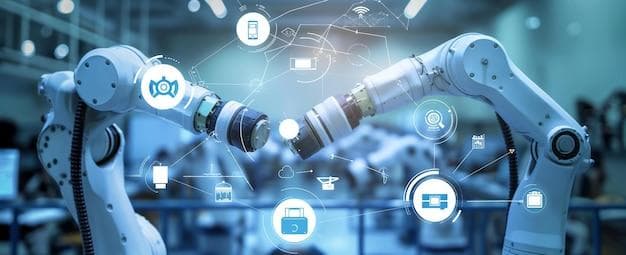
Physical AI combines real-world sensors with machine learning so machines can perceive, think, and act in 3D space. Unlike digital models that process text, Physical AI learns from cameras, sensors, and movement to understand cause and effect. NVIDIA CEO Jensen Huang calls this the "ChatGPT moment" for industrial automation, where AI gains a body and moves from rigid code to flexible intelligence. This technology bridges digital data with physical action.
Logistics and manufacturing are the main testing grounds for these advances. You can deploy autonomous systems that recognize spatial context and human behavior in real time. Companies like Amazon and Foxconn use this tech stack to manage complex warehouse variables and labor shortages. Physical AI drives a new phase of industrial efficiency by turning hardware into smart, responsive assets. Nextwaves Industries provides the RFID infrastructure and software needed to feed high-quality data into AI models, ensuring end-to-end visibility.
Beyond the Screen: Defining Physical AI
Physical AI (PAI) marks the transition from digital intelligence to embodied intelligence. While traditional AI operates in virtual environments processing text or images, Physical AI integrates with the material world. It gives software a body. This shift helps machines go beyond providing information to performing physical labor in your warehouse or factory.
At the core of this technology is a closed-loop system. Unlike standard software following linear commands, Physical AI runs through a continuous cycle:
- Perception: Sensors and cameras gather data from the environment.
- Reasoning: The system analyzes data to make decisions.
- Action: Mechanical devices or robots execute movements.
To work well, PAI needs spatial intelligence. Standard Large Language Models (LLMs) understand word syntax but do not grasp the laws of physics. Spatial intelligence helps systems understand 3D relationships, depth, and force. It moves beyond language into 3D spatial reasoning. This capability is vital for robots navigating crowded loading docks or automated systems picking up fragile items without damage.
Nextwaves Industries supports this growth with hardware and software infrastructure for Physical AI. High-performance UHF RFID antennas and sensors act as sensory inputs for the system. By combining Nextwaves RFID hardware with PAI reasoning, you achieve end-to-end visibility where intelligence meets execution. This convergence turns your facility from a passive environment into an active, learning system. Experts predict this tech market will grow from $5.41 billion in 2025 to over $61 billion by 2034 [liahnson.com](https://liahnson.com/insights/what-is-physical-ai-understanding-the-concept-principles-applications-and-future-outlook/).
The $61 Billion Frontier: Market Stats and Growth
The Physical AI (PAI) industry represents a major shift from digital generative models to machines that interact with the physical world. Market data confirms this transition is accelerating. Experts forecast the PAI market will grow from $5.41 billion in 2025 to over $61 billion by 2034. This expansion represents a compound annual growth rate (CAGR) of 31.26%.
Real-world applications prove that PAI is expanding commercially and operationally. Look at these current benchmarks:
- Autonomous Logistics: Waymo now completes 450,000 paid robotaxi trips per week. The company aims for 1 million trips per week by 2026. This proves autonomous navigation systems are no longer just experiments.
- Global Patent Race: Competition for technical dominance is fierce. China leads the US 5:1 in humanoid robot patents, filing 7,705 patents in 5 years compared to 1,561 in the US according to theaienterprise.io.
- Industrial Robotics: The vast industrial robotics market is heading toward $57.67 billion by 2035 according to openpr.com.
- Hardware Dominance: Hardware currently accounts for 56.40% of the Physical AI market share. This includes sensors, AI chips, and actuators needed for machine perception according to globenewswire.com.
Nextwaves Industries supports this frontier with the essential hardware platform for PAI. Our RFID tags and UHF readers provide the high-quality data that autonomous systems need to identify and locate assets. Physical AI requires precise environmental data to run. Without accurate identification of goods and locations, even the most advanced AI models cannot perform logistics tasks.
You can prepare your infrastructure for this growth. Integrating smart hardware with software solutions like our VTTM (Vital Trace & Track Module) ensures your facility is ready for the next decade of automation. High-performance RFID hardware from Nextwaves Industries brings the end-to-end visibility needed for smart, autonomous supply chains.
Tech Stack: How Physical AI 'Thinks' and 'Moves'
Physical AI needs a specialized three-computer architecture to move from digital logic to physical action. This architecture helps robots perceive, think, and move in complex environments like warehouses and factory floors. Nextwaves Industries uses this hardware and software to deliver comprehensive visibility and operational control.
The three-computer requirement includes the following stages:
- Computer 1: Training (NVIDIA DGX). This supercomputing layer processes massive datasets to create the core AI models. It uses the Blackwell architecture to train vision-language-action (VLA) models. These models help systems grasp 3D space and predict the next physical move.
- Computer 2: Simulation (NVIDIA Omniverse). This computer runs the digital twin. It uses the Cosmos world foundation model to create a physically accurate virtual environment. This stage lets developers test thousands of scenarios at once without risking real hardware.
- Computer 3: Execution (NVIDIA Jetson AGX Thor). This is the inference processor on the robot. It sits inside the machine to process real-time sensor data and run commands. It helps the robot react to its surroundings in milliseconds.
The biggest challenge for robots is the Sim-to-Real gap. This term refers to the performance difference between a robot in simulation and the real world. Real environments are full of unpredictable variables like lighting changes, dust, or floor surfaces. Collecting enough real-world data to cover every case is slow and expensive.
To bridge this gap, Nextwaves solutions use synthetic data generation. Developers apply the Cosmos Transfer pipeline to generate realistic and physically correct training data right in the simulation. This process creates millions of edge cases that are hard to film manually. Robots learn how to handle equipment failure or human intervention in a safe virtual space. Once the model reaches high accuracy in simulation, you can deploy it to real hardware with confidence. This flow speeds up deployment and cuts costs for upgrading supply chains.
With these three computing layers, you turn static machines into intelligent agents. The tech stack helps Nextwaves bring high-performance hardware and software together, connecting digital planning with physical execution. [blogs.nvidia.com](https://blogs.nvidia.com/blog/three-computers-robotics) [faf.ae](https://www.faf.ae/home/2026/1/15/understanding-nvidias-three-computer-architecture-for-physical-ai-systems)
Physical AI in Action: From Humanoids to Smart Logistics
Physical AI turns static automation into adaptive intelligence. This technology helps machines perceive, think, and act in the 3D physical world. Unlike traditional robots that run fixed scripts, Physical AI systems use foundation models to learn complex tasks through simulation and human demonstrations.
The clearest industrial impact is in the automotive sector. Hyundai Motor Group plans to produce 30,000 Atlas humanoid robots per year by 2028 at the Georgia Metaplant [axios.com](https://www.axios.com/2026/01/05/hyundai-humanoid-robots-boston-dynamics). Enterprise-grade robots from Boston Dynamics have 56 degrees of freedom and swappable batteries that last 4 hours [newatlas.com](https://newatlas.com/ai-humanoids/boston-dynamics-production-atlas-hyundai/). Hyundai deploys them to handle the following tasks:
- Sorting parts and line-side logistics.
- Assembling components by 2030.
- Handling heavy loads and repetitive motions to reduce human injuries.
- Machine tending in dangerous environments.
This shift affects the $50 trillion global logistics and manufacturing industry. Success depends on measurable performance. The PAI-Bench framework evaluates Physical AI through three main metrics:
- Efficiency: The speed and accuracy of completing tasks compared to human standards.
- Safety: The ability to navigate dynamic floors and work alongside humans without collisions.
- Energy Balance: The balance between high-torque mechanical output and battery life.
Nextwaves Industries supports this transformation with the necessary data infrastructure. While robots operate, our RFID hardware and VTTM software provide a comprehensive vision for the AI system. High-performance UHF RFID tag antennas track moving robot parts. This integration ensures Physical AI systems have accurate real-time data to optimize warehouse workflows and inventory accuracy.
This technology market is expected to grow from $5.41 billion in 2025 to over $61 billion by 2034. Businesses need to adopt smart logistics solutions to stay competitive. You can improve operational efficiency right away by connecting Nextwaves RFID solutions with automated systems.
Nextwaves Industries: Bridging the Gap with RFID and PAI
Nextwaves Industries provides the essential infrastructure to move from traditional automation to Physical AI. Physical AI needs 3D spatial reasoning to understand the environment, but it relies on high-quality data to identify specific objects. Nextwaves RFID hardware acts as the primary sensor input for the system. Our UHF RFID readers and antennas serve as the eyes and ears of the warehouse. These components help Physical AI agents recognize inventory beyond simple direct line-of-sight.
Our hardware ecosystem enables Physical AI through precise data points:
- RFID Tags and Inlays: These provide a unique digital identity for every physical asset. They help AI models distinguish between items that look identical but have different destinations or expiration dates.
- High-Performance Readers: These devices capture movement data instantly. They provide the AI with constant updates on asset location and speed.
- UHF Antennas: These parts define the detection zones. They help the AI understand exactly when an item enters or leaves a specific process.
The Vital Trace & Track (VTTM) module builds the data foundation for automated decisions. Physical AI uses world models to predict outcomes. VTTM provides accurate, real-time inventory levels and delivery status. This combination allows AI agents to navigate warehouses and manage stock without human help. According to onetrack.ai, Physical AI bridges the gap between digital abstraction and the real world using sensor data and spatial reasoning. Nextwaves supports this with raw sensor data so machines can learn from real-world observations.
By combining Nextwaves hardware with smart software, you get full end-to-end visibility. This technical synergy turns reactive logistics into a proactive, autonomous system. Industry research shows the robot market is expected to grow from $5.41 billion in 2025 to over $61 billion by 2034. Nextwaves Industries helps your facility stay ready for change. You can boost operational efficiency by using our RFID solutions as the backbone of your Physical AI strategy.
Conclusion: Prepare for the Physical AI Revolution
The meeting of spatial intelligence and robotic hardware marks a turning point in industrial history. Experts from NVIDIA and the International Federation of Robotics see 2026 as the tipping point for physical AI, with annual robot installations reaching 619,000 units economist.com. You are witnessing the "ChatGPT moment" of the physical world. This era moves beyond digital chatbots into autonomous systems that perceive, think, and act right inside your facility.
Moving to embodied intelligence requires a solid data foundation. Physical AI does not run in a vacuum. It needs high-accuracy, real-time data to map environments and track assets. The market for these systems is projected to grow from $371.7 billion in 2025 to $2.4 trillion by 2032 worldtechnologycongress.org. Organizations that do not upgrade their data collection infrastructure now will fall behind instantly.
Prepare your manufacturing and cold chain for the revolution with Nextwaves RFID solutions. Our hardware and software provide the sensor input for physical AI to navigate and manage your supply chain. You must digitize physical assets to enable automated decision-making.
Take these steps to future-proof your operations:
- Deploy Nextwaves UHF RFID antennas and readers to create a continuous data stream for AI models.
- Integrate the Vital Trace and Track Module (VTTM) to provide detailed visibility for automated delivery management.
- Audit current inventory systems to ensure compatibility with machine learning control models.
- Use Nextwaves high-performance tags to turn every physical part into a rich data node.
The window for early adoption is closing fast. The pace of physical AI development suggests human-level robots could arrive as early as next year thedeepview.com. Contact Nextwaves Industries today to upgrade your infrastructure and lead the way in smart automation.
Was this article helpful?
Related Articles
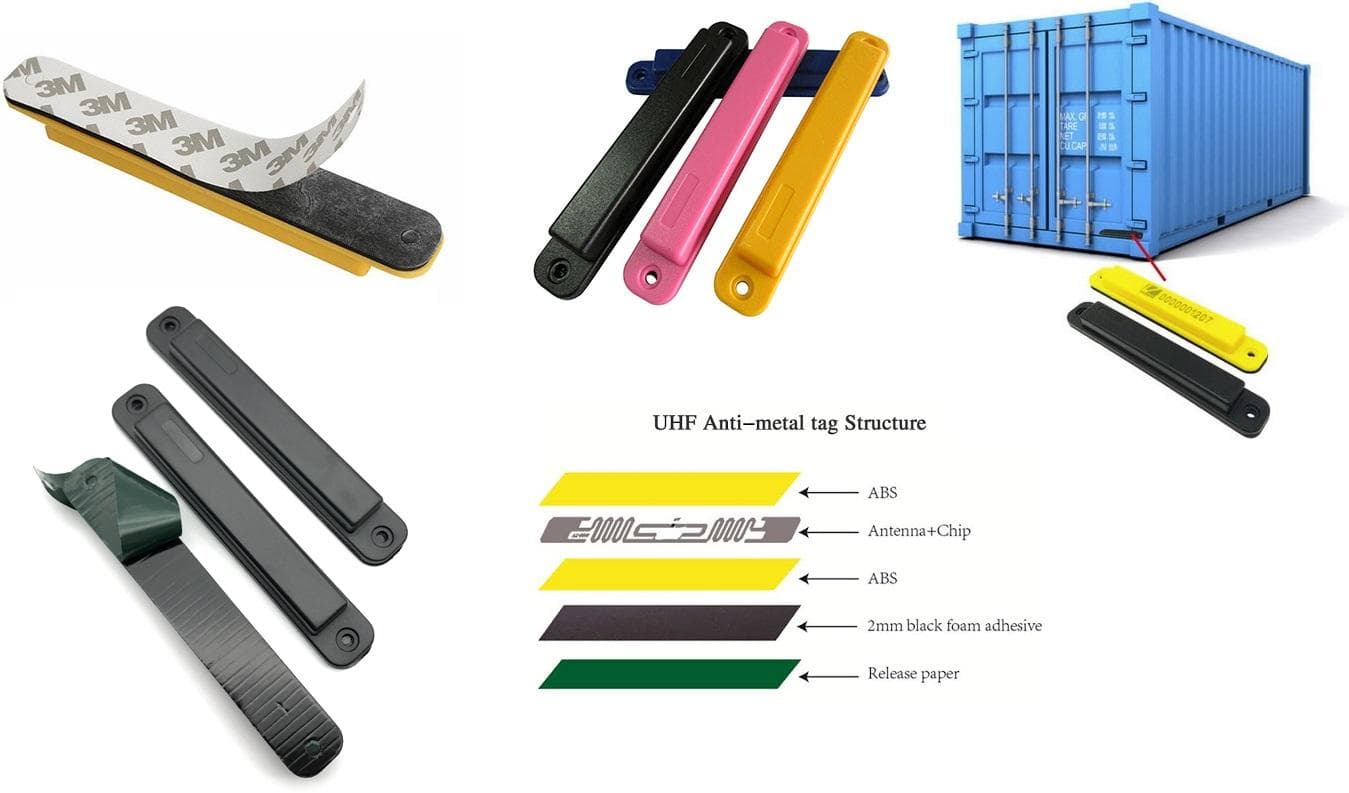
Maximizing Asset Visibility: The Ultimate Guide to Anti-Metal UHF RFID Tags
Mar 2, 2026

Mastering UHF RFID in Odoo: Hardware, Workflows, and Best Practices
Mar 2, 2026
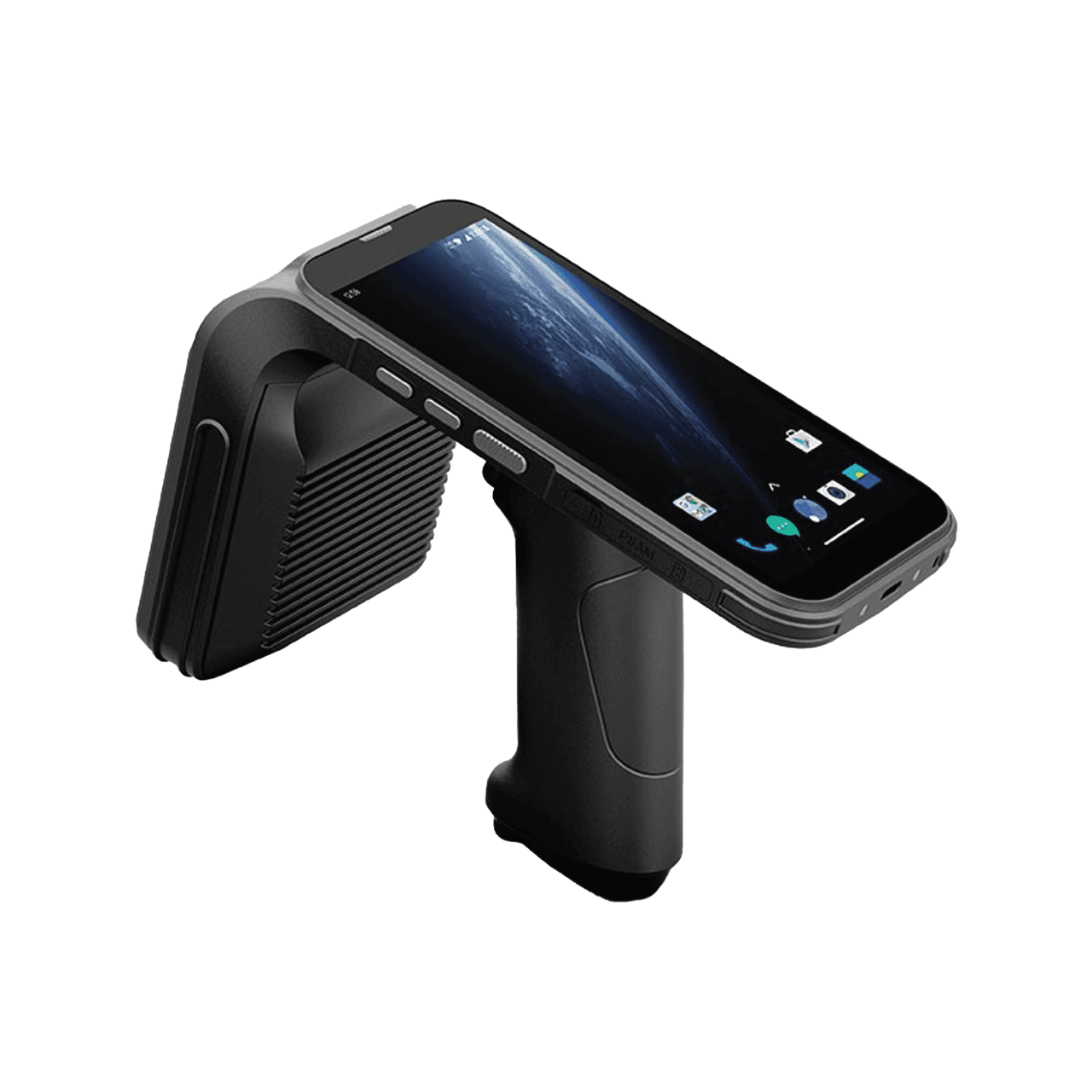
Chainway C72 Comprehensive Review: Specs, Pricing, and Top Alternatives
Mar 2, 2026
The Ultimate UWB Module Comparison: Prices, Specs, and Use Cases
Feb 23, 2026