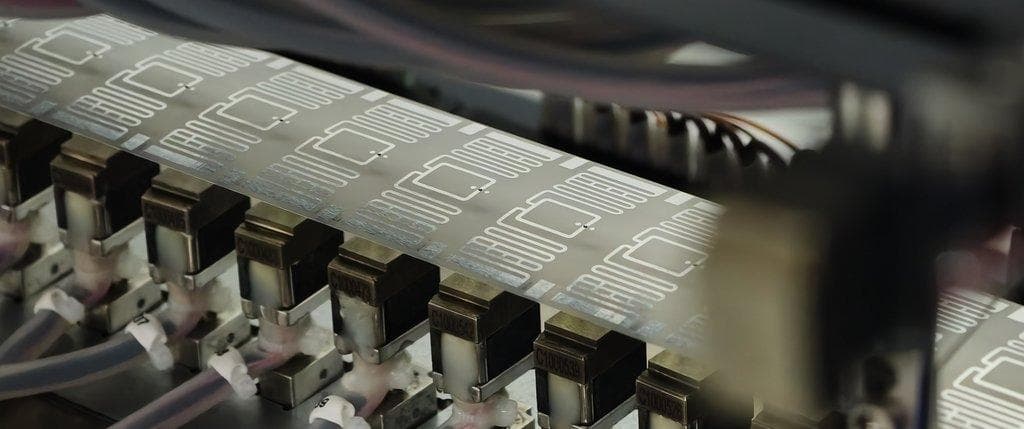
As we navigate the sophisticated connectivity of 2026, selecting the right hardware foundation is pivotal for maximizing the efficiency of any asset tracking system. With a myriad of options flooding the market, distinguishing between the top UHF RFID inlay manufacturers requires a strategic look at performance, memory, and material durability. This global comparison guide breaks down the leading RFID inlay suppliers-from industry giants to specialized innovators-to help you secure the ideal components for your supply chain infrastructure.
Introduction: The State of the Global RFID Inlay Market
At the core of every digital transformation strategy in modern supply chains lies a component often thinner than a sheet of paper: the UHF RFID inlay. Acting as the heartbeat of the radio frequency identification ecosystem, the inlay combines the integrated circuit (IC) and the antenna, transforming standard labels into intelligent data carriers. For industries ranging from high-volume retail to complex cold chain logistics, these components are no longer optional add-ons; they are the fundamental infrastructure required to achieve item-level visibility, automate inventory management, and eliminate the blind spots that lead to operational inefficiencies.
As we look toward the market landscape of 2026, the demand for high-performance UHF RFID inlays is accelerating, driven by the mandate for "smart packaging" and source tagging. However, the market is shifting from simple volume purchasing to a focus on technical compliance and application specificity. Two dominant trends are currently reshaping how procurement teams and operations managers select their inlay partners:
- The Rise of ARC Certification: Auburn University's ARC Program has become the global benchmark for RFID performance. Retailers and logistics giants now mandate ARC-certified inlays to ensure tags perform reliably across diverse environments-whether stacked in a cardboard box or hanging on a denim rack.
- Versatility in Form Factors (Wet vs. Dry): The distinction between 'wet' inlays (adhesive-backed, ready for immediate application or converting) and 'dry' inlays (non-adhesive, typically used by converters to create custom labels) has become critical. Manufacturers must now offer robust portfolios of both to suit the varied machinery and application methods of the end-user.
With the stakes higher than ever, choosing the right manufacturer is a strategic decision. It requires navigating a complex ecosystem that includes massive global conglomerates known for volume, and agile, integrated solution providers-like Nextwaves Industries-that prioritize customization and end-to-end system compatibility. The purpose of this comparison is to dissect the capabilities of these key players, helping you determine whether your operation requires the sheer scale of a legacy giant or the specialized, high-performance integration of a modern technology partner.
Nextwaves Industries: The Integrated Solution Provider
While many manufacturers focus exclusively on producing individual components, Nextwaves Industries stands apart as a holistic solution provider. Headquartered in the strategic manufacturing hub of Ho Chi Minh City, Vietnam, we move beyond simple component supply to deliver comprehensive ecosystems that bridge the gap between raw technology and operational excellence.
True supply chain modernization requires more than just a high-quality inlay; it demands seamless integration. Nextwaves distinguishes itself by combining high-performance hardware-including UHF RFID Antennas, Readers, and Tags-with intelligent software platforms designed for Dispatch Management and Inventory Systems. This symbiotic approach ensures that the data captured by our hardware is immediately actionable, providing the end-to-end visibility necessary for modern commerce.
Our integrated solutions are engineered to meet the rigorous demands of complex industries, ensuring reliability where it matters most:
- Manufacturing: Streamlining work-in-progress tracking and maximizing asset utilization.
- Logistics & Cold Chain: Guaranteeing shipment accuracy and maintaining integrity across the supply chain.
- Retail: Optimizing inventory accuracy to prevent stockouts and enhance customer experiences.
By choosing Nextwaves Industries, businesses gain a partner capable of deploying a fully synchronized RFID infrastructure. Improve your operational efficiency today with a solution that connects every link in your value chain.
Global Industry Giants: Avery Dennison & Alien Technology
When analyzing the global UHF RFID landscape, two organizations stand out as the bedrock of the industry: Avery Dennison and Alien Technology. These manufacturers have largely defined the standards for mass-market inlay production, providing the raw volume required to support global supply chains.
Avery Dennison (Smartrac) acts as the heavyweight of the sector. Headquartered in Mentor, Ohio, and established in 1935, the company has leveraged its material science heritage to dominate the RFID space. Following the strategic integration of Smartrac, Avery Dennison now operates a massive global manufacturing network with facilities in the USA, Mexico, Brazil, China, and Malaysia. Their primary competitive advantage lies in sheer scale; they possess the capacity to produce billions of inlays annually, ensuring that standardized tags are available as a commodity for retail and logistics markets worldwide.
Alien Technology, headquartered in San Jose, California, represents the innovative roots of the industry. Established in 1994, Alien is widely recognized as an industry pioneer that was instrumental in the development of the EPCglobal Gen 2 standard-the protocol that powers virtually all modern UHF RFID applications. Their legacy is built on robust integrated circuit (IC) design and high-reliability tags that helped transition RFID from a niche technology to a mass-adoption solution.
| Feature | Industry Giants (Avery & Alien) | Nextwaves Industries | Core Focus | Mass Manufacturing & Raw Volume | Software Integration & System Logic | Primary Output | Standardized Inlays & ICs | End-to-End Solutions (Hardware + Software) | Value Add | Global Supply Chain Availability | Dispatch Management & Inventory Visibility |
|---|
While Avery Dennison and Alien Technology excel in volume production, the modern enterprise requires more than just hardware availability-it requires intelligence. These giants provide the essential "fuel" (the tags), but Nextwaves Industries provides the "engine."
Our approach differs by focusing on software integration. In complex sectors like Cold Chain, Manufacturing, and Logistics, a tag is only as valuable as the data it generates. Nextwaves bridges the gap between mass-produced hardware and operational efficiency by layering intelligent Dispatch Management and Inventory Systems on top of high-performance hardware. This ensures that while you utilize top-tier inlays from global leaders, you also gain the end-to-end visibility needed to actually improve your bottom line.
Specialized & Regional Leaders: HID, Confidex, and SML
While massive volume producers often dominate the headlines, the RFID landscape is heavily supported by manufacturers who excel in specific niches and regional dominance. For businesses seeking specialized applications-such as high-security environments, rugged industrial settings, or high-volume retail tagging-understanding the unique value propositions of HID Global, Confidex, and SML Group is essential.
HID Global: Security and Diverse Manufacturing
Headquartered in Austin, Texas, HID Global is synonymous with secure identity solutions. Unlike generalist inlay manufacturers, HID leverages its deep roots in security to produce RFID tags that prioritize data integrity and durability. Their manufacturing footprint is notably diverse, with key facilities located in Ireland and Brazil, offering strategic logistical advantages for companies operating in Europe and the Americas.
For Nextwaves Industries clients in sectors requiring strict access control or secure asset tracking, HID offers:
- High-Security Protocols: Advanced encryption and authentication capabilities embedded within the tags.
- Resilient Supply Chain: Manufacturing diversity reduces reliance on a single region, mitigating supply chain risks.
- Broad Portfolio: Solutions ranging from standard UHF inlays to complex active RFID systems.
Confidex: The Industrial and Mobility Specialist
Based in Tampere, Finland, Confidex has carved out a reputation as the go-to manufacturer for "industrial-grade" RFID. If your operations involve harsh environments, extreme temperatures, or rough handling-common in the manufacturing and logistics sectors served by Nextwaves-Confidex is a primary contender. They are particularly renowned for their rugged hard tags and specialized labels designed for the automotive and transportation industries.
Key differentiators for Confidex include:
- Ruggedization: Tags engineered to withstand chemicals, moisture, and mechanical stress.
- Mobility Solutions: A strong focus on contactless ticketing and smart mobility applications.
- Design Innovation: Custom antenna designs optimized for difficult surfaces, such as metal or liquid containers.
SML Group: The Retail and Apparel Powerhouse
With its headquarters in Hong Kong, SML Group is a dominant force in the retail and apparel sector. They specialize in item-level tagging, providing the sheer volume required for global clothing brands to maintain inventory accuracy. Their manufacturing strategy is heavily concentrated in Asia, with major facilities in Vietnam and China, allowing them to integrate seamlessly with the manufacturing hubs of the world's largest apparel brands.
SML is best suited for:
- High-Volume Retail: Cost-effective inlays designed for disposable hang-tags and packaging.
- Source Tagging: Extensive network allowing tags to be applied at the point of manufacture in Asia.
- Brand Integrity: Solutions focused on anti-counterfeiting and brand protection within the retail supply chain.
To help you visualize where these specialized leaders fit into your supply chain strategy, refer to the comparison below:
| Manufacturer | Headquarters | Primary Focus | Key Manufacturing Hubs | HID Global | Austin, TX (USA) | Security & Asset Tracking | Ireland, Brazil | Confidex | Tampere, Finland | Industrial & Rugged | Finland, China | SML Group | Hong Kong | Retail & Apparel | Vietnam, China |
|---|
Choosing the right manufacturer often depends on the specific environmental conditions and volume requirements of your project. At Nextwaves Industries, we help you navigate these choices, selecting the optimal RFID hardware to pair with our intelligent dispatch and inventory software.
Asian Market Powerhouses: Invengo, SATO, and Murata
The global RFID landscape is heavily influenced by the manufacturing density and technological innovation found in Asia. While Western giants often dominate headlines, Asian manufacturers have established massive production capabilities and specialized engineering niches that drive the industry forward. In this section, we examine three critical players-Invengo, SATO, and Murata-and analyze how their supply chain positioning compares to the emerging advantages of the Vietnamese market utilized by Nextwaves Industries.
Invengo Technology (HQ: Shenzhen, China) represents the sheer scale of Chinese manufacturing. With a strong foothold in both China and Korea, Invengo has evolved from a local player to a global competitor, particularly in the retail and railway sectors. Their primary strength lies in high-volume production of standard UHF inlays, leveraging the extensive electronics ecosystem of Shenzhen. They are a go-to for mass-market applications where raw volume is the primary driver.
SATO Holdings (HQ: Tokyo, Japan) approaches the market from a legacy of "Auto-ID" solutions. Famous for their barcode printers and hand labeling systems, SATO's RFID strategy is deeply integrated with their hardware. They excel in creating "Genbaryoku" (operational excellence) by offering tags that work seamlessly with their proprietary printers. Their strength is reliability and system integration, often targeting healthcare, retail, and food safety sectors where precision is paramount over lowest-cost volume.
Murata Manufacturing (HQ: Kyoto, Japan) leverages a massive background in ceramic capacitors and electronics components to dominate the niche of specialized tags. Unlike manufacturers focusing on paper-thin adhesive inlays, Murata is renowned for rugged, miniaturized, and embedded tags. Their magicstrap® technology and multi-layer ceramic substrates allow for RFID tagging on metal surfaces and extremely small items (like eyewear or surgical tools), areas where standard inlays often fail.
While these "Powerhouses" offer distinct technological strengths, the logistical landscape of Asia is shifting. The "China Plus One" strategy has made supply chain diversification critical. Below, we compare the logistical realities of sourcing from these established hubs versus Nextwaves' strategic positioning in Vietnam.
| Feature | Traditional Hubs (China/Japan) | Nextwaves Industries (Vietnam) | Supply Chain Agility | Often prioritized for massive global bulk; can be slower to react to mid-sized, custom regional demands. | High agility; positioned centrally in SE Asia for rapid deployment to emerging manufacturing hubs (Vietnam, Thailand, Malaysia). | Cost Structure | Rising labor costs in coastal China and premium pricing associated with Japanese engineering. | Competitive labor rates combined with high-tech manufacturing standards, offering a balanced cost-to-performance ratio. | Geopolitical Risk | Subject to tariff fluctuations and trade barriers affecting exports to Western markets. | Benefits from neutral trade agreements and serves as a stable alternative for risk diversification. | Solution Scope | Primarily hardware-focused (Component sales). | End-to-End: Combines local hardware manufacturing with proprietary Dispatch Management and Inventory Software. |
|---|
For businesses operating within the dynamic Southeast Asian supply chain, or global entities looking to diversify beyond traditional hubs, Nextwaves Industries offers a compelling alternative. We provide the technical rigor expected of Asian manufacturing but paired with the agility and software integration required for modern Logistics and Cold Chain modernization.
Technical Comparison: Selecting the Right Inlay
Selecting the optimal UHF RFID inlay is a critical engineering decision that directly impacts the reliability of your supply chain visibility. At Nextwaves Industries, we understand that an inlay is more than just an antenna and a chip; it is the bridge between your physical assets and your digital inventory systems. To ensure maximum operational efficiency, technical specifications must be aligned with your specific environmental and data requirements.
1. Chip Architecture: Impinj vs. NXP
The integrated circuit (IC) is the brain of the inlay. While there are several manufacturers, the market is primarily dominated by the Impinj Monza series and the NXP UCODE series. Both offer exceptional performance, but they excel in different nuances of sensitivity and write speed.
| Feature | Impinj Monza Series (R6, M700) | NXP UCODE Series (8, 9) | Auto-Tuning | Features AutoTune technology to adjust performance based on the material it is applied to. | High read sensitivity with self-adjust capabilities for consistent performance. | Privacy | Focuses on high-speed encoding and data integrity (Integra technology). | Often includes Brand Identifier and privacy modes for retail theft prevention. | Best Application | High-volume logistics and rapid-moving conveyor environments. | Retail apparel and environments requiring extremely high read sensitivity. |
|---|
2. Memory Configuration: EPC vs. User Memory
Understanding the memory bank structure is vital for system integration. The choice depends heavily on whether your database is centralized or distributed.
- EPC Memory (96-128 bits): This acts as the "license plate" of the tag. It stores the Electronic Product Code. For 90% of supply chain applications, standard EPC memory is sufficient because the tag simply references a record in your backend software, such as the Nextwaves Inventory System.
- User Memory (32-512+ bits): This bank allows for additional data storage directly on the chip, such as expiration dates, batch numbers, or maintenance logs. While useful for offline verification, reading User Memory is slower than reading EPC memory and can reduce read rates in high-speed environments.
3. Substrate Materials: Paper vs. PET
The durability of the inlay is determined by the carrier material, or substrate, which holds the antenna and chip.
- Paper Inlays: The cost-effective standard for retail hang tags and cardboard box logistics. However, they are susceptible to moisture and tearing.
- PET (Polyethylene Terephthalate): A robust plastic substrate. PET inlays are water-resistant and durable, making them the superior choice for warehouse management, cold chain logistics, and environments with fluctuating humidity.
4. Specialized Applications: Overcoming Physics
Standard UHF RFID inlays rely on electromagnetic waves that can be absorbed by water or reflected by metal, causing "detuning." For industrial assets, specialized form factors are required:
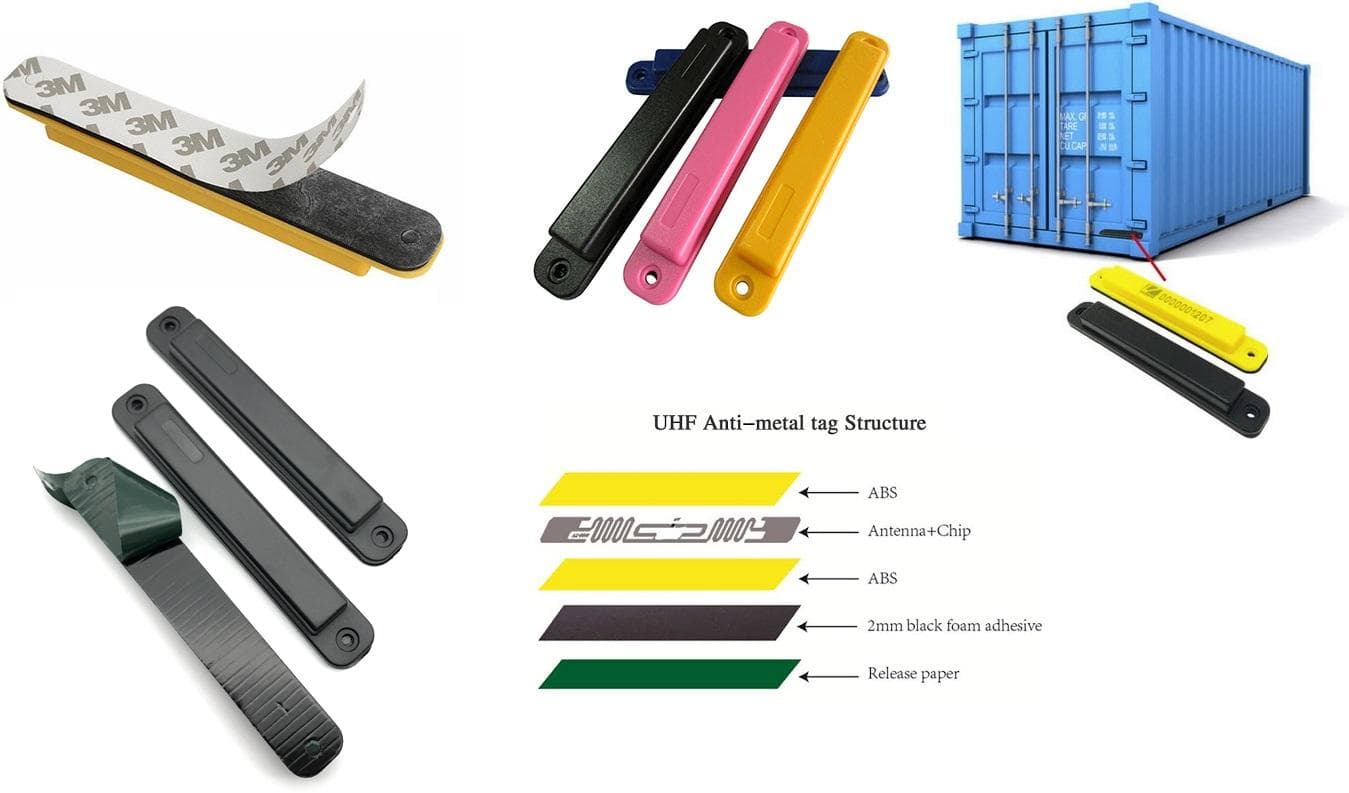
- Mount-on-Metal (MOM) Tags: These utilize a ceramic or foam spacer to create distance between the antenna and the metal surface, using the metal itself as a reflector to boost the signal rather than cancel it out. Essential for tracking IT assets, machinery, and metal pallets.
- Washable / Textile Tags: Encapsulated in flexible, heat-resistant materials (often PPS or flexible fabric), these tags are designed to withstand high pressure, chemical detergents, and sterilization cycles found in commercial laundry and healthcare linen management.
At Nextwaves Industries, we leverage our deep expertise in RF physics to match the exact inlay specifications to your operational reality. Whether you need the high-speed throughput of an Impinj M700 for logistics or the rugged durability of an on-metal tag for manufacturing, our team ensures your hardware stack delivers consistent, end-to-end visibility.
Conclusion: Why Integrated Solutions Matter
As we have explored, the landscape of UHF RFID inlay manufacturers is vast, ranging from massive legacy producers to specialized innovators. While legacy manufacturers often dominate the conversation through raw production volume and commodity pricing, the complexities of modern supply chains require more than just a component supplier. In an era defined by data-driven decision-making, the true value lies not merely in the tag itself, but in how effectively it integrates with your broader operational ecosystem.
At Nextwaves Industries, we bridge the gap between hardware manufacturing and digital transformation. We understand that a high-performance inlay is only as effective as the system that manages it. Unlike traditional vendors who stop at delivery, we provide a holistic Value Proposition that combines robust RFID hardware-including antennas, readers, and tags-with intelligent software solutions for dispatch management and inventory control.
By choosing an integrated approach over a fragmented vendor list, your organization gains:
- End-to-End Visibility: Seamless connectivity between physical assets and digital dashboards.
- Operational Agility: Hardware and software designed to work in perfect unison, reducing integration headaches.
- Industry-Specific Expertise: Tailored solutions for Manufacturing, Logistics, Retail, and Cold Chain environments.
Don't settle for disparate components that leave gaps in your supply chain visibility. It is time to evolve from simple tracking to intelligent management. Improve your operational efficiency with Nextwaves RFID solutions today. Partner with us to deploy a fully integrated infrastructure that drives performance, accuracy, and growth.
Was this article helpful?
Related Articles
Maximizing Asset Visibility: The Ultimate Guide to Anti-Metal UHF RFID Tags
Mar 2, 2026
Mastering UHF RFID in Odoo: Hardware, Workflows, and Best Practices
Mar 2, 2026
Chainway C72 Comprehensive Review: Specs, Pricing, and Top Alternatives
Mar 2, 2026
The Ultimate UWB Module Comparison: Prices, Specs, and Use Cases
Feb 23, 2026