The Quiet Revolution at UPS: Decoding the Billion-Dollar RFID Strategy
In the 24/7 world of logistics, where every second counts and every package is a promise, silence usually means things are running smoothly. But in early 2026, the silence around UPS operations means something else. It isn't the quiet of a standstill, but the nearly invisible work of a deep tech revolution. Facing pressure from Amazon, the rise of FedEx, and a volatile post-pandemic market, UPS has quietly poured billions into a technology that isn't new, but is being used at a scale never seen before: RFID.
This isn't just about replacing barcodes. This is a deep look into a complex business strategy, a massive tech gamble, and an effort to reshape the future of global delivery. UPS isn't just sticking smart tags on boxes; they are building a digital nervous system for their entire network-a system that senses, reacts, and self-optimizes at lightning speed. From the familiar brown trucks on the street to massive sorting hubs, a fundamental shift is happening, powered by tiny silicon chips and invisible radio waves.
This article explores every side of this bold move. We will analyze why UPS-a 119-year-old giant-decided to make the biggest tech investment in its history. We will break down the technical side, from low-cost RFID label designs to the reader network covering the US. More importantly, we will look at the economic drivers, operational challenges, and the big impact on employees, customers, and the whole logistics industry. This is the story of how UPS uses RFID not just to boost productivity, but to reclaim its dominant spot, win over high-value customers, and redefine what delivery means in the 21st century.
The Stakes: Why RFID, and Why Now?
To understand the UPS decision, you have to look at the logistics industry in the mid-2020s. The industry is at a crossroads, shaped by three big forces: Amazon emerging as a direct logistics rival, the pressure to cut costs after the pandemic shock, and a fierce tech race to win high-value business clients. The UPS strategy didn't happen by accident; it is a calculated response to these survival pressures.
Under CEO Carol Tomé, UPS changed its core philosophy to: "Better, Not Bigger." This acknowledges that chasing pure volume, especially from low-margin customers like Amazon, is no longer sustainable. In fact, UPS actively reduced its reliance on Amazon, surprising many analysts. This drop in volume created a gap to fill, but not just with any package. UPS needs higher-value shipments from small and medium businesses (SMBs) and large corporations in healthcare, high-tech, and luxury retail. These customers don't just pay more; they demand service, reliability, and tracking that old systems can't handle. They want to know exactly where a package is at all times and are willing to pay for that certainty. This is the perfect ground for RFID to grow.
At the same time, the battle for operational efficiency is heating up. Labor costs are soaring, and manually handling billions of packages a year is a massive burden. The "Network of the Future" (NoF) initiative-a $9 billion investment program started in 2018-laid the groundwork for automation. The "Smart Package, Smart Facility" (SPSF) initiative brings NoF to life, focusing on digitizing every package and every facility. Data from UPS shows that the cost to handle an item in an automated facility is 28% lower than in a traditional one. This isn't just a stat; it's an economic must. By closing 93 aging facilities by 2025 and planning to close 24 more, UPS is reshaping its network to be "smaller and more flexible," where every square foot and every labor hour is optimized. RFID is the catalyst making this shift happen at scale.

The Digital Nervous System: Four Pillars of the Revolution
To turn the "Smart Package, Smart Facility" vision into reality, UPS built a complex tech ecosystem with four core parts working together. Understanding each part and how they interact is the key to decoding the scale and depth of this strategy.
Pillar One: The Smart Package
The foundation of the whole system is the package itself, or more specifically, the small detail stuck on it: the RFID label. This isn't a normal label. Under the paper and glue is an "inlay"-a tiny silicon chip connected to a thin metal antenna. UPS uses passive UHF (Ultra-High Frequency) RFID technology, a deliberate choice because of its strengths in logistics. Unlike barcodes that need a direct line of sight and must be scanned one by one, UHF RFID tags can be read from a distance (up to 10 meters or more), through materials like cardboard, and most importantly, hundreds of tags can be read at once in just seconds.
The biggest challenge for a long time was cost. For years, the price of each RFID tag was the main barrier to using them everywhere. But by the mid-2020s, thanks to manufacturing gains and economies of scale, the price per inlay dropped to a very low level, around 5 cents (0.05 USD) when bought in bulk. This made the impossible possible. With a volume of 5.7 billion packages a year, UPS's estimated label cost is about $285 million annually. This is a huge investment, but UPS calculates that the operational efficiency gains will far outweigh this cost.
Pillar Two: The Smart Facility
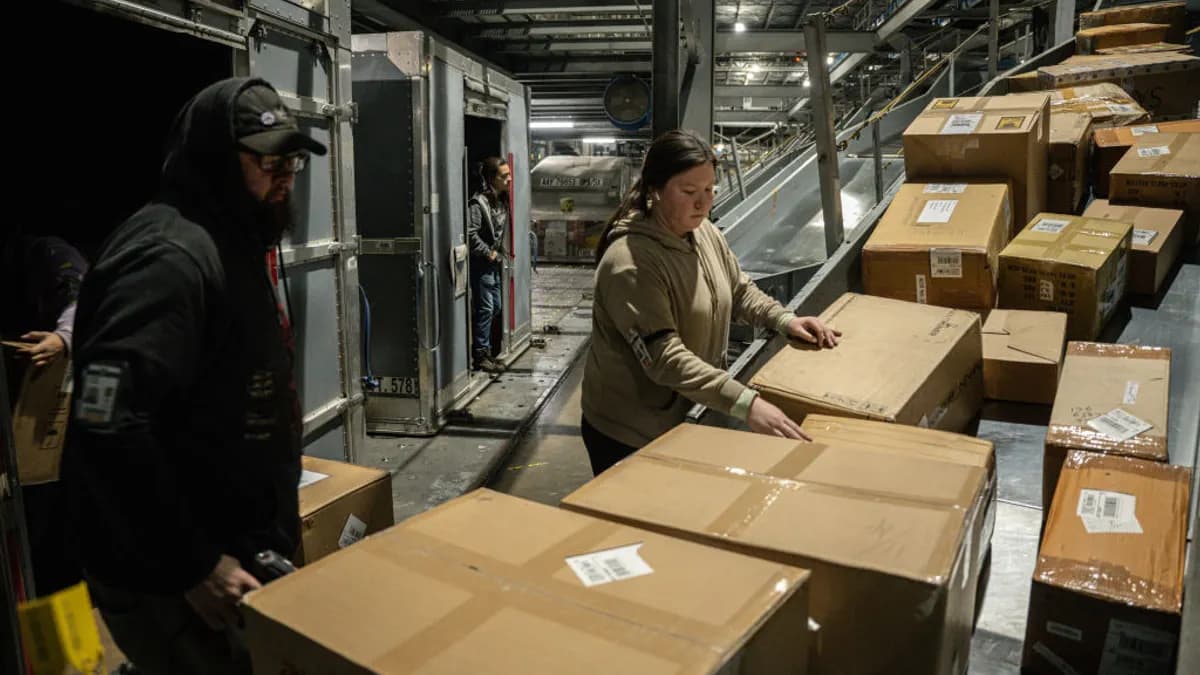
If RFID tags are the nerve cells, then UPS facilities are the nerve centers. Here, millions of packages are sorted, redirected, and processed every day. UPS installed a dense network of fixed RFID readers at strategic spots: on high-speed conveyor belts, dock doors, and other key bottlenecks. When a package with an RFID tag passes a reader, it sends out a radio signal that wakes up the chip on the label. The chip immediately "replies" with its unique ID code. The whole process takes just a millisecond, with no human help needed.
The system's real power is in the numbers. UPS estimates that during the truck loading phase alone, RFID technology has eliminated over 20 million manual barcode scans every day across the network. This saves more than 277 labor hours daily at just one checkpoint. To better support employees, UPS provides wearable RFID readers. Workers don't have to hold a scanner and aim at every barcode; they just walk past a stack of packages, and the device automatically records everything in the area.
The Third Pillar: Mobile Networks
The revolution doesn't stop at fixed facilities. UPS turned its entire US delivery fleet into a massive mobile RFID reading network. Every iconic brown truck is equipped with its own RFID reader. Because of this, the system automatically logs packages as soon as they are loaded. If a package ends up on the wrong truck, the system detects it instantly and alerts the driver, drastically reducing costly delivery errors. The process repeats when unloading at the delivery point, creating final data to confirm a successful drop-off.
Equipping the fleet does more than just automate scanning. It opens up new future possibilities. UPS says the next phase will use location data from the truck's RFID system to show drivers exactly where a package is inside the cargo area, cutting down search time and speeding up deliveries at every stop.
The Fourth Pillar: The Digital Brain
The three pillars above would be meaningless without the powerful software and data analysis systems connecting them. This is the brain of the entire operation. Every time an RFID tag is read-whether on a conveyor belt, at a warehouse door, or inside a truck-the system creates a data event and sends it to the UPS center almost instantly. This system combines RFID data with truck GPS, shipping documents, and facility operational data.
This combination creates a "digital twin" of the logistics network-a real-time virtual version of the physical world. With this twin, UPS managers track package flow with unprecedented detail. They spot bottlenecks before they get serious, optimize delivery routes on the fly, and give customers the "order-to-cash" visibility they expect. This is where RFID shows its true value, turning billions of raw data points into actionable insights that drive efficiency and a competitive edge that is hard to copy.
From Cost to Profit: The Economics of the RFID Gamble
Spending hundreds of millions of dollars a year just on RFID labels, plus the cost of tens of thousands of readers, network infrastructure, and software development, raises a big question: how does the UPS economic equation work? The answer lies in a delicate balance between huge investment costs and benefits ranging from direct operational efficiency to long-term strategic advantages.
Optimizing Operating Costs
The most obvious and measurable benefit comes from reducing labor costs. Eliminating over 20 million manual scans a day is a massive figure. If an employee takes an average of 2 seconds per scan (finding the barcode and scanning it), automation saves over 11,000 labor hours every day. Multiply that by the average UPS wage, and the savings are enormous. On top of that is the reduction in human errors like mis-scans, missed items, or loading the wrong truck. Every error costs money to fix, from rerouting packages to handling customer complaints. RFID significantly cuts these costs.
Furthermore, faster processing at facilities helps UPS increase capacity without needing more physical space. Data shows that automated facilities have a 28% lower cost per item. RFID is a key factor in reaching this efficiency, allowing conveyor belts and sorting systems to run at maximum speed.
Attracting High-Value Customers
However, focusing only on cost savings is short-sighted. The real strategic value of RFID is the ability to attract and keep target customers. Pharmaceutical companies, medical device makers, high-end electronics, and luxury fashion brands require strict security and supply chain visibility. For them, a lost or misdelivered shipment isn't just an annoyance; it causes millions in damages, disrupts production, or threatens lives.
By offering near real-time tracking from the initial pickup at a UPS Store to the final delivery, UPS provides a service that competitors find hard to match at scale. Matt Guffey, UPS Chief Strategy and Commercial Officer, notes that large retailers value inbound visibility because it helps them plan staffing and receiving more effectively. The UPS Premier service, which uses RFID (Premier Silver) and advanced sensors (Premier Gold) for critical medical goods, is a prime example of how UPS turns technology into a powerful sales tool. They aren't just selling shipping; they are selling peace of mind, control, and data.
Building a Foundation for the Future
Investing in RFID doesn't just solve today's problems; it builds a foundation for future services and business models. The massive data stream from the RFID network is a gold mine for artificial intelligence (AI) and machine learning applications. UPS uses this data to predict traffic patterns, optimize asset allocation (trucks, containers) flexibly, and even provide supply chain analytics services to customers.
For example, the system analyzes historical data to predict delays at a specific sorting center at a certain hour and automatically reroutes packages to avoid that bottleneck. Or, it can give retailers detailed info on average transit times from different suppliers, helping them optimize inventory management. These value-added services will become increasingly important for standing out and building customer loyalty.
A Digital Future: Long-Term Impact and Challenges Ahead
The UPS RFID revolution isn't a project with a clear end point. It is an ongoing transformation, a fundamental change in how the company views and manages its operations. Its impact will last for years, not just at UPS but across the entire logistics industry.
For UPS, the success of this strategy will shape the company's future. If they fully use RFID data to boost efficiency, improve service, and create new revenue, they will cement their spot as the industry's tech leader. However, the road ahead still has challenges. Managing a massive, complex IT system requires top-tier technical and operational skills. Data security, system scaling, and integrating new tech remain top priorities. Furthermore, the human factor is still vital. UPS must keep investing in retraining its workforce, helping them move from repetitive manual tasks to roles in oversight, analysis, and problem-solving alongside automated systems.
For the logistics industry, UPS's move has set a new benchmark. Rivals like FedEx and DHL, along with emerging startups, now face more pressure to catch up. The race to automate and digitize the supply chain will speed up. Customers who experience the tracking and reliability of RFID will find it hard to accept anything less. This will drive a wave of tech investment across the sector, raising overall standards and efficiency.
In the end, the UPS RFID story proves a major truth: in the digital economy, data is the most valuable asset. By turning every package into a smart data point, UPS isn't just moving goods; they are moving information. In the fierce competition of the 21st century, the ability to harvest and use information effectively will decide who leads and who follows. UPS's quiet revolution might not make daily headlines, but the ripples it creates will surely change the landscape of the logistics industry for decades to come.
The Battle of the Giants: RFID as a Competitive Weapon
To truly judge the strategic importance of RFID at UPS, you have to look at it through the lens of the constant war between logistics giants. This isn't just an internal tech upgrade; it's a calculated move in a complex game where every big player from FedEx and Amazon to DHL is looking for an edge.
FedEx: A Parallel Race
FedEx, the long-time rival of UPS, isn't sitting still. They have their own automation initiative called "Network 2.0." While FedEx's RFID details aren't as public as UPS's, they are clearly heading in a similar direction. However, the two companies differ in philosophy and structure. FedEx has a more decentralized model, with business units like Express, Ground, and Freight operating quite independently. This makes it harder to roll out a unified RFID system across the whole network. In contrast, UPS's more integrated model might give them an advantage in creating a seamless data ecosystem.
UPS's move puts direct pressure on FedEx. When large business customers see the benefits of UPS's end-to-end tracking, they will demand the same from FedEx. Competition is no longer just about price or delivery speed; it's about the quality and depth of data. Whoever provides a clearer, more reliable picture of the supply chain will have the upper hand in winning lucrative contracts.
Amazon: From Biggest Customer to Formidable Rival
No competitor has shaped UPS's recent strategy more than Amazon. Once UPS's biggest customer, Amazon gradually built its own logistics empire to become a direct rival. UPS actively reduced its reliance on Amazon as part of its "Better, not Bigger" strategy, but that left a revenue gap to fill. Deploying RFID is the key to solving this.
By focusing on the value-added services RFID brings, UPS tries to stand out from Amazon's model, which emphasizes cost efficiency and fast delivery. Amazon excels at warehouse networks and last-mile delivery for consumer e-commerce, but UPS is targeting the more complex B2B market. In this space, reliability, security, and deep tracking matter more than two-hour delivery. Temperature-sensitive medical shipments, high-value manufacturing parts, or luxury goods are areas where Amazon struggles to compete directly in the short term. RFID is the foundational tech helping UPS build a "strategic moat" around these markets.
DHL and the Global Stage
On the international stage, DHL is another tough competitor. DHL was one of the first to use automation and robots in warehouses, deploying thousands of collaborative robots. However, they focus more on physical automation rather than digitizing every single package like UPS. UPS's move will likely push DHL and other global logistics providers to rethink their digital strategies. As supply chains become more global and complex, the need for a seamless, unified tracking standard across borders and different service providers will grow. By leading in large-scale RFID deployment, UPS has a chance to shape those standards and put itself at the center of the future global logistics ecosystem.
Impact on People: Transforming the Workforce
A tech revolution of this scale cannot happen without deeply affecting the workforce. With UPS announcing tens of thousands of job cuts and automating tasks that once took millions of human hours, job concerns are unavoidable. However, the picture isn't entirely bleak.
From Manual Labor to Oversight Roles
Many of the most manual, repetitive, and injury-prone jobs are being phased out. Bending down, searching for, and scanning barcodes on thousands of packages a day will be replaced by automated systems. This doesn't just boost productivity; it also improves working conditions and reduces injury risks for staff. Human roles are slowly shifting from "doers" to supervisors, problem-solvers, and tech collaborators.
A future warehouse worker might not spend their whole day scanning packages. Instead, they will monitor a dashboard showing robot and RFID system activity, step in when there's a glitch, analyze data to find ways to improve, and work with AI to smooth out the process. Similarly, delivery drivers will use technology to find packages faster and plan better routes, letting them focus more on great customer service.
The Retraining Challenge and the Role of Unions
This shift requires a massive effort in training and retraining. UPS and other logistics firms must invest heavily in teaching staff new skills: digital literacy, data analysis, and working with automated systems. This is a big challenge, but also a chance to boost the value and pay of the workforce.
Unions, like the Teamsters, play a key role here. Their job is to make sure technology is rolled out fairly, supporting workers rather than blindly replacing them. Future labor contract talks will surely include terms on job security, retraining programs, and sharing the gains from higher productivity. Balancing tech efficiency with worker well-being will be one of the most important social issues the logistics industry faces in the next decade.
The Dark Side of the Revolution: Technical and Environmental Challenges
Despite the huge benefits, rolling out RFID at the scale of UPS comes with tough challenges and hard questions. These issues range from physical tech barriers to long-term environmental impacts.
Unforgiving Physics: Metal, Liquids, and Interference
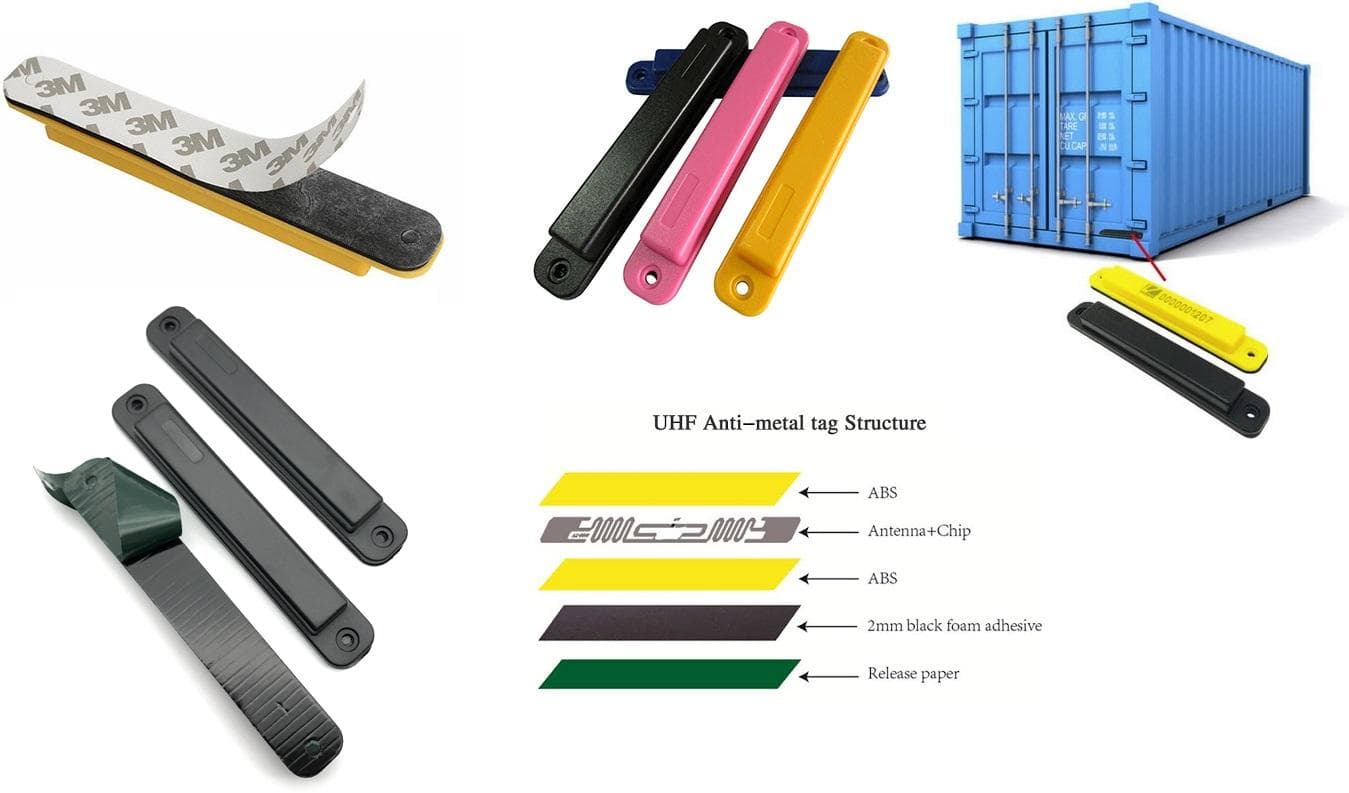
RFID technology, especially at UHF frequencies, isn't a magic bullet. Radio waves are affected by their surroundings. Metal is the biggest enemy of RFID because it reflects radio waves, creating dead zones and unpredictable readings. Likewise, liquids absorb radio waves, cutting down the reading range. This means tracking packages with metal parts, drinks, or other liquid products needs special solutions, like "anti-metal" tags with special insulation or careful tag placement on the box.
In a busy industrial setting like a UPS sorting center, with thousands of motors, belts, and other electronics running, RF interference is also a serious issue. Making sure dozens of RFID readers work at once in a tight space without messing with each other takes complex planning and network setup. UPS engineers must do detailed site surveys, pick antennas carefully, adjust power output, and use advanced anti-collision algorithms to ensure near-perfect accuracy.
Sustainability Issues: Where Do Billions of Chips Go?
As UPS uses billions of RFID tags every year, a big environmental question pops up: where do these tags go after the package is delivered? A typical RFID tag is made of paper, glue, aluminum or copper antennas, and silicon microchips. This mix of materials makes recycling tricky. If these tags are just tossed out with the cardboard boxes, they could contaminate the paper recycling stream.
The RFID industry knows this and is developing "eco-RFID" solutions. These include antennas that can be washed away during paper recycling, smaller chips that use less material, or plastic-free designs. However, using these at a large scale is still a challenge for cost and performance. UPS, as one of the world's biggest RFID users, has a major role and responsibility in pushing the industry toward greener solutions. Their choice of suppliers and tag types will ripple across the whole market.
Data Security: Protecting the Nervous System
A system that creates and sends billions of data points every day is also a tempting target for cyberattacks. Protecting the integrity and security of this "digital nervous system" is a top priority. Threats come in many forms: from eavesdropping on data between tags and readers, to cloning RFID tags to create fake packages, or denial-of-service attacks to paralyze the reader network.
UPS must use a multi-layered security strategy. Physically, they need to encrypt communication between tags and readers. Modern RFID standards like EPC Gen2v2 have built-in authentication and encryption to stop eavesdropping and cloning. For the network, data sent from warehouses and trucks to data centers must be encrypted and sent over secure channels. System-wide, UPS uses strict access controls, intrusion detection, and constant monitoring to protect the "digital brain" from both inside and outside threats. The fight to protect this system is just as complex and vital as building it.
Beyond Delivery: Building a Data Business
It would be a mistake to see the UPS RFID strategy only as a tool to optimize logistics. The long-term vision and real potential are much bigger. UPS isn't just building a smarter delivery network; they are laying the groundwork to become a tech and data company, with logistics as the core. The massive flow of detailed, real-time data from billions of packages every year is the most important strategic asset this revolution brings.
Supply Chain Analysis as a Service
With detailed data on goods flowing from thousands of global companies, UPS is in a unique spot to offer supply chain analysis and consulting. Imagine a retailer logging into a UPS dashboard that doesn't just show where a shipment is, but also gives deep insights. For example, the dashboard could show average shipping times and variations from each supplier, helping them spot weak links in their supply chain. It could compare their performance against anonymous industry standards, showing them how efficiently they run compared to competitors.
UPS can sell these services as premium subscriptions, creating new revenue that doesn't depend on shipping individual packages. They help customers optimize inventory, reduce stockouts, and react faster to market changes. This shifts UPS from a simple service provider to an essential strategic partner for their clients' businesses.
Dynamic Network Optimization
Internally, RFID data allows for network optimization at a level never seen before. Machine learning systems constantly analyze data streams to find patterns and trends. For example, the system might notice that on Tuesday afternoons, a sorting center in Chicago often gets overwhelmed. Before, spotting and fixing this took weeks. Now, the system suggests real-time solutions, like rerouting some traffic to a nearby facility or sending extra staff and trucks to the hotspot before a bottleneck even starts.
This dynamic optimization makes the network much more resilient. When unexpected issues hit-like extreme weather, strikes, or sudden spikes in demand-the self-adjusting network recovers faster and keeps things moving, minimizing the impact on customers.
A Foundation for Future Tech
The RFID infrastructure and data UPS is building also serve as the perfect foundation for future tech. As the Internet of Things (IoT) grows, packages will likely carry more sensors beyond just RFID. These sensors could track temperature, humidity, shocks, or even if a package has been opened. With a tag-reading network already covering the country, collecting data from these sensors becomes much easier and more efficient.
Looking further ahead, imagine combining RFID data with blockchain to create an unchangeable supply chain ledger, offering total transparency for high-value products. Or using precise RFID location data to coordinate self-driving cars or delivery drones. By investing in RFID today, UPS ensures they are ready to ride the next waves of technology.
Conclusion: A Bet That Shapes an Empire
UPS's RFID expansion isn't just a tech story. It's a story about adaptation, vision, and survival in a fast-changing world. Facing fierce competition and rising customer expectations, UPS didn't take the easy path. Instead, they made a bold bet: the future of logistics isn't just about moving boxes; it's about moving data intelligently.
This quiet revolution, happening in noisy warehouses and inside those familiar brown trucks, is reshaping the foundation of a 119-year-old empire. It turns every package into a node in a massive smart network, every employee into a data worker, and UPS from a shipping company into a tech company. The technical, cost, environmental, and human challenges are real and huge. But if they succeed, the reward is even bigger. They won't just boost productivity and attract the best customers; they will build a lasting competitive advantage-a "digital moat" that will be hard to cross for years to come.
The world might not notice the difference when a package is scanned by radio waves instead of lasers. But for UPS and the entire logistics industry, that difference is everything. It's the line between the past and the future, between reacting to change and creating it. And in this billion-dollar game, UPS is playing to win.
Deep Dive: Pressure Creates Diamonds
To truly understand the scale of UPS's bet, we need to go back to a time before RFID was a strategic buzzword. The UPS network, while massive and efficient for its time, still ran on half-century-old technology: barcodes. Every package was a silent object that only "talked" when a laser scanned its black and white stripes. This process, repeated billions of times a day, was the system's Achilles' heel.
A worker at a sorting center has to handle hundreds of packages every hour. Each one requires a series of physical actions: picking it up, turning it to find the barcode, aligning the scanner, and waiting for the "beep." This isn't just slow; it causes endless problems. Barcodes get dirty, wrinkled, torn, or covered, requiring expensive manual entry. Missed or wrong scans lead to misrouted packages, creating a domino effect of costs: fuel for reshipping, labor for reprocessing, and customer service time for complaints. Most importantly, it erodes customer trust.
Meanwhile, the world outside UPS was changing fast. The e-commerce dominance led by Amazon created new expectations: fast, cheap, and transparent delivery. But the UPS business model was built on B2B services, where reliability and specialized care mattered more than same-day speed. Trying to beat Amazon at their own game was a race to the bottom for prices and margins. CEO Carol Tomé saw this clearly. The "Better, not Bigger" strategy wasn't just a slogan; it was a refusal to join that race. It declared that the future of UPS lies in serving customers willing to pay for superior quality.
What does that quality look like? For a pharma company shipping temperature-sensitive vaccines, it means a guaranteed cold chain confirmed by real-time sensor data. For a chip maker, it means tracking a million-dollar shipment with meter-level accuracy to reduce theft. For a luxury fashion brand, it means giving customers a smooth, premium tracking experience that reflects their brand value. Simple barcodes can't do this. RFID, with its unique digital identity and automatic reading, became the obvious answer. Investing in RFID wasn't just a choice; it was a necessity driven by market pressure and a clear strategic vision.
Technical Deep Dive: Inside the System
To build a system that handles billions of transactions a year, engineers had to solve complex technical hurdles at every level. Their choice of tech and how they deployed it shows a deep understanding of both the potential and the limits of RFID.
The Package Layer: Distributed Intelligence
At the heart of every "Smart Package" is an RFID inlay that follows the EPC Class 1 Generation 2 standard (often called Gen2v2). This is the global standard for UHF RFID. Choosing this is vital because it ensures everything works together. A package labeled at a UPS store in California can be read perfectly by a sorter in Germany. Gen2v2 also offers advanced security, like "hiding" parts of the chip memory or using encrypted passwords to prevent copying or unauthorized access.
The inlay works using a clever physics principle called "backscatter." It has no battery. When radio waves from a reader hit the inlay's antenna, they create a tiny electric current that powers the microchip. The chip quickly changes the antenna's impedance, which alters the radio waves bouncing back to the reader. These changes carry the data stored on the chip, usually a unique Electronic Product Code (EPC). The whole process happens in just a few milliseconds.
However, no two packages are the same. UPS works with label suppliers to create different types of labels for specific uses. For liquid containers, they use special antenna designs or foam spacers to keep the label away from the liquid, which prevents signal absorption. For pallets of metal parts, they use "anti-metal" hard tags with a ferrite lining to isolate the antenna from the metal surface. Choosing the right label for the right job is a key part of RFID science.
The Infrastructure Layer: A Radio Wave Orchestra
Inside the facility, the challenge is to create total RFID coverage with no dead zones or interference. Engineers perform "RF site surveys" using spectrum analyzers to map the radio environment, finding potential interference and reflective surfaces. Based on this map, they decide where to install hundreds of fixed RFID readers.
Each reader usually connects to several antennas (often 4 or 8) to create spatial diversity. Switching quickly between antennas lets the system "see" a package from many angles, increasing the chance of reading a label that is hidden or poorly positioned. Middleware acts as the conductor, coordinating all the readers. It tells each reader when to fire, collects thousands of raw reads per second, filters out duplicates, fixes errors, and turns them into meaningful business events like "Package XYZ entered Conveyor 5 at 14:32:17.123."
The Mobile Layer: Challenges in Tight Spaces
Equipping delivery trucks with RFID brings its own set of hurdles. The truck body is a closed metal environment, much like a Faraday cage. This causes "multipath effects" where radio waves bounce off the walls repeatedly, creating a complex and unpredictable RF environment. To solve this, engineers place multiple antennas strategically inside the truck and use smart algorithms to tell direct signals apart from reflections.
On-board systems must also handle their own power and network. RFID readers usually plug into the truck's electrical system and use built-in cellular modems to send data back to the center instantly. This way, managers know exactly what is on the truck even while it is on the move.
The Data Layer: From Big Data to Smart Insights
Finally, data from thousands of warehouses and hundreds of thousands of trucks flows into a massive data lake, usually hosted on a scalable cloud platform like Google Cloud (UPS has a strategic partnership with Google). Here, raw data is processed, cleaned, and enriched. RFID data is matched with GPS, shipping labels, customer info, and operations to create a unified data model.
On this platform, analytics and machine learning tools take over. Clustering algorithms find inefficient delivery routes. Predictive models guess the volume of incoming parcels at a hub. Anomaly detection flags packages that stop moving unexpectedly, signaling potential loss. This is where the magic happens: billions of invisible "beeps" turn into business intelligence, helping the whole company make faster, better, and more efficient decisions.
Detailed Economic Analysis: The Numbers Behind the Big Bet
UPS didn't decide to invest heavily in new tech on a whim. It was based on a thorough cost-benefit analysis. While they don't share all their internal numbers, we can build an economic model based on public data and industry standards.
The Cost Side
RFID labels are the biggest and most obvious cost. With an estimated 5.7 billion packages a year, and each bulk RFID inlay costing about $0.05, the annual label cost hits $285 million. When you factor in turning that inlay into a finished label (adding paper, glue, and printing), the price per label is closer to $0.10, totaling $570 million per year.
Next is the infrastructure. Each industrial fixed RFID reader costs between $1,000 and $2,000. Each antenna is $100 to $300. With over 1,000 facilities, each needing dozens or hundreds of readers and antennas, the total equipment cost for warehouses can easily reach hundreds of millions of dollars. Add to that the readers on trucks and wearable devices for staff.
Beyond hardware, there are software and integration costs. Building or buying middleware, developing data analytics apps, and linking RFID to old systems like WMS and ERP requires a massive effort-hundreds of thousands of work hours from software engineers, architects, and project managers. This cost also runs into the hundreds of millions over the life of the project.
Finally, there are ongoing operating and maintenance costs: tech support, replacing broken gear, and software updates. Total initial CAPEX and annual OPEX can easily exceed $1 billion in the early years.
The Benefit Side
Facing such huge costs, the benefits must be even bigger. The first benefit comes from direct labor savings. Eliminating 20 million manual scans a day saves a massive amount of work hours. Estimating each labor hour (wages and benefits) at $40, saving 11,000 hours a day equals $440,000 a day, or over $160 million a year. That is from just one step.
The second benefit is error reduction. Every lost or misdelivered package costs $50 to $100 to fix. Even if RFID reduces the error rate by a tiny fraction of a percent across 5.7 billion packages, the savings reach tens or hundreds of millions of dollars annually.
The third and most important benefit is revenue growth from high-value customers. Premium services like UPS Premier cost more than standard shipping. By offering superior tracking and reliability, UPS convinces more customers to switch. The Digital Access Program grew from $139 million to $4.1 billion in five years, showing a huge demand from small and medium businesses for convenient digital services. RFID is the core factor driving this growth. If RFID helps UPS gain just a few percentage points of market share in high-profit sectors like healthcare and high-tech, the extra revenue could reach billions of dollars.
Return on Investment (ROI)
Looking at the cost-benefit ratio, it is clear that UPS is playing the long game. The project's ROI might not be high in the first year, but it will soar once the system is fully deployed and the network effect kicks in. Saving 28% in costs per package at automated warehouses shows the real potential here. As they add more automated hubs and customers use value-added services, the math becomes even more attractive. This isn't blind risk-taking; UPS is making a calculated bet on efficiency, quality, and future growth.
Was this article helpful?
Related Articles
Maximizing Asset Visibility: The Ultimate Guide to Anti-Metal UHF RFID Tags
Mar 2, 2026
Mastering UHF RFID in Odoo: Hardware, Workflows, and Best Practices
Mar 2, 2026
Chainway C72 Comprehensive Review: Specs, Pricing, and Top Alternatives
Mar 2, 2026
The Ultimate UWB Module Comparison: Prices, Specs, and Use Cases
Feb 23, 2026