
In the history of technology, few projects are as massive or as controversial as SpaceX's Starlink. This is more than just a satellite internet service; it is an extraordinary engineering effort to bring high-speed, low-latency bandwidth to every corner of the planet. With over 9,400 satellites active in Low Earth Orbit (LEO) as of January 2026, Starlink has become the largest man-made constellation ever, making up over 65% of all active satellites. This project proves the power of systems thinking, vertical integration, and the persistence to overcome the toughest technical challenges.
This is a story about engineering, numbers, physics, and the ambition to change how humans connect. Let's explore Starlink.
The Architecture of a Global Network
To understand Starlink, you first need to grasp the overall system architecture. Starlink isn't just a collection of satellites; it is a complex, carefully designed ecosystem consisting of four main components working in sync: (1) The Space Segment (the satellite constellation), (2) The Ground Segment (infrastructure), (3) The User Segment (terminals), and (4) Network and Operations.
The most visible part is the constellation of thousands of small satellites orbiting in LEO, about 550 km above the ground. This distance is 65 times shorter than traditional geostationary (GEO) satellites, helping Starlink achieve ultra-low latency of just 25-60 milliseconds-nearly as fast as fiber optics. The satellites are arranged in a dense grid with multiple orbital "shells," ensuring users on the ground always see at least one satellite. As one satellite passes by, the connection moves smoothly to the next one.
The most important technological breakthrough is Inter-Satellite Laser Links (ISLs). Each new-generation satellite has three laser links, creating a high-speed optical network in space. Data travels directly between satellites at speeds up to 200 Gbps. This reduces global latency because light travels faster in a vacuum than in fiber optic cables, while also providing coverage in places where ground stations cannot be built.
The satellites connect to the Internet through gateways, which are stations with large dome antennas located near major Internet exchange points. A user's request goes from their dish up to a satellite, down to a gateway, into the Internet, and back. The entire system is monitored by Network Operations Centers (NOCs).
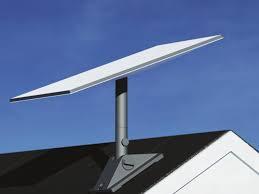
For the end user, the main component is a low-cost phased-array antenna dish. This technology was once expensive and used only by the military, but SpaceX now mass-produces it for just a few hundred dollars. It "steers" electronic beams to follow moving satellites without needing any mechanical parts. Finally, complex software and operating systems manage the entire network, from tracking thousands of satellites and routing traffic to automatically avoiding space debris.
Inside a Starlink Satellite
Each Starlink satellite is a complex machine optimized for high performance, low cost, and mass production. The unique flat-panel design allows them to be stacked like a deck of cards inside a Falcon 9 rocket, maximizing the number of satellites per launch.
The heart of the satellite is the communication system, including multiple phased-array antennas for user links (Ku-band) and gateway links (Ka/E-band), along with the ISL laser system. The power system features two giant solar panels and lithium-ion batteries to keep it running while passing through Earth's shadow.
To move, the satellite uses Hall-effect thrusters powered by krypton gas, a more economical choice than traditional xenon. These engines help raise the orbit after launch, maintain position against atmospheric drag, and de-orbit at the end of its life. The autonomous navigation system uses star trackers to determine position and reaction wheels to change direction precisely. To handle space debris, the satellites are designed to burn up completely upon re-entering the atmosphere.
What is truly amazing is SpaceX's industrial production capacity, building up to 6 satellites per day at their factory in Redmond, Washington.
Overcoming Impossible Hurdles
Starlink's success comes from solving three major technical and economic hurdles at the same time:
-
Launch Costs: This is the most significant competitive advantage. Thanks to the reusable Falcon 9 rocket, SpaceX's internal cost to put cargo into orbit is only about $2,720/kg, which is 3 to 10 times cheaper than competitors. Without this revolution, Starlink would not be economically viable.
-
Phased-Array Antenna Costs: SpaceX turned expensive military technology into a consumer product by designing custom ASIC chips and automating production. The cost to make an antenna dropped from tens of thousands of dollars to under $500, allowing them to sell kits to users at an affordable price.
-
Mass Production: SpaceX applied the assembly line mindset of the auto industry to satellite manufacturing, reaching unprecedented speeds. Vertical integration-designing and making most components in-house-helps them control the supply chain and optimize production.
Solving these three problems at once created a massive "economic moat" around Starlink.
Power Comes With Responsibility
The rise of Starlink has also sparked major controversy. Space junk and the risk of collisions (the Kessler effect) are top concerns, as Starlink occupies a large portion of LEO orbit. SpaceX has implemented self-destruct designs and automatic collision avoidance, but many experts say it is still not enough.
For astronomers, the satellites create light streaks in observation photos, ruining scientific data. SpaceX has tried to reduce satellite brightness, but the conflict between global connectivity and protecting the night sky remains.
Spectrum competition is also intense, as Starlink needs a vast range of frequencies, which can interfere with other satellite systems. Finally, Starlink's ability to provide uncensored Internet and its military applications raise concerns about national security and sovereignty, leading other countries to build their own constellations.
A New Race in the Sky
Starlink leads the new space race, but it has plenty of rivals. OneWeb targets the business market with a smaller constellation and doesn't use ISL. Amazon Kuiper, backed by Amazon, is the strongest long-term competitor but trails Starlink by years and lacks its own rockets. China is also building the Guowang constellation for strategic reasons.
Meanwhile, SpaceX keeps innovating. The Direct-to-Cell service lets smartphones connect directly to satellites, ending dead zones. The next-gen Starship rocket, capable of carrying over 100 tons, will deploy V3 satellites that are 10 times more powerful, solidifying its lead.
A Money-Making Machine in Orbit
Starlink's business model relies on strict cost control and diverse revenue. With an initial investment of about $10 billion, Starlink started turning a profit in 2024. Money comes from many sources: individual users, businesses, governments (especially the military via Starshield), and lucrative mobile markets like aviation and shipping.
With 10 million subscribers by early 2026, annual revenue could hit $12 billion. This diverse business model, combined with cost advantages that others can't copy, is turning Starlink into a real money-making machine. A future IPO could help fund SpaceX's bigger ambitions.
Starlink proves that global satellite internet is no longer science fiction. However, balancing commercial interests, tech progress, and space environment responsibilities will be the biggest challenge in the coming years. The Starlink story is just getting started.
A Deep Dive into Orbits and Constellations
Choosing Low Earth Orbit (LEO) at about 550 km was a key technical move. It offers much lower latency than traditional satellite internet using Geostationary Orbit (GEO) at 35,786 km. Latency-the time it takes for a signal to travel-drops from over 600 milliseconds to just 25-60 milliseconds. This is vital for real-time apps like video calls, online games, and financial trades. However, low latency comes with complexity. At LEO altitudes, a satellite is only visible to a user for a few minutes before disappearing over the horizon. You need a constellation of thousands of satellites working together to ensure a steady connection.
The Starlink constellation is organized into orbital "shells." The first main shell has 1,584 satellites in 72 orbital planes, each tilted 53 degrees from the equator with 22 satellites. This structure ensures users on the ground always have at least one satellite in view. As one satellite flies out of range, the connection switches seamlessly to the next one coming in. This is a complex puzzle of orbital mechanics and network coordination, managed by automated software.
Laser Networks: The Optical Backbone in Space
Starlink's biggest tech breakthrough is the large-scale use of inter-satellite laser links (ISL). Most new satellites have three optical laser links, creating a high-speed "mesh" network in space. Each link can move data at up to 200 Gbps. Lasers allow satellites to send data directly to each other without needing a ground station.
The benefits of ISL are huge. First, it cuts global latency. Light travels about 47% faster in a vacuum than through fiber optic cables. For long-distance connections like New York to London, data via Starlink's laser network is much faster than undersea cables. Second, it provides service in remote areas like the middle of the ocean or the poles where ground stations can't be built, creating true global coverage.
Keeping a precise laser link between two objects thousands of kilometers apart moving at 28,000 km/h is an incredible technical feat. It requires advanced optics, electronics, and control software. SpaceX mastering this technology at mass-production scale shows their engineering power. file content
Satellite Engineering: A Tech Marvel
Starlink satellites are the building blocks of the whole system-complex machines optimized for high performance, low cost, and mass deployment. Their design has evolved through several generations, from the early v0.9 (227 kg) to the current v2 Mini (about 740 kg), with each version bringing major upgrades.
Unlike traditional bulky box-shaped satellites, Starlink uses a unique flat-panel design. The entire body is compressed into a thin rectangle. This isn't by accident; it solves the biggest challenge of building a mega-constellation: launch costs. The flat design allows satellites to be stacked neatly inside the Falcon 9 rocket's nose cone, like a deck of cards. One Falcon 9 launch can carry 21 to 60 satellites, making the most of every flight's space and weight, which slashes the cost per satellite. This is a perfect example of designing satellites and rockets together to optimize the whole system.
Once the rocket reaches orbit, the upper stage starts to spin, and the holding mechanism releases, letting the stack of satellites drift gently into space. Centrifugal force from the spin helps them separate naturally. The whole process is designed to deploy dozens of satellites quickly and reliably without complex release gear for each one.
The heart of the satellite is the communication system, including phased array antennas for Ku-band (user links) and Ka/E-band (gateway links), plus the ISL laser system. These antennas create and steer hundreds of narrow beams toward many users and gateways at once. The ability to "steer" beams electronically lets the satellite track targets on the ground while moving at 28,000 km/h without using any moving parts.
Satellites are basically solar-powered robots. The power system uses a large gallium arsenide solar array that unfolds after launch, along with lithium-ion batteries to provide power when the satellite is in Earth's shadow. To move, the satellite uses krypton-powered Hall-effect thrusters, a cheaper choice than traditional xenon gas. These engines help the satellite raise its orbit after launch, maintain its position against atmospheric drag, and most importantly, de-orbit at the end of its life to avoid becoming space junk.
To navigate in space, each satellite has a star tracker developed by SpaceX. These sensors take photos of the stars and compare them to an internal star map to determine direction with extreme precision. They change direction using reaction wheels, which are high-speed spinning wheels inside. By changing the spin speed, the satellite rotates without using fuel. The entire operation is controlled by a central computer running Linux, designed to be fault-tolerant and radiation-resistant in the harsh space environment.
Perhaps most impressive is the ability to mass-produce these complex machines. At the factory in Redmond, Washington, SpaceX uses a highly automated production line that can build up to 6 satellites per day. This speed is unprecedented in the aerospace industry and is a core factor in Starlink's success.
Overcoming Technical and Economic Barriers
Starlink's success isn't magic; it is the result of systematically solving three major technical and economic hurdles that caused previous satellite internet projects to fail. Solving these three problems simultaneously creates a massive "economic moat" around Starlink, making it hard for competitors to catch up.
The Launch Cost Revolution:
This is Starlink's deepest and most fundamental competitive advantage, coming from its parent company, SpaceX. Before the reusable Falcon 9 rocket, the cost to put 1 kg of cargo into LEO orbit ranged from $10,000 to $80,000, depending on the rocket. At this cost, building a constellation of thousands of satellites was economically impossible. SpaceX, using reusable Falcon 9 first-stage technology, reduced launch costs to unseen levels. SpaceX's internal cost for a Falcon 9 launch is estimated at only about $15 million, bringing the launch cost down to about $2,720/kg. This figure is 3 to 10 times lower than any competitor. Without this launch cost revolution, Starlink could not exist.
Democratizing Phased Array Antennas:

To track fast-moving LEO satellites in the sky, users need electronically steered beam antennas, called phased array antennas. For decades, this technology was only available in the military and high-end aerospace, costing hundreds of thousands to millions of dollars each. SpaceX's challenge was to turn expensive technology into a cheap consumer product. They did this with a team of top engineers, designing custom ASIC chips (Application-Specific Integrated Circuits) to control the antenna elements, and building a fully automated production line. As a result, the production cost of Starlink antennas dropped from over $2,500 initially to under $500. Selling the equipment kit to users for $300-$600 (initially at a loss) is a strategic investment to quickly capture the market.
Industrial-Scale Satellite Production:
The traditional satellite industry operates like a craft workshop, where each satellite is handmade over months or years. To build Starlink, SpaceX had to produce thousands of satellites per year. They applied the assembly line mindset of the auto industry to satellite production. By using vertical integration-designing and manufacturing almost every part from the chassis and computers to the thrusters and star sensors-SpaceX controls the entire supply chain, optimizes designs for mass production, and achieves unprecedented speed. Producing 6 satellites a day not only helps build the constellation quickly but also allows them to constantly improve and release new generations of satellites with better technology.
Mastering these three factors-cheap launches, cheap antennas, and mass production-gives Starlink an almost insurmountable lead. While competitors still struggle with basic costs, Starlink focuses on expanding its network and developing new services.
The Price of Connection: Challenges and Controversies
Starlink's rapid rise and massive scale bring great benefits but also carry serious challenges and controversies. Deploying a constellation of tens of thousands of satellites causes deep concern among scientists, regulators, and other nations. SpaceX's responsibility in addressing these issues will shape the future of space activities.
Space Junk and Orbital Safety:
Low Earth Orbit (LEO) is becoming dangerously crowded, and Starlink is the biggest contributor. Every satellite can become a source of space junk. A collision between two satellites can create thousands of new debris pieces, each flying like a bullet at 28,000 km/h, causing more collisions. This scenario, called the Kessler Syndrome, could create a chain reaction that makes some orbital regions unusable. SpaceX uses mitigation measures like designing satellites to burn up completely upon reentry, autonomous de-orbiting using thrusters, and an automated collision avoidance system. However, with such a huge number of satellites, even a small failure rate leaves behind a dangerous amount of junk.
Impact on Astronomy:
For astronomers, the Starlink constellation is like a nightmare. Satellites reflect sunlight, creating long bright streaks on telescope images. These streaks ruin scientific observations, especially large sky survey projects aimed at detecting faint objects like supernovae or asteroids that could hit Earth. SpaceX works with the astronomy community to reduce the problem by painting satellites dark, adding sunshades, and adjusting the orientation of solar panels. These efforts reduce brightness but haven't eliminated it completely. The conflict between the need for global connectivity and protecting the night sky for science remains hard to solve.
Frequency Wars and Legal Issues:
Radio waves are a finite resource. Starlink needs access to large frequency bands (mostly Ku and Ka), which risks interfering with other satellite systems, including traditional GEO satellites that provide essential services like TV or weather forecasting. Frequency allocation is managed by national and international agencies, so SpaceX must navigate complex legal disputes and lobbying to get licenses. Competitors constantly object, claiming SpaceX's plans cause harmful interference and create a monopoly in LEO orbit.
Security and National Sovereignty:
A global internet system independent of any country's ground infrastructure naturally raises security and sovereignty concerns. Starlink brings uncensored internet to people in countries with strict information control, like Ukraine and Iran. It has also proven to have great military value, being used extensively by the Ukrainian military and the Pentagon. This raises complex questions about the role of private companies in military conflicts and the possibility of being seen as a military target by other nations. The dominance of a single company over global connectivity infrastructure also becomes a strategic risk, prompting countries like China and those in Europe to speed up plans for their own constellations.
The New Race in the Sky: Competitive Landscape and the Future
Starlink's success sparked a new space race to build LEO internet mega-constellations. While Starlink has an almost insurmountable first-mover advantage, several major rivals are working hard to gain market share. At the same time, SpaceX continues to innovate with technology that will change the telecommunications industry.
Main Competitors:
The LEO satellite internet market is becoming a game for tech and telecom giants. Starlink's three most notable rivals are OneWeb, Amazon Kuiper, and a potential constellation from China.
-
OneWeb (now Eutelsat OneWeb): OneWeb follows a different strategy, focusing on business (B2B), government, aviation, and maritime customers. Their constellation is much smaller, around 648 satellites, flying at a higher orbit (1,200 km), which leads to slightly higher latency. A key technical difference is that OneWeb satellites lack inter-satellite laser links (ISL), meaning every connection must pass through a ground station. This increases latency and limits coverage in remote areas.
-
Amazon Kuiper (now Amazon Leo): Thanks to Amazon's massive financial power, Project Kuiper is seen as Starlink's most formidable direct rival in the long run. They plan to deploy a constellation of 3,236 satellites. But Kuiper's biggest challenge is being 5-7 years behind Starlink and lacking its own rocket launch capability. Amazon has to sign billion-dollar contracts to buy dozens of launches from other companies. Kuiper's advantage may lie in integrating with Amazon's large ecosystem, especially Amazon Web Services (AWS).
-
China's National Constellation (Guowang): China considers building its own satellite internet constellation a strategic national priority to reduce dependence on US systems. This project, named Guowang ("National Network"), plans to deploy about 13,000 satellites. Although starting later, thanks to a strong space program and state support, this will be a major geopolitical and technological rival in the long term.
The Future of Starlink: Direct-to-Cell and the Starship Era
SpaceX is not resting on its laurels. They are pushing two technologies that will change the future of Starlink.
-
Direct-to-Cell: This is a new service that allows existing LTE smartphones to connect directly to Starlink satellites without special equipment. New generation Starlink satellites have advanced eNodeB modems, acting like cell towers in space. Initially, it will only support text messages, later expanding to voice and data. This service does not replace ground mobile networks but completely eliminates "dead zones" in remote areas. SpaceX has signed agreements with many major global carriers.
-
The Role of Starship: Starship is SpaceX's next-generation rocket system, fully reusable and capable of carrying over 100 tons to LEO orbit. Compared to Falcon 9 (about 22 tons), this is a huge leap in capacity. Starship helps SpaceX deploy third-generation Starlink satellites (V3) that are bigger, more powerful (10 times higher throughput), and in larger numbers per launch. This allows SpaceX to speed up building and upgrading the constellation, reducing the cost per satellite and solidifying its dominant position for years to come.
The Money Machine in Orbit: Economic Analysis and Business Model
Any engineering marvel will collapse without a sustainable business model. The history of the satellite internet industry is full of financial failures. Starlink is different thanks to its technology and a carefully calculated economic model, based on strict cost control and diverse revenue sources.
Cost Analysis:
Cost determines survival. The Starlink model optimizes initial investment costs (CAPEX) and operations (OPEX). The total cost to build the first phase of the constellation (about 12,000 satellites) is estimated at 10 billion dollars. This figure is much lower than similar projects thanks to extremely cheap internal launch costs and mass production of satellites (under 500,000 dollars each). Operating costs include running the constellation, maintaining ground infrastructure, and replacing satellites every 5-7 years. By making launches cheap, SpaceX turns this large expense into manageable operating costs.
Revenue Sources:
Starlink doesn't just target one market. The business model serves many different customer segments:
- Consumer Market (Residential): Initial revenue comes from rural and remote households. With 10 million subscribers expected by early 2026, this market could bring in 12 billion dollars in annual revenue.
- Business and Government Market: Premium service packages for businesses, especially large contracts with governments and the military (Starshield service).
- Mobility Market: Service packages for RVs (Roam), boats (Maritime), and planes (Aviation). This is a lucrative market because traditional internet connections in these places are expensive and slow.
The Path to Profit:
Starlink burned through cash for years. But thanks to rapid subscriber growth and effective cost control, Starlink started making a profit in 2024. With expected revenue of 11.8 billion dollars in 2025, Starlink is becoming a real money-making machine. Elon Musk has mentioned the possibility of a Starlink IPO once cash flow is stable. A successful IPO could raise massive capital for SpaceX's bigger ambitions.
Conclusion: A Connected Future
Starlink proves that low-latency broadband internet from space is no longer science fiction. By solving the costs of launching, mass-producing antennas, and satellites, SpaceX has created a huge competitive advantage, changing the entire telecom and space industry.
In the coming years, competition will get tougher, but Starlink's leading position will be strengthened by the Starship program. Services like Direct-to-Cell continue to blur the lines between ground and space networks, heading toward a future where everyone and every device is connected no matter where they are on Earth.
However, great power comes with great responsibility. Handling challenges like space junk, astronomical impacts, and security issues will determine if this new era of global connectivity stays sustainable and benefits all of humanity. The Starlink story is just beginning, and the next chapters promise to be even more exciting.
Deep Dive into Orbital Shells
The Starlink constellation architecture isn't just one big block; it is divided into several orbital shells. Each shell has a different altitude, tilt angle, and number of satellites, optimized for specific purposes. The first phase of Starlink, approved by the FCC, consists of 4,408 satellites divided into five shells:
- Shell 1: 1,584 satellites at 550 km altitude, 53.0-degree tilt. This is the main layer, providing primary coverage for most populated areas in the world.
- Shell 2: 1,584 satellites at 540 km altitude, 53.2-degree tilt. This layer works close to Shell 1 to increase network density and capacity.
- Shell 3: 336 satellites at 570 km altitude, 70-degree tilt. This layer has a higher tilt to improve coverage at high latitudes near the polar regions.
- Shell 4: 520 satellites at 560 km altitude, 97.6-degree tilt. These are polar orbit satellites, helping Starlink serve the North and South Poles, which GEO satellites cannot do.
- Shell 5: 374 satellites at 560 km altitude, 97.6-degree tilt. Similar to Shell 4, enhancing polar coverage.
Additionally, SpaceX is licensed for a second-generation constellation (Gen2) with nearly 30,000 satellites, operating at altitudes from 328 km to 614 km. Multiple orbital shells help Starlink fine-tune coverage and network capacity based on demand. For example, they concentrate more satellites in crowded areas to avoid congestion. This approach is flexible and easy to scale, unlike the fixed architecture of traditional satellite systems.
Deep Dive into Ground Infrastructure
Ground infrastructure is an essential part of the Starlink system, acting as the bridge between space and Earth. It consists of two main components: gateways and network operations centers (NOCs).
Gateways are ground stations with large radome antennas that track and communicate with multiple passing satellites at once. They are placed in strategic locations, usually near major Internet Exchange Points (IXPs) or data centers of cloud providers like Google Cloud and Microsoft Azure. Placing them nearby helps reduce latency and speed up connections. When you visit a website, the request from your Starlink dish flies up to a satellite, the satellite sends it down to the nearest gateway, the gateway gets the data from the ground internet and sends it back. SpaceX has built hundreds of these gateways around the world, creating a global ground network to support the space network.
Network Operations Centers (NOCs) are the brains of the entire system. Located in secure spots in Hawthorne (California), Redmond (Washington), and McGregor (Texas), the NOCs monitor thousands of satellites, manage network traffic, coordinate connection handovers, and command satellites to avoid collisions by adjusting their orbits. Engineers use complex software to view the constellation in real-time, track network performance, and fix issues. The system is highly automated but still needs people to oversee unusual situations.
Deep Dive into End-User Equipment
For the end user, Starlink is a simple kit consisting of an antenna dish, a Wi-Fi router, and cables. But inside that simple-looking dish is the most impressive engineering achievement: a low-cost phased array antenna.
Unlike old satellite dishes that need precise mechanical alignment, Starlink antennas use electronic beam steering. Consisting of hundreds of tiny antennas, the device adjusts the signal phase for each one to "steer" the beam toward satellites moving across the sky, with no moving parts needed. The antenna automatically finds and locks onto the satellite signal, optimizing the connection itself. It even has built-in heating to melt snow and ice in winter. SpaceX mass-producing these antennas for just a few hundred dollars is a major economic and manufacturing breakthrough, opening the door for Starlink into the consumer market.
Besides the standard version for homes, SpaceX has high-performance versions for businesses and mobility. The "High Performance" version is larger, handles weather better, and offers higher speeds in extreme conditions. The "Flat High Performance" version is designed to be mounted on moving vehicles like RVs, boats, and planes, keeping the internet connected at high speeds.
Exploring the Economic Model and Pricing
The Starlink economic model combines superior rocket launch manufacturing advantages with a diverse business strategy targeting many segments. While competitors are still struggling with basic costs, Starlink has already entered the harvest phase.
Multi-Segment Pricing Strategy:
Starlink doesn't use a one-size-fits-all price. They built a complex hierarchy to get the most revenue from every customer group:
- Standard: The basic plan for households at a fixed location. This is the cheapest option, aimed at attracting a large number of rural users.
- Priority: For businesses and high-demand users. It offers faster speeds, network priority, and better customer support. This plan is much more expensive and is sold based on data limits (like 1TB, 2TB, or 6TB).
- Mobile (formerly Roam): For people in RVs, campers, or those who need to connect in different places. This plan costs more than Standard and comes in two types: Mobile Regional (for use within your own continent) and Mobile Global (for use anywhere Starlink has coverage).
- Mobile Priority: Combines Priority and Mobile features for critical mobile uses like maritime, emergency rescue, and mobile businesses. This is the most expensive plan, reaching thousands of dollars per month for high-capacity data packages.
This pricing strategy helps Starlink capture maximum value from all types of customers. Luxury yachts are willing to pay thousands a month for high-speed internet in the middle of the ocean, while rural households can only afford about a hundred. By serving both, Starlink expands into a massive potential market.
The path to profit and IPO:
For years, Starlink was a money-burning machine with billions spent on R&D and investment. But thanks to rapid subscriber growth (reaching 10 million by early 2026) and better control over terminal production costs, the financial situation has flipped. Reports show Starlink started making a profit in 2024. Analysts predict Starlink's revenue will hit $11.8 billion in 2025 and continue to grow strongly after that.
Elon Musk often mentions the possibility of a Starlink IPO in the future, once cash flow is stable and predictable. Based on SpaceX's internal funding rounds, Starlink is valued at tens or even hundreds of billions of dollars, making it one of the most valuable private companies in the world. A successful IPO wouldn't just bring big profits to early investors; it would raise massive capital to fuel SpaceX's bigger ambitions, like building a city on Mars. Starlink isn't just an internet service; it's the financial engine for Musk's interplanetary vision.
A deep dive into the future: Direct-to-Cell and the Starship era
The future of Starlink will be shaped by two breakthrough technologies: Direct-to-Cell and the Starship rocket.
Direct-to-Cell: Turning satellites into cell towers
This groundbreaking service allows existing LTE smartphones to connect directly to Starlink satellites without any special equipment. New generation Starlink satellites have advanced eNodeB modems that act like cell towers in space. They broadcast on standard mobile frequencies (like T-Mobile's bands in the US), helping phones connect when they lose ground signals. It will start with SMS support, then expand to voice and data. The service won't replace city networks, but it will wipe out "dead zones" in remote areas, at sea, or during emergencies. The big challenge is the weak signal from a satellite 550 km away and the Doppler effect caused by the satellite's speed. SpaceX solves this with super-advanced signal processing. They have signed deals with major carriers like T-Mobile (US), Rogers (Canada), Optus (Australia), and KDDI (Japan), creating a brand new B2B business model.
The role of Starship: A giant leap in capability
Starship is SpaceX's next-generation rocket system, fully reusable and capable of carrying over 100 tons to LEO. Compared to Falcon 9 (about 22 tons), this is a huge step forward. Starship helps SpaceX launch larger, more powerful Starlink V3 satellites in greater numbers each time. A single Starship launch can deploy hundreds of satellites. V3 satellites have 10 times the throughput of the current V2, with downlinks up to 1 Tbps and uplinks of 160 Gbps. This solves network congestion as users increase and opens up high-bandwidth services. With Starship, the cost per gigabit of data will drop even further, helping Starlink dominate the satellite internet market for decades.
A deep dive into the competitive landscape
Even though Starlink is leading, the LEO race is heating up. Competitors, though late to the game, are still working hard to find their place.
OneWeb: After escaping bankruptcy thanks to the UK government and India's Bharti Global, and then merging with GEO satellite giant Eutelsat, OneWeb has positioned itself as Starlink's main rival in the B2B market. They don't compete with Starlink for consumers; instead, they provide reliable connections for governments, ISPs, airlines, and shipping companies. A lack of ISL is a technical weakness, but focusing on large, long-term business contracts helps OneWeb build a sustainable model. The Eutelsat merger also allows for "multi-orbit" solutions, combining low-latency LEO with the stable, wide coverage of GEO.
Amazon Kuiper: This remains the biggest unknown and the largest potential threat to Starlink. With almost endless financial backing from Amazon and a long-term vision, Kuiper is building a system to compete directly with Starlink. Although a few years behind, Kuiper is learning from Starlink's successes and failures. Its biggest advantage likely lies in deep integration with Amazon Web Services (AWS). Kuiper offers seamless, secure, high-performance connectivity for millions of AWS customers worldwide, from large corporations to startups. The biggest challenge remains cost and access to launch services. Depending on external launch partners puts them at a major disadvantage in terms of cost and deployment speed compared to SpaceX's vertically integrated model.
National Constellations: Recognizing the strategic importance of satellite internet, many countries and regions are developing their own constellations. China is pushing the Guowang project with 13,000 satellites. The European Union is funding the IRIS² constellation to ensure Europe's strategic autonomy in secure connectivity. While these projects may not compete directly with Starlink on the global market, they still create competition at regional and geopolitical levels, while complicating the regulatory environment and spectrum management.
The satellite internet race is more than just a tech war; it is a battle of business models, market strategies, and geopolitical influence. Starlink is in the lead, but the race is far from over.
A Closer Look at the Challenges
Operating a constellation of tens of thousands of satellites brings challenges we have never seen before.
Satellite Reliability and Lifespan: Every Starlink satellite is a potential point of failure. With thousands in orbit, even a tiny failure rate means dozens or hundreds of satellites go dark every year. SpaceX must detect, diagnose, and fix issues from a distance. More importantly, they have to constantly produce and launch new satellites to replace old ones that reach the end of their life (about 5-7 years). This requires a non-stop production and launch machine. Any break in the supply chain or launch schedule hurts the health of the entire constellation.
Cybersecurity: As global infrastructure, Starlink is a major target for hackers. Attacks can hit any part of the system: the satellites, gateway stations, the network OS, or user terminals. SpaceX invests heavily in security using end-to-end encryption and multi-layer protection. However, threats are always there and constantly evolving. A successful attack could cause massive service outages or even loss of satellite control.
Global Legal Environment: Starlink operates in a complex and blurry legal landscape. Every country has its own rules for telecom licenses, radio spectrum use, and data privacy. SpaceX has to negotiate for permission everywhere they want to work. This creates a maze of regulations often shaped by politics. Furthermore, international rules for space traffic and orbital debris are still in the early stages. The lack of clear global standards creates uncertainty and the risk of future conflict.
Solving these challenges takes more than just technical skills; it requires diplomacy, legal savvy, and business smarts. Starlink's long-term success depends on how well SpaceX navigates this complex environment.
Was this article helpful?
Related Articles

Maximizing Asset Visibility: The Ultimate Guide to Anti-Metal UHF RFID Tags
Mar 2, 2026
Mastering UHF RFID in Odoo: Hardware, Workflows, and Best Practices
Mar 2, 2026

Chainway C72 Comprehensive Review: Specs, Pricing, and Top Alternatives
Mar 2, 2026

The Ultimate UWB Module Comparison: Prices, Specs, and Use Cases
Feb 23, 2026