
Navigating the complexities of asset tracking often begins with understanding the technical distinctions between an RFID inlay, rfid label, and a standard rfid tag. While these terms are frequently used interchangeably, choosing between a raw substrate or a specialized rfid hangtag can significantly impact your operational efficiency and data accuracy. This guide clarifies these essential components to ensure you invest in the right tracking technology for your specific industrial requirements.
Introduction: Navigating the RFID Hierarchy
In the rapidly evolving landscape of global commerce, supply chain modernization has transitioned from a competitive advantage to a fundamental requirement for operational resilience. At the heart of this digital transformation lies Radio Frequency Identification (RFID) technology-a powerful tool that enables real-time visibility and precision tracking across increasingly complex logistics networks.
At Nextwaves Industries, we specialize in bridging the gap between physical assets and digital intelligence. Our expertise spans the entire RFID ecosystem, from high-performance hardware-including UHF antennas, readers, and specialized inlays-to sophisticated software solutions like dispatch management and inventory systems. Whether you are operating in manufacturing, cold chain logistics, or retail, our goal is to provide the end-to-end visibility necessary to drive efficiency and eliminate operational blind spots.
However, as businesses begin to integrate these solutions, they often encounter a confusing array of terminology. Terms such as "inlay," "label," and "tag" are frequently used interchangeably in casual conversation, yet they represent distinct stages of product development and application. Understanding the RFID hierarchy is essential for selecting the right components for your specific environment and budget.
To simplify these concepts, it is helpful to view these components as a progression from a raw functional part to a finished, specialized product. You can think of it using the "Engine to the Car" analogy:
- The Inlay (The Engine): This is the core functional component. Just as an engine provides the power for a vehicle, the inlay contains the microchip and antenna that allow for data transmission.
- The Label (The Standard Vehicle): This is the "assembled" product. Much like a standard car is built around an engine to make it usable for daily commuters, a label adds an adhesive layer and a printable face to the inlay for easy application.
- The Tag (The Heavy-Duty Truck): This represents the ruggedized version of the technology. Similar to how a specialized off-road vehicle is built to withstand extreme terrain, an RFID tag is often encased in durable materials to survive harsh industrial environments.
In the following sections, we will break down these differences in detail to help you navigate the technical nuances and choose the optimal RFID solution for your organization's unique requirements.
The RFID Inlay: The 'Engine' of the System
At the heart of every RFID solution lies the RFID inlay. Often referred to as the "engine" of the system, the inlay is the functional core that enables data storage and wireless communication. Without the inlay, an RFID label is simply a piece of paper or plastic; it is the inlay that provides the "intelligence" required for the high-level supply chain visibility that Nextwaves Industries delivers to its global partners.
An RFID inlay is a marvel of minimalist engineering, consisting of three primary components:
- Integrated Circuit (IC): Commonly called the microchip, this component stores the unique identification data and performs the necessary processing logic.
- Antenna: Usually etched from aluminum, copper, or silver, the antenna captures radio frequency energy from the reader to power the chip and transmit data back.
- Substrate: A thin, flexible carrier material-typically PET (polyester) or sometimes paper-upon which the IC and antenna are mounted.
Because they are designed to be embedded into other materials, inlays are characterized by being incredibly thin and flexible. However, this minimalist design makes them inherently fragile. The delicate bond between the microchip and the antenna can be compromised by moisture, chemicals, or physical stress. This vulnerability is the primary reason why raw inlays are rarely seen or handled by end-consumers; they require further protection to survive the rigors of manufacturing and logistics environments.
When sourcing hardware for your operations, it is important to understand the two standard formats in which inlays are supplied:
| Inlay Type | Description | Dry Inlay | The IC and antenna are attached to the substrate without any adhesive. These are typically sold in rolls and are intended for "conversion" into finished labels or hard tags. | Wet Inlay | A dry inlay that has been treated with a pressure-sensitive adhesive and backed with a clear liner. While "sticky," they remain transparent and offer no surface for printing. |
|---|
In the Nextwaves Industries ecosystem, the inlay serves as the foundation for our high-performance hardware. However, for most B2B applications-whether in retail inventory or cold chain logistics-these inlays must undergo a "conversion" process. This process sandwiches the fragile inlay between a printable face stock and a durable liner, transforming the "engine" into a robust, usable RFID label or tag that can withstand the demands of a modern industrial supply chain.
RFID Labels: The High-Volume 'Peel-and-Stick' Solution
Think of an RFID label as the "finished" version of an RFID inlay. While an inlay provides the technological heart (the chip and antenna), a label adds the necessary layers to make it functional for real-world industrial environments. To transform an inlay into a label, it is sandwiched between a printable face sheet-typically made of paper or synthetic plastic-and a layer of pressure-sensitive adhesive. This "peel-and-stick" format is the most widely adopted solution for high-volume supply chain operations.
The primary advantage of choosing an RFID label over a dry or wet inlay is its dual-data capability. Because the top layer is made of printable material, Nextwaves Industries' clients can use thermal transfer printers to add critical visual information directly onto the tag, including:
- 1D and 2D Barcodes: Providing a secondary data capture method for facilities not yet fully equipped with RFID readers.
- Human-Readable Text: Such as SKU numbers, product descriptions, or handling instructions.
- Branding and Compliance Logos: Ensuring the package meets corporate identity standards and regulatory requirements.
In the world of Logistics and Supply Chain Modernization, RFID labels are the workhorses of the industry. They are specifically designed for application on smooth surfaces, most notably cardboard corrugated boxes and shipping pallets. This format has become the global standard for inventory tracking, driven largely by mandates from retail giants like Walmart. These industry leaders require RFID labels to ensure near-perfect inventory accuracy, enabling end-to-end visibility from the manufacturer to the retail floor.
At Nextwaves Industries, we provide high-performance RFID labels that are optimized for high-speed application and reliable read rates. Whether you are tagging thousands of assets for a manufacturing plant or streamlining a complex distribution center, our labels offer the durability and printability required to keep your operations moving at peak efficiency.
RFID Tags: Ruggedized Durability for Assets
While inlays and labels are suitable for many applications, RFID tags (often referred to as "hard tags") represent the pinnacle of durability in the RFID ecosystem. Unlike their thinner counterparts, these tags encapsulate the sensitive inlay within a ruggedized housing-typically made of high-impact ABS plastic, polycarbonate, or even stainless steel. This protective shell is designed to withstand the harshest industrial environments where standard labels would be destroyed by physical impact or environmental exposure.
At Nextwaves Industries, we deploy these ruggedized solutions for high-value assets that demand long-term tracking reliability. These tags are engineered to survive extreme conditions, including:
- Thermal Resistance: Specialized tags capable of maintaining data integrity in high-heat environments like paint ovens or autoclaves.
- Moisture and Chemical Exposure: IP-rated housings that protect the internal circuitry from water immersion, high-pressure washdowns, and corrosive industrial chemicals.
- Mechanical Stress: Impact-resistant designs that can survive the vibration and physical rigors of heavy machinery, construction equipment, and shipping containers.
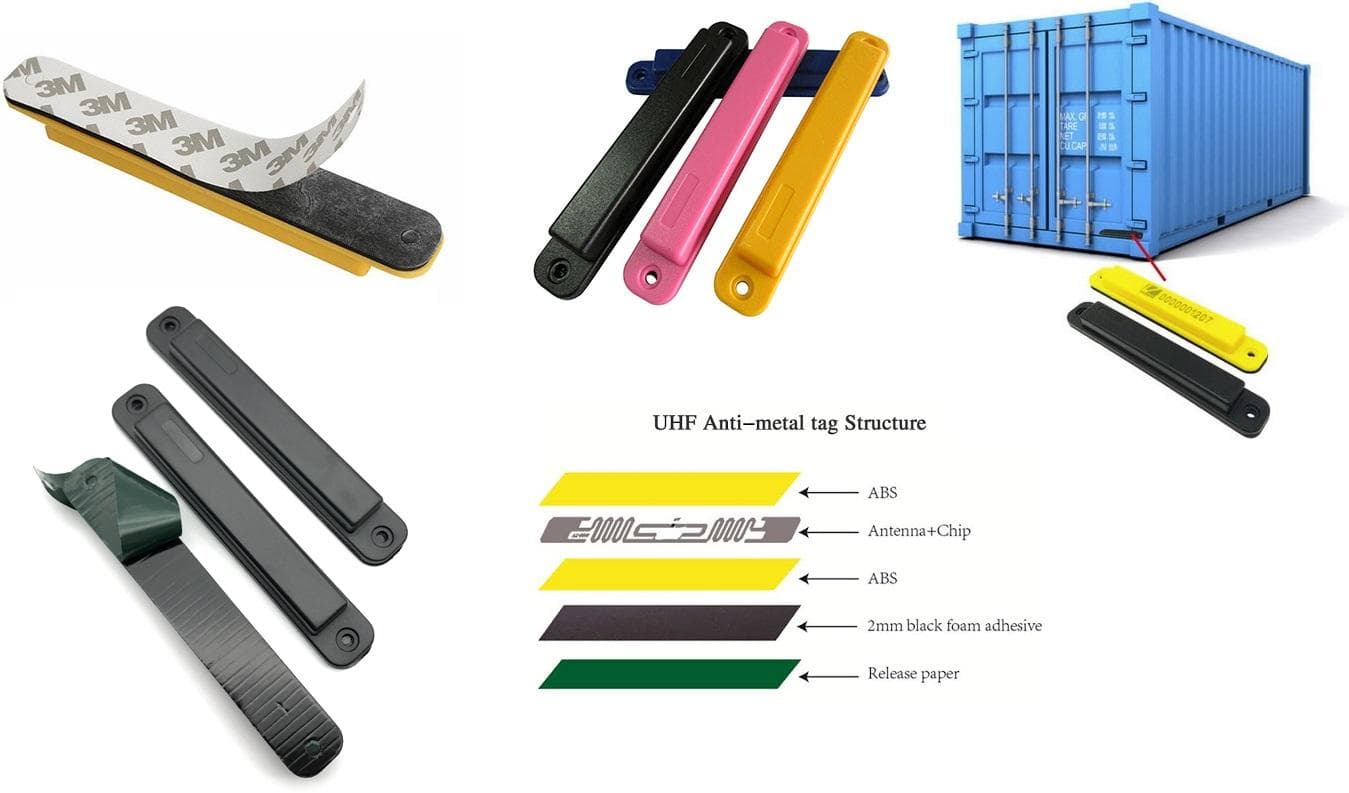
Perhaps the most critical technical challenge in the B2B space is the "Metal Problem." In a standard RFID setup, metallic surfaces reflect radio frequency energy and detune the tag's antenna, effectively "blindfolding" the reader. This is a major hurdle in manufacturing and logistics, where most assets-from engine blocks to storage racks-are made of metal.
To overcome this, Nextwaves offers specialized on-metal tags. These tags utilize a sophisticated internal architecture featuring a physical spacer-often constructed from specialized foam or ceramic materials. This spacer creates the necessary gap between the inlay and the metallic surface, preventing interference and allowing the tag to utilize the metal surface itself to actually enhance the signal. This ensures 100% read accuracy in dense manufacturing environments.
| Tag Feature | Benefit for Manufacturing & Logistics | Ceramic Spacers | Provides high-temperature stability and small form factors for tool tracking. | Foam Backing | Offers a lightweight, cost-effective solution for curved metal surfaces like gas cylinders. | Encapsulated ABS | Ensures maximum impact resistance for returnable transport items (RTIs). |
|---|
By choosing the right hard tag, businesses can ensure end-to-end visibility of their most critical assets, regardless of the environment. Nextwaves Industries specializes in matching these high-performance hardware solutions with our intelligent software to help you achieve total operational efficiency.
RFID Hangtags: The Retail Branding Powerhouse
RFID hangtags represent the premium evolution of the standard retail tag, serving as the primary bridge between physical merchandise and digital inventory systems. Architecturally, an RFID hangtag consists of a high-performance UHF RFID inlay-comprising an antenna and a microchip-discreetly embedded between layers of durable cardstock. This construction ensures the delicate technology is protected from the rigors of the supply chain while maintaining the high-end aesthetic of a brand's visual identity.
To understand its impact on modern commerce, it is helpful to view the RFID hangtag as a "price tag with a brain." While the exterior displays familiar branding, barcodes, and pricing, the internal "brain" is capable of storing unique serialized data that can be read without line-of-sight. This allows retailers to move beyond bulk inventory estimations toward 100% accurate, real-time item-level intelligence.
The real-world applications of this technology have reached new heights in 2026, with industry leaders setting the standard for operational excellence:
- UNIQLO: The global retailer has perfected the use of seamless hangtag integration to power its frictionless self-checkout experience. By utilizing high-sensitivity RFID hangtags, UNIQLO allows customers to place an entire basket of goods into a checkout bin where all items are read simultaneously. This eliminates manual scanning, slashes wait times, and provides the brand with immediate data on exactly which items have left the floor.
- Zara: Taking visibility a step further, Zara utilizes a sophisticated combination of RFID hangtags and integrated care labels to maintain end-to-end retail visibility. From the moment a garment is manufactured to its final sale, Zara's system tracks the item's journey through distribution centers and stockrooms. This granular data ensures that store shelves are always optimized and that omni-channel "buy online, pick up in-store" (BOPIS) services are executed with pinpoint accuracy.
At Nextwaves Industries, we specialize in the hardware and software ecosystems that make these success stories possible. Our high-performance UHF RFID inlays and intelligent inventory systems are designed to transform standard packaging into powerful data assets. By adopting Nextwaves' RFID solutions, retailers can achieve the same level of end-to-end visibility and operational efficiency seen in the world's most successful brands.
Technical Comparison: At-a-Glance Guide
Choosing the right RFID form factor depends heavily on your operational environment and how the tag will be handled throughout the supply chain. While dry and wet inlays serve as the essential "engine" of RFID technology, they lack the structural integrity required for exposed use. In contrast, RFID labels and hard tags provide varying levels of protection to ensure the integrated circuit remains functional under stress.
| Feature | Dry Inlay | Wet Inlay | RFID Label | Hard Tag | Durability | Very Low; fragile and exposed. | Low; susceptible to tearing. | Moderate; protected by face stock. | High; ruggedized and impact-resistant. | Printability | No. | No. | Yes; thermal transfer compatible. | Limited (Laser etching or stickers). | Adhesive | None. | Clear pressure-sensitive adhesive. | Permanent or removable options. | Mechanical (screws, rivets, or epoxy). | Primary Use | Raw material for tag conversion. | Behind-the-scenes identification. | Retail, logistics, and shipping. | Heavy industry, assets, and RTI. |
|---|
When evaluating these options, it is important to note the stark contrast between the fragile nature of inlays and the reusable, rugged design of hard tags. Dry and wet inlays are typically "one-and-done" components that are either embedded into other products or applied to items where they will not face physical abrasion. Because the antenna and microchip are barely protected, any significant bending or moisture exposure can lead to immediate failure.
At the other end of the spectrum, Nextwaves Industries' hard tags are engineered for longevity. These are often encapsulated in high-grade plastics, ceramics, or silicone, making them:
- Reusable: They can be recovered from assets and redeployed, lowering the long-term cost per read.
- Environmentally Resistant: Capable of surviving extreme temperatures, chemical washes, and high-pressure environments.
- Impact Proof: Designed to withstand the rigors of manufacturing floors and outdoor construction sites.
By aligning your choice with the specific durability requirements of your workflow, you ensure that your Nextwaves RFID solution provides consistent, end-to-end visibility without the risk of data loss due to tag failure.
Conclusion: Optimizing Your Operations with Nextwaves
Selecting the appropriate RFID format is a critical step in modernizing your supply chain and enhancing bottom-line performance. Whether your application requires the discreet versatility of an RFID inlay, the rugged durability of an RFID label for logistics, or the consumer-facing integration of a hangtag for retail, the right choice directly correlates to the accuracy and speed of your data capture. Making an informed decision ensures that your tracking system remains reliable under the specific environmental demands of your industry.
At Nextwaves Industries, we provide more than just components; we deliver comprehensive ecosystems designed for maximum uptime. Our value proposition centers on the synergy between high-performance hardware and intelligent software, ensuring you achieve end-to-end visibility across your entire operation. By partnering with us, you gain access to:
- Specialized RFID Hardware: From high-gain UHF RFID antennas to specialized tags and inlays tailored for manufacturing and cold chain environments.
- Integrated Software Solutions: Robust Dispatch Management and Inventory Systems that turn raw RFID data into actionable business intelligence.
- Industry Expertise: Proven strategies for Supply Chain Modernization across the retail, logistics, and manufacturing sectors.
Don't leave your digital transformation to chance. Selecting the wrong tag format can lead to read errors and operational bottlenecks, while the right solution can revolutionize your throughput. Improve your operational efficiency with Nextwaves RFID solutions.
Ready to optimize your workflow? Contact Nextwaves Industries today for a professional consultation. Our team of experts is standing by to develop a customized RFID strategy that aligns with your unique operational requirements and long-term business goals.
Was this article helpful?
Related Articles
Maximizing Asset Visibility: The Ultimate Guide to Anti-Metal UHF RFID Tags
Mar 2, 2026

Mastering UHF RFID in Odoo: Hardware, Workflows, and Best Practices
Mar 2, 2026
Chainway C72 Comprehensive Review: Specs, Pricing, and Top Alternatives
Mar 2, 2026
The Ultimate UWB Module Comparison: Prices, Specs, and Use Cases
Feb 23, 2026