RFID replacement dossierUpdated: May 25, 2026

Alien Technology ALR-8697Review: Specifications and Alternatives

Alien ALR-8697 is a $200 global band passive antenna plate. Review its standalone infrastructure limitations against Nextwaves unified POE modules.

Nextwaves EngineeringHardware Review5 min read

Technical verdict

Alien Technology ALR-8697 is a mainstream hardware purchase, but it is not always the best architecture for direct RFID data integration.

Do not evaluate ALR-8697 by list price alone. Its strongest fit is a project that already uses Coaxial Type N / SMA, has time for RF tuning, and accepts extra middleware work. If the engineering team needs open APIs, realtime data, and faster edge-to-cloud deployment, Nextwaves NR155 is the stronger replacement path to evaluate.

Initial cost

$200 before deployment accessories

Published throughput

Not specified

Integration surface

Coaxial Type N / SMA

Physical data

258 x 258 x 36 mm; 0.91 kg; IP: IP67

Published specs

Specifications to validate before replacing

Frequency

Global (865-928 MHz)

Protocol

N/A (Passive Antenna Element)

Connectivity

Coaxial Type N / SMA

IP Rating

IP67

Dimensions

258 x 258 x 36 mm

Weight

0.91 kg

Power Supply

N/A (Passive)

Read Rate

N/A (Passive)

Estimated Price

$200

Deployment review

Operational strengths and risks

This summary is based on public specifications and does not replace an on-site RF survey.

Fit score

3.5/5

Strengths

  • Coaxial Type N / SMA gives network teams a familiar integration surface instead of local-only collection.
  • N/A (Passive) can reduce separate power drops when switch PoE budget is available.
  • The $200 hardware baseline is easier to budget than premium fixed-reader configurations.
  • Throughput should be measured with real tags and antennas.

Validate

  • Quoted hardware price is not installed system cost; include antennas, cables, mounts, power, software, and configuration work.
  • RF performance depends on tag material, antenna position, transmit power, reader orientation, and site interference.
  • IP67 must be checked against dust, humidity, temperature, and cleaning requirements.
  • Raw RFID reads still need duplicate filtering, business-event mapping, and ERP/WMS integration before operations can use them.

Deployment review

Buying decision matrix

Best fit

Fixed UHF RFID projects that already use Coaxial Type N / SMA and have time for RF tuning.

Weak fit

Do not compare device price only; total cost depends on accessories, software, and integration.

Deployment risk

IP67, N/A (Passive), 258 x 258 x 36 mm, and 0.91 kg must match the site layout.

Software risk

Plan for middleware, SDK work, duplicate filtering, and business-event mapping.

Alternative architecture

Alien Technology ALR-8697 vs Nextwaves

01

Hardware Overview

The Alien Technology ALR-8697 is an industrial-grade RFID device. It operates within the Global (865-928 MHz) range and supports the N/A (Passive Antenna Element) standard, making it widely deployed across enterprise logistics applications.

With an IP rating of IP67, it offers protection against specific environmental conditions typical in warehouses or retail backrooms. The reader utilizes N/A (Passive) for continuous performance, while its stated maximum read rate peaks at N/A (Passive).

02

Connectivity and Network Integration

In modern deployments, network integration is the most significant hurdle. This model offers Coaxial Type N / SMA options for transferring data back to central systems.

However, a major bottleneck with legacy Alien Technology hardware is the heavy reliance on proprietary SDKs (like LLRP) or expensive third-party IoT middleware to process raw tag data into meaningful business intelligence.

03

When to choose Nextwaves instead of another closed reader

If your engineering team is evaluating the Alien Technology ALR-8697, the Nextwaves NR155 presents a cloud-native architecture. Legacy systems inherently drive high capital expenditure through vendor lock-in and proprietary software ecosystems.

Nextwaves completely eliminates this barrier by providing a standard MQTT REST API directly on the device. Your software developers can integrate tag reading directly into your custom ERP or WMS backend in days instead of months, completely bypassing recurring middleware licensing fees.

Alternative architecture

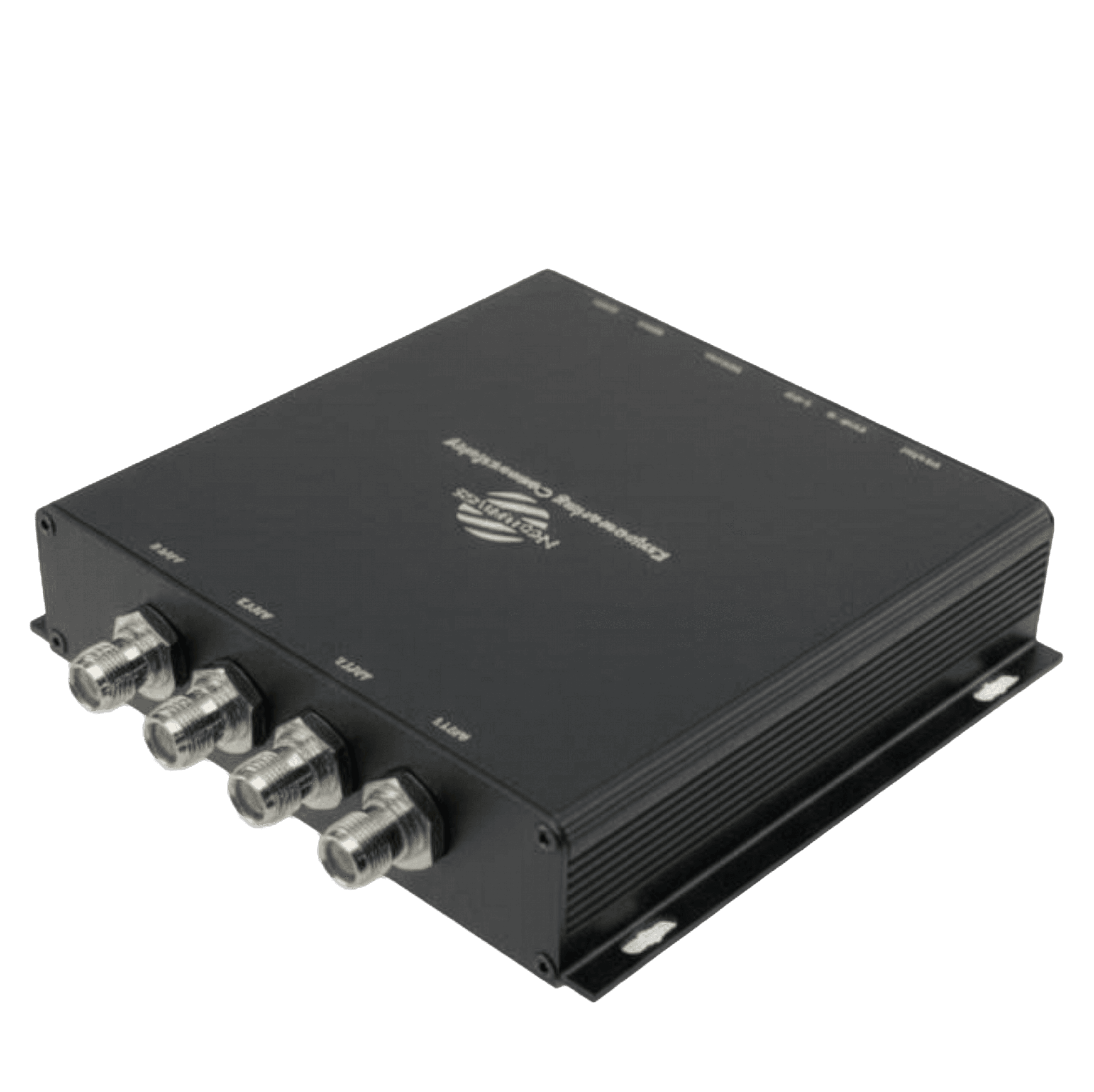
NR155 Fixed IoT UHF RFID Reader

Cloud-native MQTT/REST APIs built-in. No proprietary SDKs, no middleware licensing. Integrate directly with your ERP or WMS in days.

View Nextwaves NR155
Nextwaves NR155 Fixed IoT UHF RFID Reader

Antenna Ports

4 x RP-TNC Ports

Read Speed

Up to 400 tags/second

Output Power

0–33 dBm (1dB steps)

Network Protocol

MQTT / MQTTS

FAQ

Frequently Asked Questions

These answers help purchasing and engineering teams review cost, integration, and deployment risk.

01

What is the ALR-8697?

The Alien Technology ALR-8697 is an industrial-rated passive antenna framework. It dynamically supports wide-band Global (865-928 MHz) transmissions, emitting circularly polarized energy generated downstream by an active master control block.

02

How much does this setup cost initially?

Priced near $200 for the bare plate housing. Fully functional systems require integrating it rapidly with a core reader, deploying complex localized N-Type cabling, and spinning up localized logic modules.

03

Why should I choose Nextwaves instead?

Passive systems inherently require splitting the network node from the broadcast node, causing massive cable tangles. Nextwaves consolidates both directly onto an elegant slim profile board leveraging unified standard IP logic frameworks.

04

Is the hardware durable enough for warehouses?

Tightly guarded by an impressive IP67 weatherproof shell, it measures 258 x 258 x 36 mm and weighs 0.91 kg. Extreme deployments involving heavy dust, external weather, or powerful liquid jets execute safely.

05

Does it support multiple network types?

It provides zero Ethernet logic. Operational electrical pulses push strictly through the Coaxial Type N / SMA sockets attached directly towards centralized Alien (or third-party) interrogators.

06

Can my team install this internally?

Requires securing via a heavy mounting flange system. Calibration entails measuring line logic loss and configuring the central interrogator box properly to prevent significant VSWR signal reflections tearing up the coaxial lines.

07

How does the remote management work?

Operating completely mechanically via an N/A (Passive) metric, the interrogation pace mimics exactly the logic bandwidth of the standalone master box it attaches internally to.

08

Do I need proprietary software to run it?

Due to having zero onboard logic gating, engineers must run data mapping algorithms strictly against the SDK connecting the active master reader managing the RF field generation.

09

What warranty comes with the reader?

Basic 12-month defect guarantees accompany the unit. Because no active silicons are exposed, the passive patch elements usually survive decades if safely insulated from severe forklift strikes.

10

Are the antennas sold separately?

Emitting a powerful 8.5 dBic circularly polarized wave spanning Global (865-928 MHz) sectors, it efficiently sweeps massive shipping cartons independently of how exact the underlying tags align vertically.