Tekanan Berulang
Pengimbasan manual beribu-ribu buku menyebabkan kecederaan tekanan berulang (RSI) untuk kakitangan.


Perpustakaan ialah pusat komuniti, tetapi pustakawan sering berasa seperti pekerja gudang. Masa dihabiskan untuk memeriksa buku masuk dan keluar secara manual, menyusun pemulangan, serta mencari item yang tersalah letak menggunakan pengimbas barcode berasaskan jarak penglihatan.
Pengunjung mahukan kemudahan. Mereka mahu ambil buku dan pergi, atau memulangkannya 24/7 tanpa menunggu dalam barisan. Jalur keselamatan EM tradisional melindungi daripada kecurian, tetapi tidak menawarkan kecerdasan inventori.
Hasilnya ialah pengalaman yang penuh geseran, di mana kakitangan terpendam dalam tugas pentadbiran—bukan berinteraksi dengan komuniti.
Pengimbasan manual beribu-ribu buku menyebabkan kecederaan tekanan berulang (RSI) untuk kakitangan.
Buku yang tersalah letak adalah buku yang hilang. Tanpa RFID, mencari buku yang diletakkan di rak yang salah adalah seperti mencari jarum dalam timbunan jerami.
Waktu puncak mewujudkan barisan panjang di kaunter edaran, yang mengecewakan pelanggan.
Nextwaves membawa perpustakaan ke era moden dengan penyelesaian HF/NFC dan UHF RFID. Kami menyisipkan tag RFID nipis yang tidak kelihatan pada tulang belakang (spine) atau kulit setiap buku.
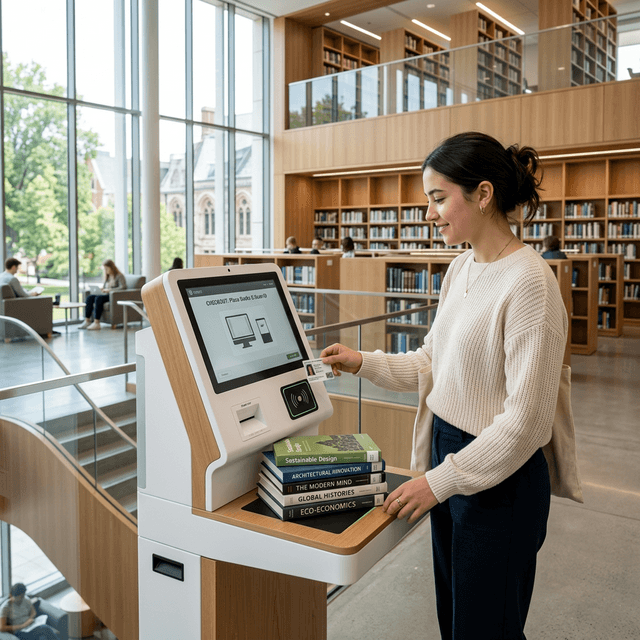
Kiosk Layan Diri (Self-Checkout) membolehkan pengunjung menyusun 5-10 buku sekaligus pada pad. Sistem membaca semuanya secara serta-merta, menyahaktifkan butang keselamatan, dan mencetak resit dalam beberapa saat.
Saluran Pemulangan Pintar (AMH) menerima buku 24/7. Apabila buku meluncur masuk ke saluran, ia diimbas, didaftarkan sebagai pemulangan, malah boleh disusun secara automatik ke dalam tong untuk ditempatkan semula. Kakitangan boleh menggunakan alat pengimbas genggam untuk menyapu seluruh rak, sekali gus menemui buku yang hilang dan mengesahkan susunan.
Membolehkan pelanggan mendaftar keluar dan memulangkan item serta-merta, mengurangkan barisan.
Cari buku yang tersalah rak dalam beberapa saat hanya dengan berjalan di lorong dengan tongkat.
Pungutan buku automatik mengemas kini akaun pelanggan dengan serta-merta.
Pustakawan beralih daripada 'pengendali buku' kepada 'pakar maklumat'.
Sebuah perpustakaan pusat baharu ingin dibuka dengan model edaran 'tanpa kakitangan' untuk memaksimumkan bajet untuk program komuniti.
Menukar keseluruhan koleksi perpustakaan adalah usaha yang besar, sebab itu kami mereka bentuk untuk wujud bersama. Tag hibrid kami mengandungi kedua-dua barcode legasi dan cip RFID baharu dalam satu label yang sama. Jadi ILS sedia ada anda terus berfungsi, sementara kakitangan secara beransur-ansur beralih kepada aliran kerja RFID mengikut kadar masing-masing.
Untuk kebanyakan perpustakaan awam, kami mengesyorkan HF (13.56 MHz). Frekuensi yang sama digunakan oleh kad pembayaran dan telefon NFC, menawarkan ketepatan yang baik dan privasi pengunjung. Arkib akademik yang besar yang menguruskan inventori pukal puluhan ribu item mendapat manfaat daripada kelajuan UHF. Kami menilai koleksi anda dan mencadangkan frekuensi yang sesuai—bukan pendekatan "satu saiz untuk semua".
RFID menjadikan model "waktu tanpa kakitangan" (unstaffed hours) benar-benar boleh dilaksanakan. Pengunjung berdaftar boleh mengakses bangunan menggunakan kad keahlian mereka, melayari dan membuat pinjaman buku secara sendiri, serta memulangkan item melalui saluran pemulangan automatik. pada jam 10 malam pada hari Selasa, atau jam 6 pagi pada hari Ahad.
Infrastruktur yang sama membuka kecerdasan inventori untuk kakitangan: imbasan menggunakan alat pengimbas genggam di seluruh lorong mengambil masa beberapa minit dan mendedahkan setiap item yang tersalah letak. Apa yang sebelum ini mengambil masa satu syif penuh oleh pustakawan kini hanya mengambil beberapa minit di awal hari.
Lindungi komputer riba dan peralatan IT dengan pintu keselamatan RFID, tag anti-logam, dan audit automatik.
Cipta pengalaman moden yang lancar untuk pelanggan anda.