Unlock the Invisible World: A Deep Dive into Radio-Frequency Identification (RFID) Technology
In an increasingly connected world, the ability to identify and track objects, assets, and even people in real-time is no longer a luxury-it's a necessity. At the heart of this revolution lies Radio-Frequency Identification (RFID), a powerful technology that uses radio waves to transmit data wirelessly. Far more advanced than its predecessor, the barcode, RFID is the foundational technology enabling the Internet of Things (IoT) to embrace physical objects, transforming industries from retail and logistics to healthcare and manufacturing. This article will explore the core concepts of RFID, how it works, its various types, and its profound impact on modern business operations.

The Anatomy of an RFID System: How the Invisible Works
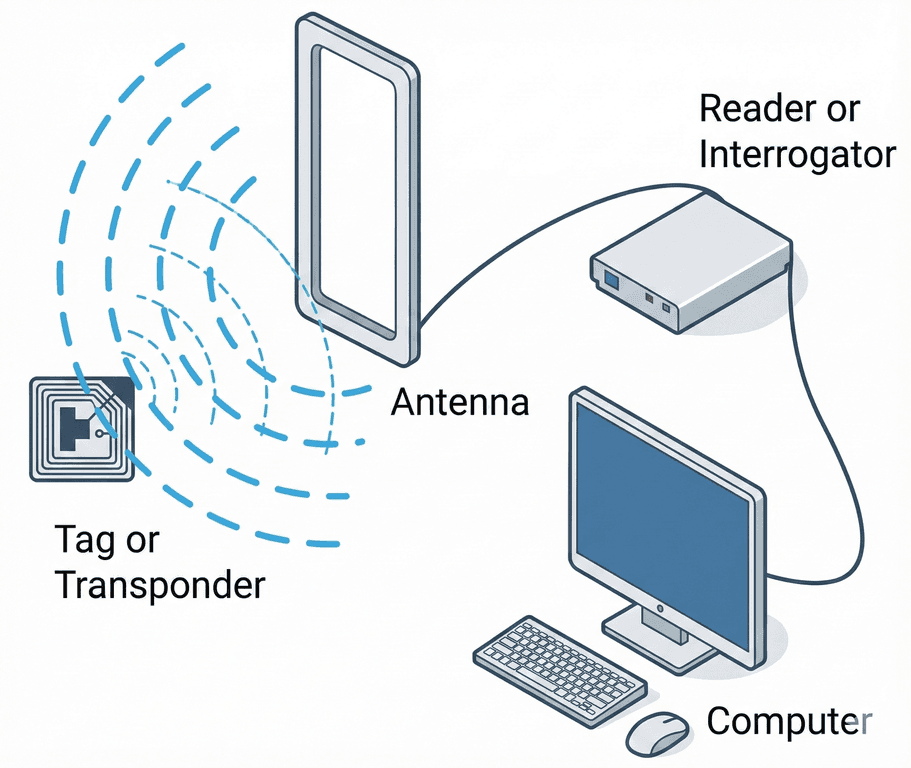
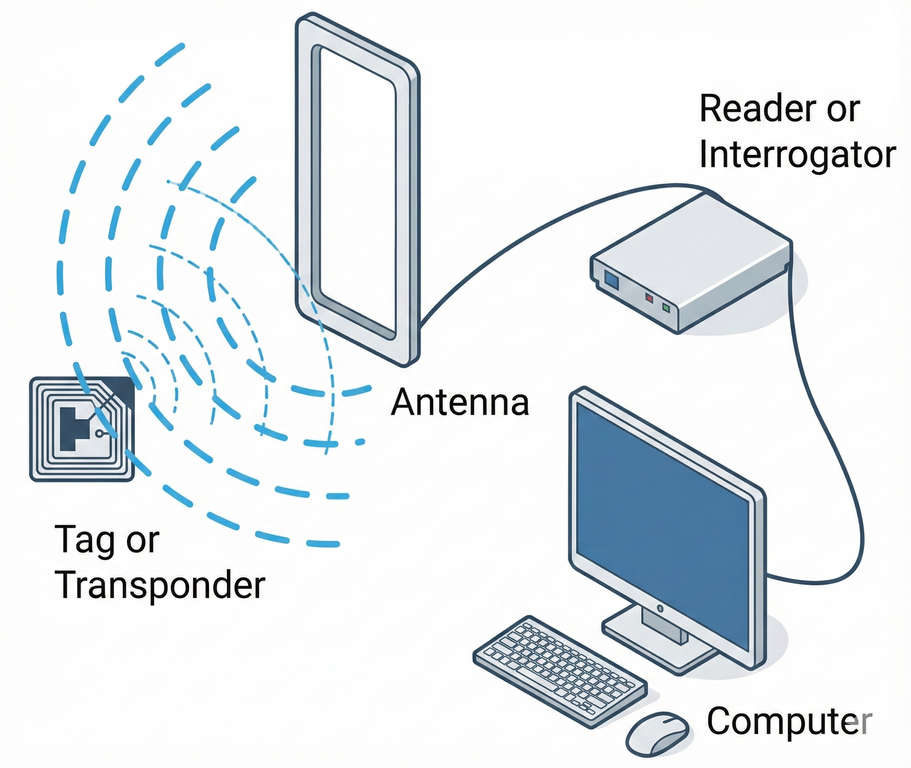
An RFID system fundamentally comprises three main components working together to enable wireless identification: tags, readers, and antennas.
1. RFID Tags (or Transponders)
Tags are the data-bearing devices attached to the items you want to track. They consist of a microchip for storing data (typically a unique identifier) and an antenna for transmitting and receiving signals. Tags are broadly classified into two types:
- Passive Tags: These tags have no internal power source. They draw energy from the radio waves emitted by the reader to power the microchip and transmit a response. They are smaller, cheaper, and have a shorter read range (from a few centimeters to several meters).
- Active Tags: These tags contain their own battery, allowing them to broadcast signals over much longer distances (up to hundreds of meters). They are more expensive and larger but ideal for tracking high-value assets or real-time location systems (RTLS).
2. RFID Readers (or Interrogators)
The reader is the device that emits radio waves to query tags. When a tag passes through the reader's electromagnetic field, it gets activated (if it's a passive tag) and sends its stored data back to the reader. The reader then converts the radio waves into a digital format and sends the data to a host computer system for processing.
3. Antennas
The antenna is the conduit for radio frequency energy. It is connected to the reader and is responsible for transmitting radio waves to the tags and receiving signals back from the tags. The size and design of the antenna determine the shape and range of the electromagnetic field, which is crucial for system performance.
Understanding Frequencies: LF, HF, and UHF
RFID systems operate on different radio frequency bands, each suited to specific applications based on read range, data transfer rates, and resistance to environmental interference. The three main bands are:
Low Frequency (LF) RFID (125-134 kHz)
LF RFID offers a short read range (typically up to 10 cm) and slower data transfer rates. However, its low frequency makes it less susceptible to interference from metal and liquids. Common applications include animal tracking (pet microchips), access control, and car anti-theft devices.
High Frequency (HF) RFID (13.56 MHz)
HF RFID provides a medium read range (up to 30 cm) and is often used for applications requiring more data and close proximity interaction. This band includes Near Field Communication (NFC), a subset of HF RFID, widely used in mobile payments, smart posters, and electronic ticketing. Other applications include library book tracking and patient identification in healthcare.
Ultra-High Frequency (UHF) RFID (860-960 MHz)
UHF RFID, often referred to as RAIN RFID, offers the longest read range (up to 12 meters) and the fastest data transfer rates. This makes it an ideal choice for bulk, long-distance tracking. While more sensitive to liquids and metal, advancements in tag and antenna design have mitigated these issues. UHF is the dominant technology in supply chain, retail inventory management, and logistics.
Transforming Industries: Key Applications of RFID
The versatility of RFID technology has allowed it to extend beyond simple asset tracking to become a core driver of operational efficiency and customer experience across numerous sectors.
Supply Chain and Logistics
RFID tags on pallets, cases, and individual products enable automated, real-time inventory visibility throughout the supply chain. This leads to:
- Accurate Inventory: Eliminating manual counts and reducing human error.
- Traceability: Providing a complete, immutable history of an item's location and movement.
- Faster Throughput: Reading hundreds of items simultaneously without line-of-sight, speeding up receiving and shipping processes.
Retail
In retail, RFID is a game-changer for inventory accuracy, which is critical for omnichannel order fulfillment.
- Omnichannel Order Fulfillment: Ensuring accurate in-store inventory records to support "Buy Online, Pick Up In Store" (BOPIS) and ship-from-store models.
- Loss Prevention: Tags can be integrated with Electronic Article Surveillance (EAS) systems.
- Enhanced Customer Experience: Smart mirrors and interactive displays can read tags to provide product information and styling suggestions.
Healthcare
RFID is crucial for patient safety and asset management in hospitals.
- Asset Tracking: Locating critical medical equipment like pumps and wheelchairs instantly.
- Patient Safety: Ensuring the right patient receives the correct medication or procedure via tagged wristbands.
- Surgical Instrument Management: Tracking instruments to prevent loss and ensure proper sterilization.
The Tagged Future: The Road Ahead for RFID
As the cost of RFID tags continues to decrease and the technology becomes more robust, its integration into everyday objects will only accelerate. The future of RFID is intertwined with the growth of the Internet of Things (IoT), where every physical object will have a digital twin. Innovations in sensor-integrated tags, battery-assisted passive (BAP) tags, and the push for global standardization through organizations like the RAIN Alliance are paving the way for a world where data about physical objects is as accessible and manageable as data on the internet. RFID is not just a technology; it is the essential link between the physical and digital worlds, driving unprecedented levels of efficiency, transparency, and intelligence in global operations.
Was this article helpful?
Related Articles
Maximizing Asset Visibility: The Ultimate Guide to Anti-Metal UHF RFID Tags
Mar 2, 2026
Mastering UHF RFID in Odoo: Hardware, Workflows, and Best Practices
Mar 2, 2026
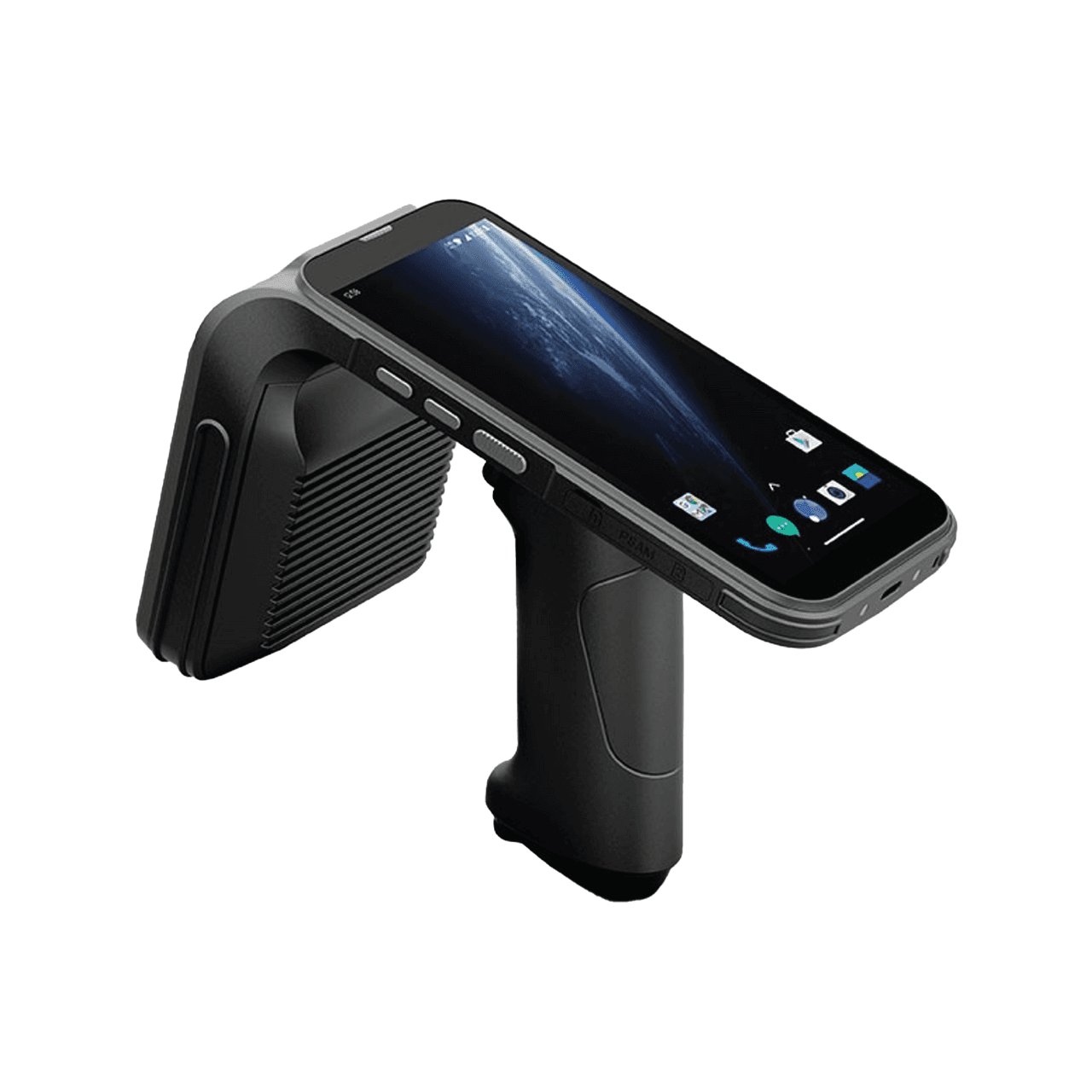
Chainway C72 Comprehensive Review: Specs, Pricing, and Top Alternatives
Mar 2, 2026
The Ultimate UWB Module Comparison: Prices, Specs, and Use Cases
Feb 23, 2026