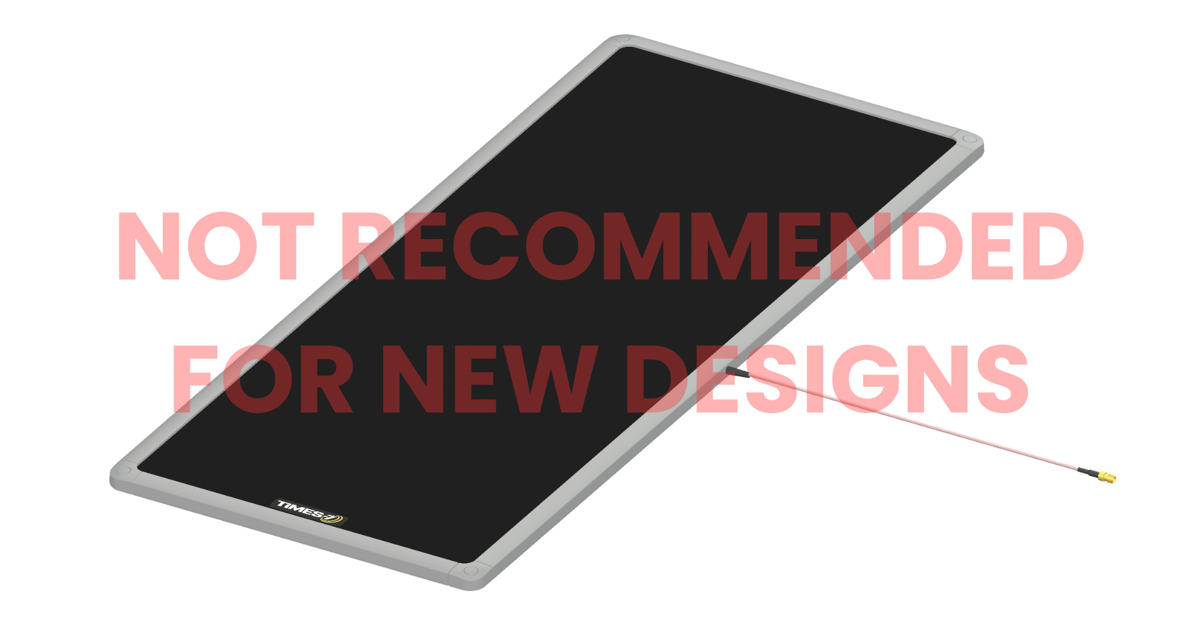
The Times-7 A6034 is a large 2.2 kg portal antenna starting at $250. Learn the installation complexities of massive multi-component RF dock systems.
Technical Specifications
Hardware Overview
The Times-7 A6034 is an industrial-grade RFID device. It operates within the 865-868 MHz / 902-928 MHz range and supports the N/A (Passive Antenna Element) standard, making it widely deployed across enterprise logistics applications.
With an IP rating of IP65, it offers protection against specific environmental conditions typical in warehouses or retail backrooms. The reader utilizes N/A (Passive) for continuous performance, while its stated maximum read rate peaks at N/A (Passive).
Connectivity and Network Integration
In modern deployments, network integration is the most significant hurdle. This model offers SMA Female options for transferring data back to central systems.
However, a major bottleneck with legacy Times-7 hardware is the heavy reliance on proprietary SDKs (like LLRP) or expensive third-party IoT middleware to process raw tag data into meaningful business intelligence.
The Nextwaves Alternative
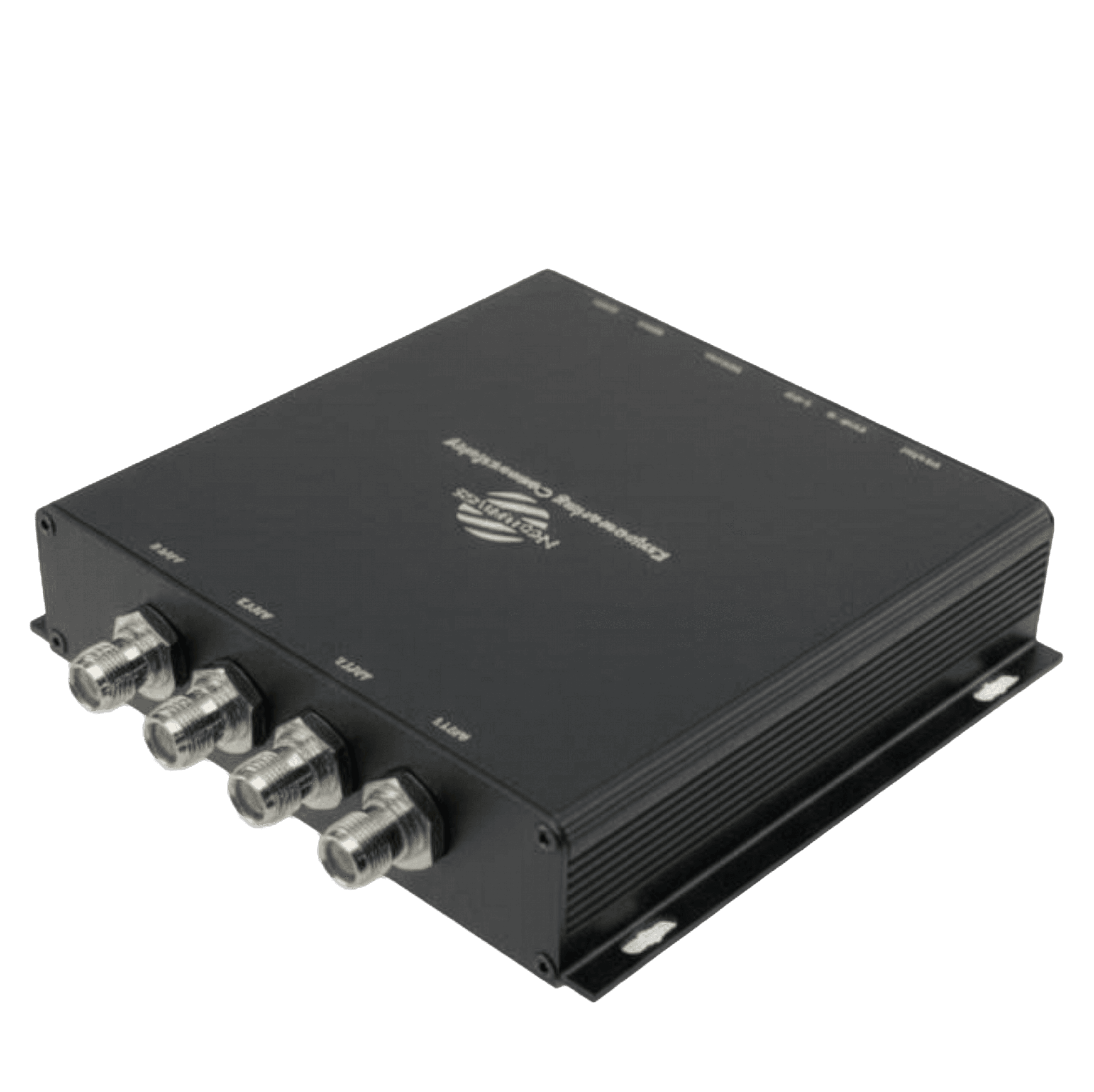
If your engineering team is evaluating the Times-7 A6034, the Nextwaves NR155 presents a vastly superior cloud-native architecture. Legacy systems inherently drive high capital expenditure through vendor lock-in and proprietary software ecosystems.
Nextwaves completely eliminates this barrier by providing a standard MQTT REST API directly on the device. Your software developers can integrate tag reading directly into your custom ERP or WMS backend in days instead of months, completely bypassing recurring middleware licensing fees.
Frequently Asked Questions
What is the A6034?
The Times-7 A6034 is a massive, high-gain portal antenna built specifically for extreme coverage footprints. Generating high circular polarization across 865-868 MHz / 902-928 MHz boundaries, it provides the physical framework for warehouse pallet tunnels.
How much does this setup cost initially?
Selling for approximately $250, the absolute total cost must include structural heavy-metal mounting poles, expensive active interrogators (like an Impinj R700), and custom-length LMR-400 equivalent cabling lines.
Why should I choose Nextwaves instead?
Building portal arrays from separate components forces teams to fight coaxial cable degradation. Nextwaves completely unifies the massive antenna surface and active gateway processing into one monolithic device powered by standard Ethernet switches.
Is the hardware durable enough for warehouses?
Spanning a massive 714 x 380 x 12 mm area, the antenna weighs a hefty 2.2 kg. Protected by an IP65 shell, it comfortably survives standard indoor warehousing moisture and heavy dust.
Does it support multiple network types?
The array integrates zero logic silicon and runs zero network traffic. Interaction is limited strictly to driving +30 dBm pulses into the SMA Female coax input.
Can my team install this internally?
Due to its extreme size, installation relies on secure VESA mounts or articulating flange arms. Proper tuning requires physically aiming the wide lobe effectively to prevent 'bleed-over' into adjacent loading dock sectors.
How does the remote management work?
With a strict N/A (Passive) metric, read operations are fully disconnected from the plate itself. Speed bottlenecks strictly reflect the intelligence of the connected master reader.
Do I need proprietary software to run it?
Writing logic to extract EPCs occurs entirely on the external interrogator attached downstream. Software developers never address the A6034 natively, interacting only with the hardware pushing the RF pulses.
What warranty comes with the reader?
Times-7 standard defect warranties apply. Passive plates of this scale rarely fail electronically; their operational lifespan is usually halted only by violent forklift impacts.
Are the antennas sold separately?
Pushing out an aggressive 9.0 dBic polarized signal, it efficiently illuminates large pallets moving cleanly across 865-868 MHz / 902-928 MHz bandwidth constraints in heavily active dock systems.