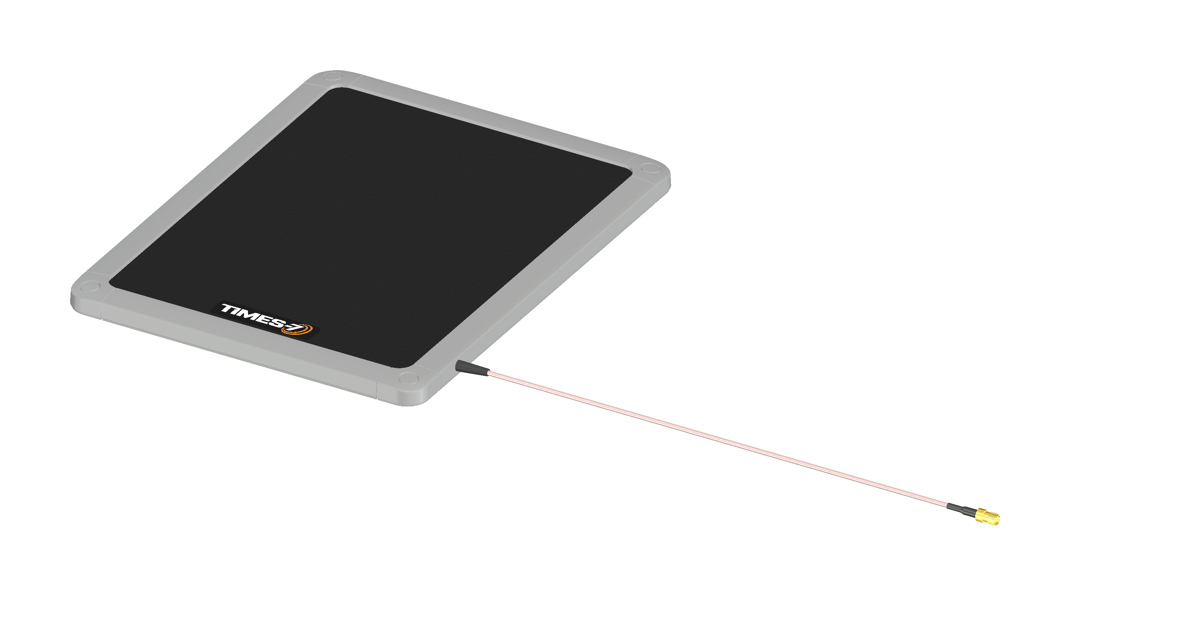
The Times-7 A6031 is a slim 600g antenna priced around $150. Understand the required coaxial integration steps against Nextwaves active network boards.
Technical Specifications
Hardware Overview
The Times-7 A6031 is an industrial-grade RFID device. It operates within the 865-868 MHz / 902-928 MHz range and supports the N/A (Passive Antenna Element) standard, making it widely deployed across enterprise logistics applications.
With an IP rating of IP65, it offers protection against specific environmental conditions typical in warehouses or retail backrooms. The reader utilizes N/A (Passive) for continuous performance, while its stated maximum read rate peaks at N/A (Passive).
Connectivity and Network Integration
In modern deployments, network integration is the most significant hurdle. This model offers SMA Female options for transferring data back to central systems.
However, a major bottleneck with legacy Times-7 hardware is the heavy reliance on proprietary SDKs (like LLRP) or expensive third-party IoT middleware to process raw tag data into meaningful business intelligence.
The Nextwaves Alternative
If your engineering team is evaluating the Times-7 A6031, the Nextwaves NR155 presents a vastly superior cloud-native architecture. Legacy systems inherently drive high capital expenditure through vendor lock-in and proprietary software ecosystems.
Nextwaves completely eliminates this barrier by providing a standard MQTT REST API directly on the device. Your software developers can integrate tag reading directly into your custom ERP or WMS backend in days instead of months, completely bypassing recurring middleware licensing fees.
Frequently Asked Questions
What is the A6031?
The Times-7 A6031 is an economically sized, passive circular flat panel antenna. Radiating efficiently over the 865-868 MHz / 902-928 MHz spectrums, it is typically employed for desktop POS applications or localized inventory smart shelves.
How much does this setup cost initially?
Basic units start around $150. Real implementation cost must also account for the central network reader pulling the signal data, and the high-grade SMA cabling connecting the physical elements together.
Why should I choose Nextwaves instead?
Separating antenna modules from logic circuits creates cable rat nests during deployment. Nextwaves merges the RF array, processing silicon, and networking chip directly onto a single enclosed panel utilizing a direct CAT6 PoE drop.
Is the hardware durable enough for warehouses?
Rated for an IP65 environment, the robust ABS construction protects against low-pressure water streams. At just 600 g and 275 x 214 x 12 mm, it easily hides behind retail dry-walls or within display shelving.
Does it support multiple network types?
This hardware holds no internal processing state. It natively routes RF waves via its recessed SMA Female connector intended for standard coaxial linkage to host interrogators.
Can my team install this internally?
Simple mounting holes permit flush installation. Network technicians must still measure signal degradation across whatever coaxial lines run between the plate and the active reader matrix.
How does the remote management work?
Since it relies on an external power injection to establish its field, it possesses a N/A (Passive) rating. Read capacities are locked entirely by the Impinj, Zebra, or Alien reader connected downstream.
Do I need proprietary software to run it?
Software routing simply does not apply to passive transmission lines. Programming applications requires writing against the host REST or LLRP endpoints hosted by the parent master reader.
What warranty comes with the reader?
It retains a typical one-year defense against construction defects. Protected from UV and minor moisture, the lifespan on the static patch array is effectively indefinite.
Are the antennas sold separately?
Sustaining an efficient 4.0 dBic output circularly polarized field across its 865-868 MHz / 902-928 MHz range, it generates a focused electromagnetic bubble suited specifically for near-field tag illumination.