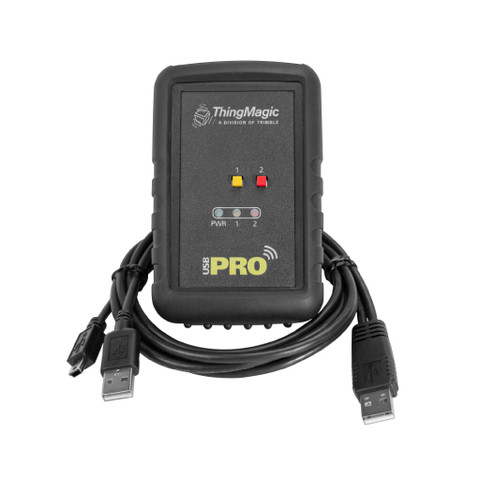
The ThingMagic USB Pro is a $700 specialized desktop reader reliant on USB. Compare its wired requirements against Nextwaves wireless autonomous hardware.
Technical Specifications
Hardware Overview
The ThingMagic (JADAK) USB Pro is an industrial-grade RFID device. It operates within the Global range and supports the EPC Gen2v2, ISO 18000-63 standard, making it widely deployed across enterprise logistics applications.
With an IP rating of indoor rating, it offers protection against specific environmental conditions typical in warehouses or retail backrooms. The reader utilizes USB Bus Power for continuous performance, while its stated maximum read rate peaks at ~50 tags/sec.
Connectivity and Network Integration
In modern deployments, network integration is the most significant hurdle. This model offers USB 2.0 Type A options for transferring data back to central systems.
However, a major bottleneck with legacy ThingMagic (JADAK) hardware is the heavy reliance on proprietary SDKs (like LLRP) or expensive third-party IoT middleware to process raw tag data into meaningful business intelligence.
The Nextwaves Alternative
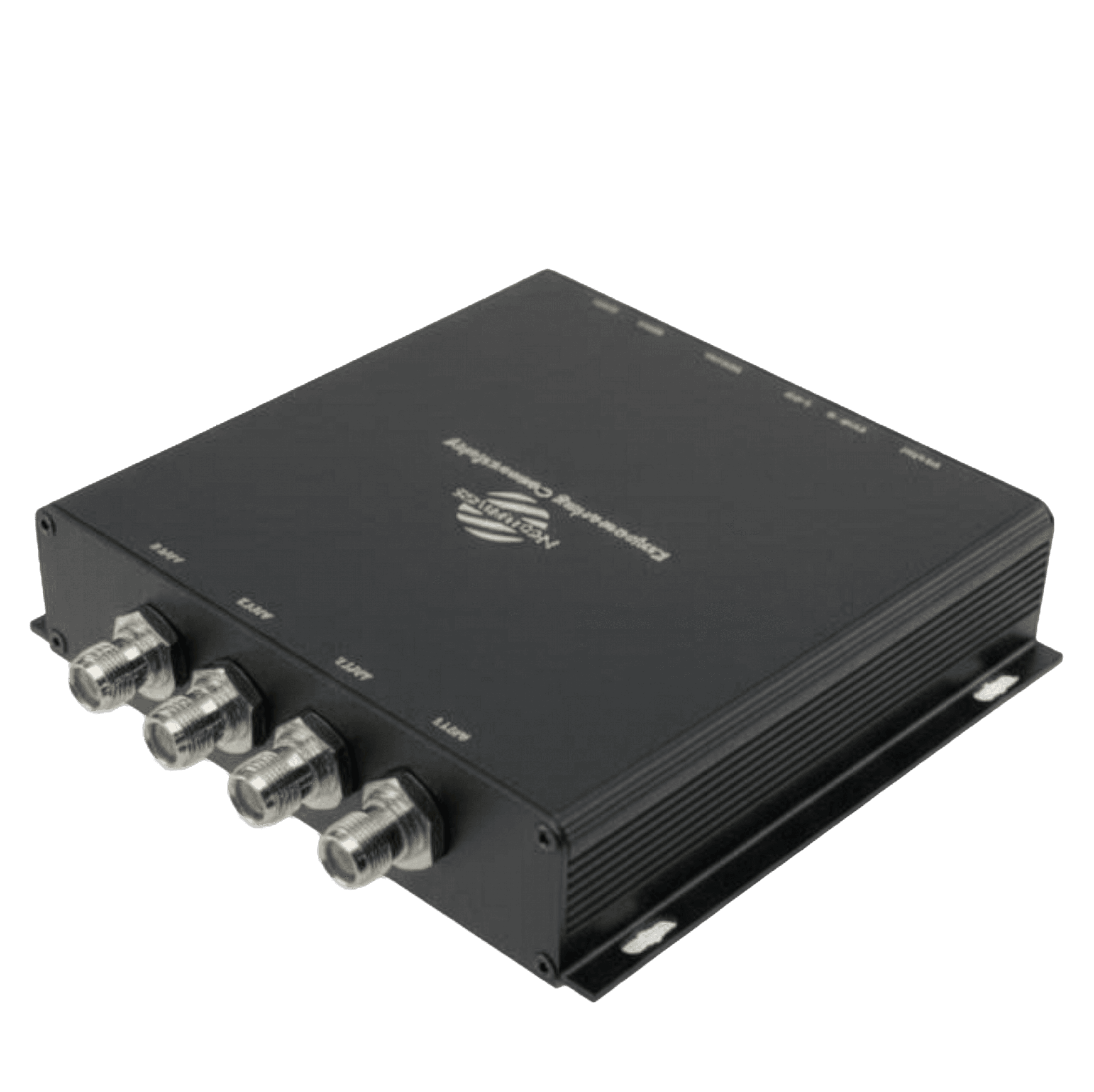
If your engineering team is evaluating the ThingMagic (JADAK) USB Pro, the Nextwaves NR155 presents a vastly superior cloud-native architecture. Legacy systems inherently drive high capital expenditure through vendor lock-in and proprietary software ecosystems.
Nextwaves completely eliminates this barrier by providing a standard MQTT REST API directly on the device. Your software developers can integrate tag reading directly into your custom ERP or WMS backend in days instead of months, completely bypassing recurring middleware licensing fees.
Frequently Asked Questions
What is the USB Pro?
The ThingMagic (JADAK) USB Pro is a stationary, desktop-mounted RFID interrogator. It supports the EPC Gen2v2, ISO 18000-63 protocols over Global frequencies, primarily intended for individual asset encoding, access credential issuance, and point-of-sale checkout.
How much does this setup cost initially?
Retail pricing typically falls around $700. Deployment budgeting is generally simple since it relies on USB Bus Power directly from the connected PC host without needing external AC wiring or separate antenna brackets.
Why should I choose Nextwaves instead?
Nextwaves infrastructure utilizes standalone networking hardware to communicate directly to your SQL databases via webhooks. You completely remove the requirement of keeping a Windows PC constantly powered simply to shuttle EPC data.
Is the hardware durable enough for warehouses?
The aluminum enclosure checks in at 0.27 kg and measures 97 x 61 x 25 mm. It carries an indoor rating, intended strictly for dry, climate-controlled environments like ticketing booths or developer testing benches.
Does it support multiple network types?
Data routing is strictly confined to a physical USB 2.0 Type A interface. It establishes no network connections of its own, meaning all security auditing falls entirely on the policies of the connected host computer.
Can my team install this internally?
Setup is heavily reliant on the ThingMagic Mercury API. Software teams must compile C# / Java bindings to initialize the reader, control the internal transceiver, and manage the stream of incoming hex identifiers.
How does the remote management work?
Driven internally by an M6e-Micro module, the desktop read speed peaks at roughly ~50 tags/sec. It is optimized for near-field single tag targeting rather than high-density warehousing sweeps.
Do I need proprietary software to run it?
Because it acts as a peripheral via its USB 2.0 Type A link, developers must write host-side daemon software that polls the USB pipe, packages the data into JSON, and transmits it out to enterprise logistics systems.
What warranty comes with the reader?
JADAK supports the USB Pro with a standard desktop hardware warranty. System integrations often utilize it primarily as a programming station rather than a critical high-throughput checkpoint.
Are the antennas sold separately?
This model integrates a small ceramic antenna tuned across a wide Global broadband footprint. It deliberately restricts transmit output (up to +30 dBm) to prevent reading unintended tags situated further away in the room.