The Laird S9028PCL/PCR are $150 US-band passive antennas. Analyze required external RF reader costs vs Nextwaves monolithic standalone arrays.
Technical Specifications
Hardware Overview
The Laird S9028PCL/PCR is an industrial-grade RFID device. It operates within the 902-928 MHz (FCC) range and supports the N/A (Passive Antenna Element) standard, making it widely deployed across enterprise logistics applications.
With an IP rating of IP54, it offers protection against specific environmental conditions typical in warehouses or retail backrooms. The reader utilizes N/A (Passive) for continuous performance, while its stated maximum read rate peaks at N/A (Passive).
Connectivity and Network Integration
In modern deployments, network integration is the most significant hurdle. This model offers Coaxial Type N / SMA options for transferring data back to central systems.
However, a major bottleneck with legacy Laird hardware is the heavy reliance on proprietary SDKs (like LLRP) or expensive third-party IoT middleware to process raw tag data into meaningful business intelligence.
The Nextwaves Alternative
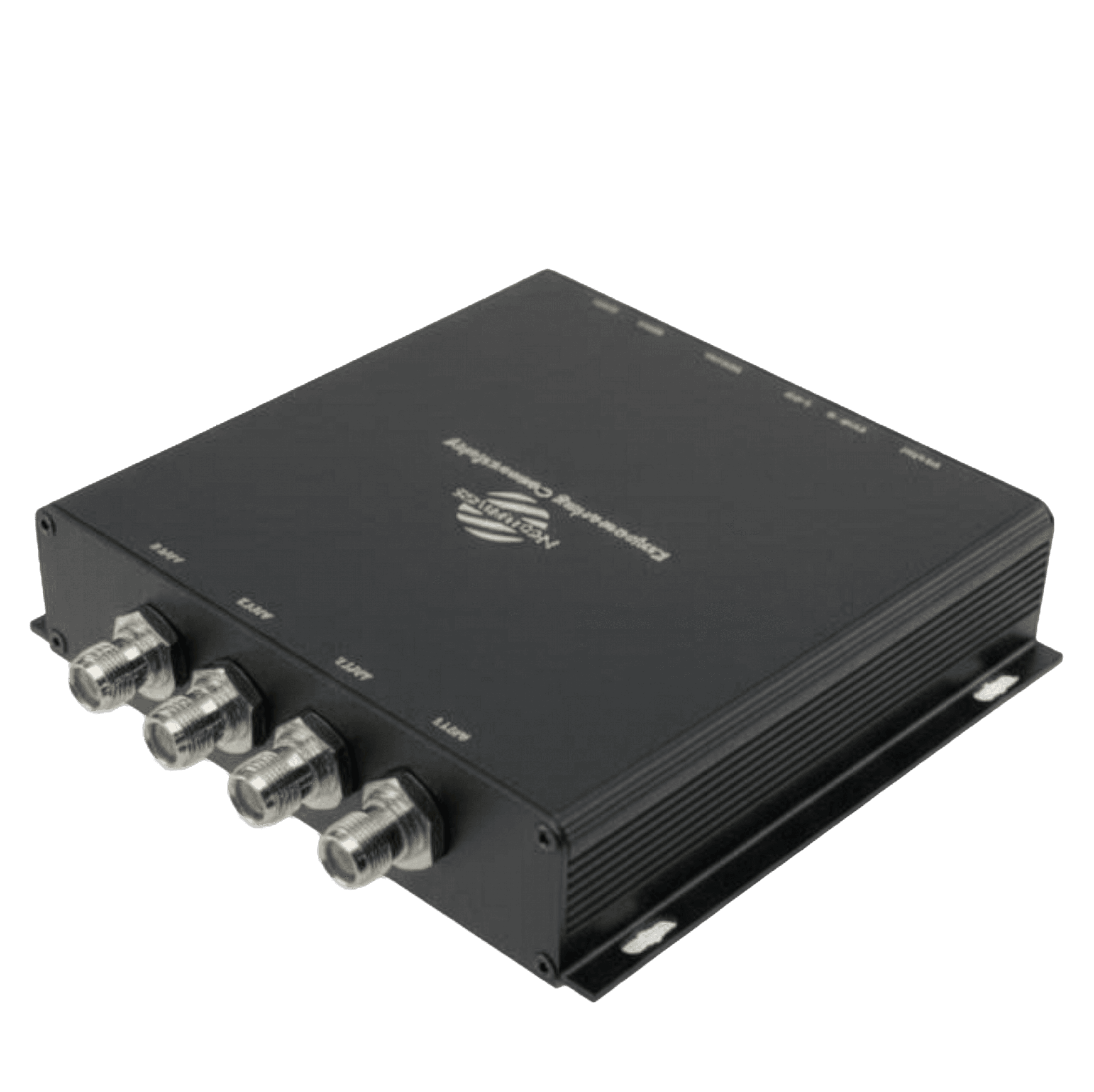
If your engineering team is evaluating the Laird S9028PCL/PCR, the Nextwaves NR155 presents a vastly superior cloud-native architecture. Legacy systems inherently drive high capital expenditure through vendor lock-in and proprietary software ecosystems.
Nextwaves completely eliminates this barrier by providing a standard MQTT REST API directly on the device. Your software developers can integrate tag reading directly into your custom ERP or WMS backend in days instead of months, completely bypassing recurring middleware licensing fees.
Frequently Asked Questions
What is the S9028PCL/PCR?
The Laird S9028PCL (Left-Hand) and PCR (Right-Hand) are ruggedized, circularly polarized passive antennas. Locked strictly to the 902-928 MHz (FCC) North American block, they project high-gain beams when excited by external active transceiver logic.
How much does this setup cost initially?
A raw plate costs roughly $150. Integrators assume the subsequent costs of securing high-end RF reader controllers, shielding coaxial cable trenches, and engineering the required Linux-based software routing frameworks.
Why should I choose Nextwaves instead?
Building portal chokepoints using discrete RF antennas entails painful impedance engineering. Nextwaves consolidates both the powerful RF board and the IP gateway inside one sealed panel, removing external logic entirely.
Is the hardware durable enough for warehouses?
Operating inside an IP54 weather-resistant shell, it measures roughly 260 x 260 x 33 mm and weighs 1.04 kg. It readily handles dense warehouse grit but lacks sealing necessary for intense wash-down cycles.
Does it support multiple network types?
Network routing is completely non-applicable to physical broadcast plates. All connections occur physically over Coaxial Type N / SMA edge sockets trailing strictly back to the active master block.
Can my team install this internally?
Physical setup involves aiming the plates accurately along heavy-duty VESA arms. Network engineers must use expensive VNA spectrum analyzers to assure proper RF alignment and calculate decibel line-loss over the coaxial lengths.
How does the remote management work?
With a N/A (Passive) rating, read volumes depend exclusively upon the parent system driving the board. Expanding throughput necessitates replacing the parent reader matrix, not the passive plate itself.
Do I need proprietary software to run it?
There is zero software logic present. Programmatic interfaces must be directed towards the SDKs controlling the central interrogator box supplying current through the coaxial leads.
What warranty comes with the reader?
Like most large passive elements, the rugged fiberglass radome shields the array components securely, offering standard 1-year defenses against purely manufacturing-related breakage.
Are the antennas sold separately?
Pushing an aggressive 8.5 dBic output, operators typically alternate Left and Right Hand (PCL/PCR) models on opposing portal walls across the 902-928 MHz (FCC) band to destroy complex multipath nulls.