The Honeywell IH21 operates over Bluetooth 4.2 protocols. For $900 MSRP, compare its tethered architecture against Nextwaves integrated cloud terminals.
Technical Specifications
Hardware Overview
The Honeywell IH21 is an industrial-grade RFID device. It operates within the 865-868 MHz / 902-928 MHz range and supports the EPC Gen2 standard, making it widely deployed across enterprise logistics applications.
With an IP rating of IP54, it offers protection against specific environmental conditions typical in warehouses or retail backrooms. The reader utilizes Li-Poly 4.2V 2200mAh for continuous performance, while its stated maximum read rate peaks at standard read rates.
Connectivity and Network Integration
In modern deployments, network integration is the most significant hurdle. This model offers Bluetooth 4.2 options for transferring data back to central systems.
However, a major bottleneck with legacy Honeywell hardware is the heavy reliance on proprietary SDKs (like LLRP) or expensive third-party IoT middleware to process raw tag data into meaningful business intelligence.
The Nextwaves Alternative
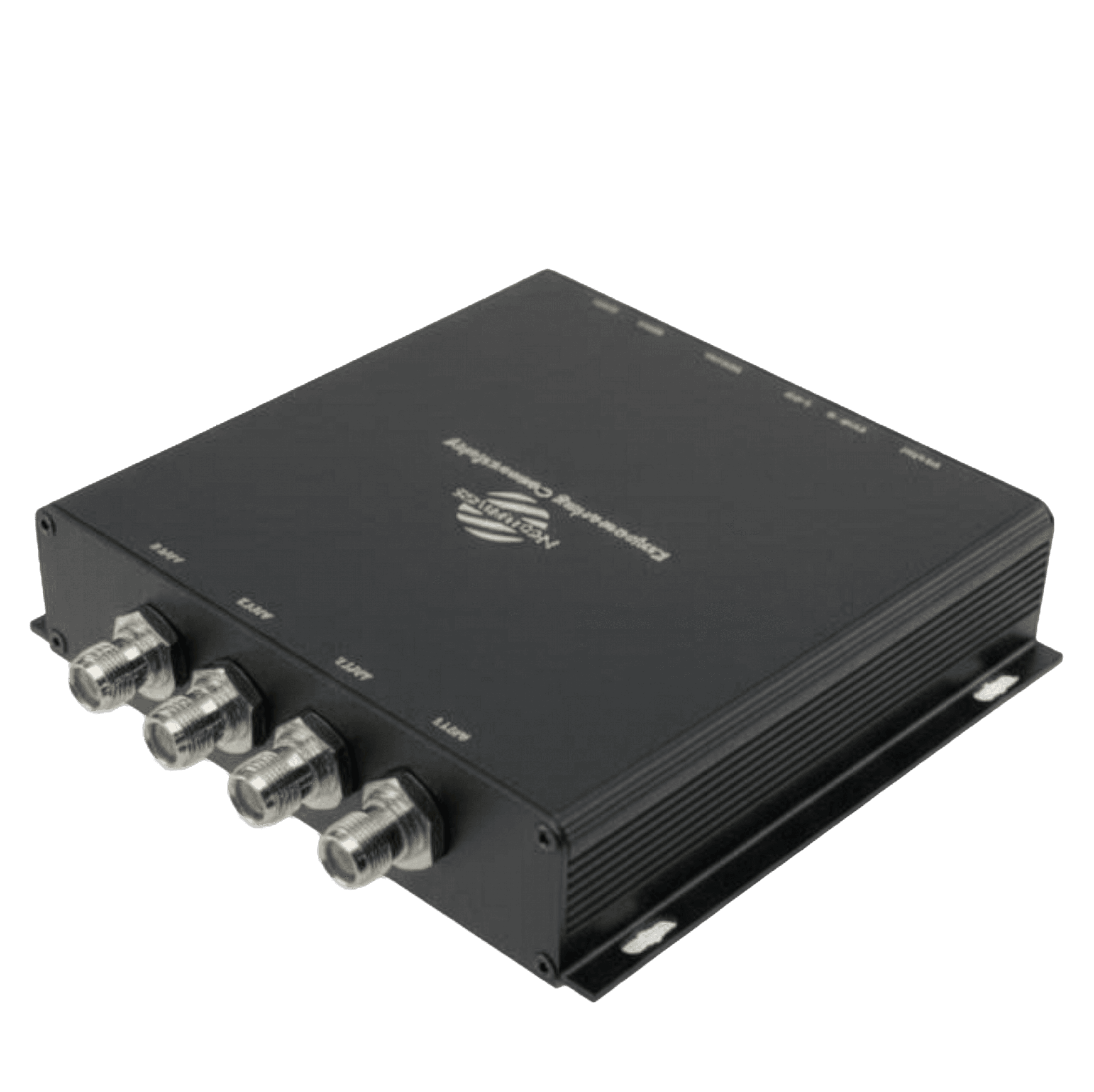
If your engineering team is evaluating the Honeywell IH21, the Nextwaves NR155 presents a vastly superior cloud-native architecture. Legacy systems inherently drive high capital expenditure through vendor lock-in and proprietary software ecosystems.
Nextwaves completely eliminates this barrier by providing a standard MQTT REST API directly on the device. Your software developers can integrate tag reading directly into your custom ERP or WMS backend in days instead of months, completely bypassing recurring middleware licensing fees.
Frequently Asked Questions
What is the IH21?
The Honeywell IH21 is a discontinued Bluetooth UHF RFID sled. It supported legacy EPC Gen2 reading over the 865-868 MHz / 902-928 MHz blocks, enabling mobile data collection primarily for the Dolphin 75e and CT40 mobile computers.
How much does this setup cost initially?
Historically priced at $900, businesses also had to procure specialized eConnex brackets, Li-Poly 4.2V 2200mAh batteries, and the specific legacy Honeywell host device.
Why should I choose Nextwaves instead?
Nextwaves hardware features embedded connectivity processors. By leveraging native REST and MQTT nodes directly on the interrogator, developers bypass Bluetooth translation latency entirely.
Is the hardware durable enough for warehouses?
Weighing 365 g (without mobile) with dimensions of 160 x 77 x 175 mm, the terminal met an IP54 standard, shielding it from standard warehousing dust but lacking resilience against driving rain or deep freezing environments.
Does it support multiple network types?
The single data link path was through Bluetooth 4.2. Secure network encryption and enterprise connectivity ultimately relied on the paired host Android device rather than the sled's subcomponents.
Can my team install this internally?
Pairing demanded the operator lock the smartphone into the mounting rail. The mobile app utilized the Honeywell SDK to initiate RF bursts across the BLE connection whenever the mechanical trigger was depressed.
How does the remote management work?
The architecture was generally capable of standard read rates. Firmware administration and basic diagnostics required a physical USB connection or updates piped through the connected smartphone utility.
Do I need proprietary software to run it?
Integration involved building custom native Java/Android middleware capable of sustaining the Bluetooth 4.2 handshake and mapping the resultant hex reads into your proprietary databases.
What warranty comes with the reader?
As a legacy device, securing valid replacement components or manufacturer warranties is incredibly difficult, forcing many logistics operators to pursue total system lifecycle upgrades.
Are the antennas sold separately?
A standard circular polarized internal antenna mapped the field over the 865-868 MHz / 902-928 MHz frequencies. Field effectiveness dropped significantly as the Li-Poly battery reached below 20% voltage.