The Honeywell IA33D/IA33E are $150 passive planar arrays. Consider how discrete passive antenna maintenance impacts IT infrastructure overhead.
Technical Specifications
Hardware Overview
The Honeywell IA33D/E is an industrial-grade RFID device. It operates within the 865-956 MHz range and supports the N/A (Passive Antenna Element) standard, making it widely deployed across enterprise logistics applications.
With an IP rating of IP67, it offers protection against specific environmental conditions typical in warehouses or retail backrooms. The reader utilizes N/A (Passive) for continuous performance, while its stated maximum read rate peaks at N/A (Passive).
Connectivity and Network Integration
In modern deployments, network integration is the most significant hurdle. This model offers N-Type Female options for transferring data back to central systems.
However, a major bottleneck with legacy Honeywell hardware is the heavy reliance on proprietary SDKs (like LLRP) or expensive third-party IoT middleware to process raw tag data into meaningful business intelligence.
The Nextwaves Alternative
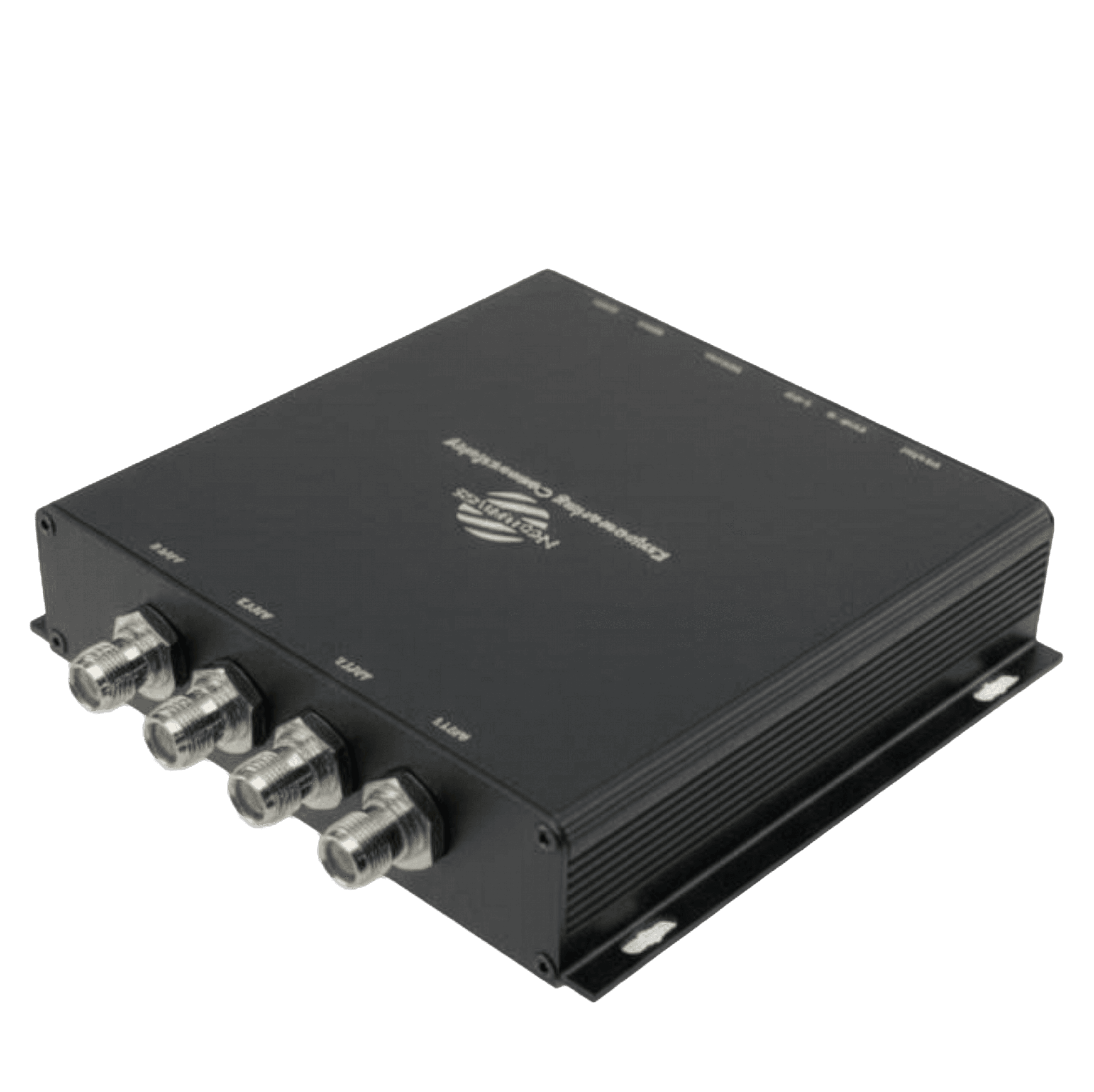
If your engineering team is evaluating the Honeywell IA33D/E, the Nextwaves NR155 presents a vastly superior cloud-native architecture. Legacy systems inherently drive high capital expenditure through vendor lock-in and proprietary software ecosystems.
Nextwaves completely eliminates this barrier by providing a standard MQTT REST API directly on the device. Your software developers can integrate tag reading directly into your custom ERP or WMS backend in days instead of months, completely bypassing recurring middleware licensing fees.
Frequently Asked Questions
What is the IA33D/E?
The Honeywell IA33D (Right-Hand) and IA33E (Left-Hand) are ruggedized circular passive antennas. They support the 865-956 MHz wideband spectrum, radiating signals directed by powerful fixed interrogators like the Honeywell IF2.
How much does this setup cost initially?
Priced near $150 individually. System integrators must also allocate substantial budget for the 4-port fixed gateway reader controlling the antennas, plus specialized thick coaxial wiring runs.
Why should I choose Nextwaves instead?
Maintaining distributed networks of passive plates and interconnected MCU readers adds vast architectural complexity. Nextwaves streamlines deployment by embedding the processor and gateway cleanly into a single panel handling both RF and IP operations natively.
Is the hardware durable enough for warehouses?
Housed in a sturdy die-cast chassis spanning roughly 260 x 260 x 30 mm and weighing 1.4 kg, its IP67 rating ensures failure-proof operation during heavy factory dust cycles or direct wash-downs.
Does it support multiple network types?
The hardware has zero computational networking logic. Functional continuity is maintained by twisting low-loss coaxial conduits securely into its N-Type Female port stemming from an active box.
Can my team install this internally?
Installers bolt the heavy plate directly onto dock brackets. Effective deployment requires careful measurement of impedance mismatches over the connecting coaxial line to prevent internal reader damage caused by signal reflection.
How does the remote management work?
Working fundamentally as an analog component, its read rate registers as N/A (Passive). The speed of EPC extraction relies exactly on the processor clock of the active reader attached downstream.
Do I need proprietary software to run it?
There is no operating system or web server on the panel. Application teams must code webhook parsers directed solely against the master reader machine pulling data from the RF pulse.
What warranty comes with the reader?
Like most standalone arrays, it provides standard 12-month hardware defect coverage. The passive mechanics are essentially immortal assuming the exterior radome survives industrial accidents.
Are the antennas sold separately?
Achieving an 8.5 dBic circular field across the 865-956 MHz band, mixing Right and Left Hand (D/E) variants across warehouse choke points easily neutralizes severe multipath cancellation fields.