The Chainway Ant-RC12 is an IP66 heavy-duty passive antenna array. Learn how running external coaxial compares to Nextwaves integrated routing solutions.
Technical Specifications
Hardware Overview
The Chainway Ant-RC12 is an industrial-grade RFID device. It operates within the 860-960 MHz range and supports the N/A (Passive Antenna Element) standard, making it widely deployed across enterprise logistics applications.
With an IP rating of IP66, it offers protection against specific environmental conditions typical in warehouses or retail backrooms. The reader utilizes N/A (Passive) for continuous performance, while its stated maximum read rate peaks at N/A (Passive).
Connectivity and Network Integration
In modern deployments, network integration is the most significant hurdle. This model offers N-Type Female options for transferring data back to central systems.
However, a major bottleneck with legacy Chainway hardware is the heavy reliance on proprietary SDKs (like LLRP) or expensive third-party IoT middleware to process raw tag data into meaningful business intelligence.
The Nextwaves Alternative
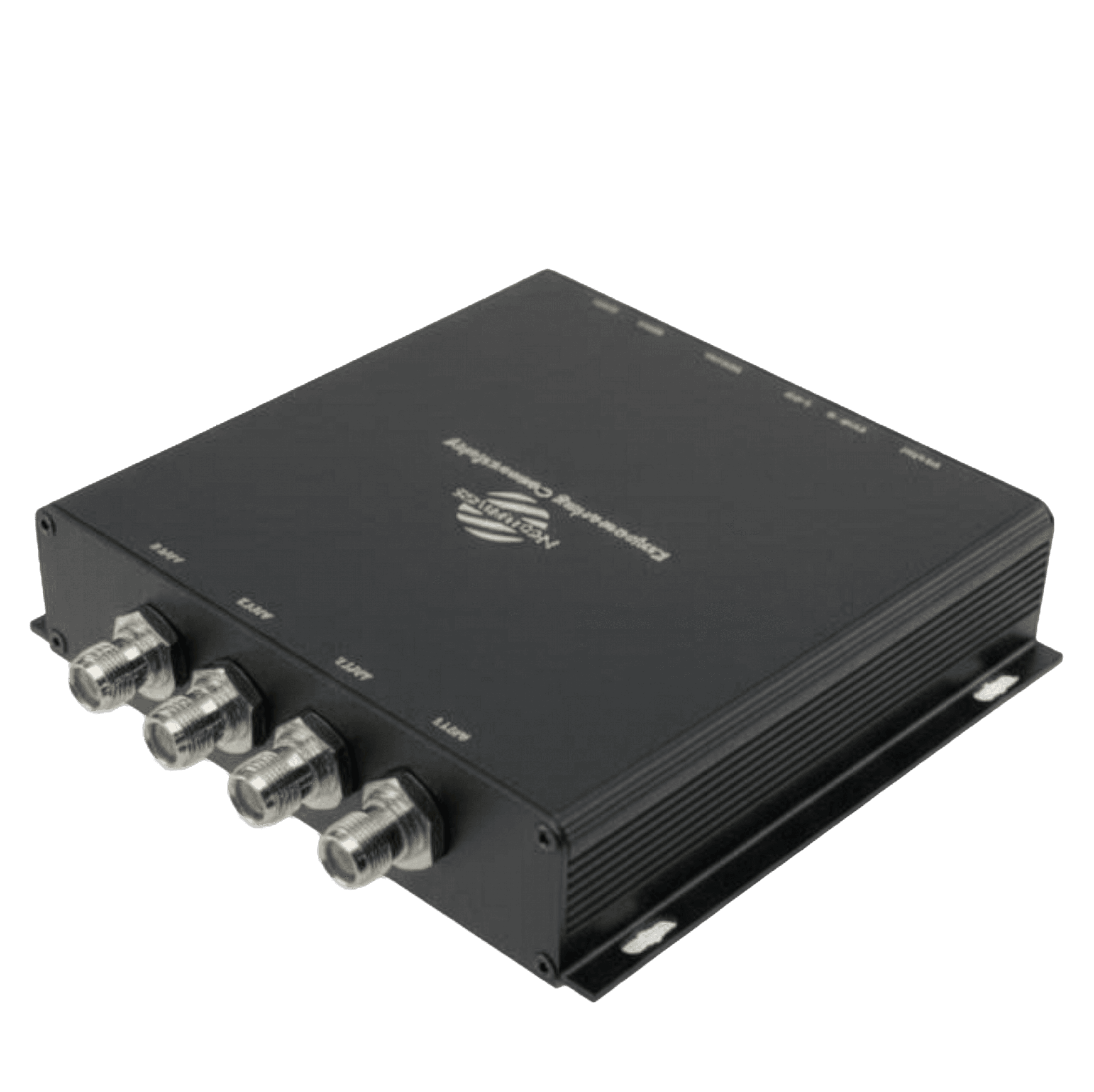
If your engineering team is evaluating the Chainway Ant-RC12, the Nextwaves NR155 presents a vastly superior cloud-native architecture. Legacy systems inherently drive high capital expenditure through vendor lock-in and proprietary software ecosystems.
Nextwaves completely eliminates this barrier by providing a standard MQTT REST API directly on the device. Your software developers can integrate tag reading directly into your custom ERP or WMS backend in days instead of months, completely bypassing recurring middleware licensing fees.
Frequently Asked Questions
What is the Ant-RC12?
The Chainway Ant-RC12 is a heavy-duty, circularly polarized passive array. Operable universally across the 860-960 MHz frequency width, it is intended to pair with robust active readers (like the UR4 series) to cover massive parking lot or warehouse distances.
How much does this setup cost initially?
Priced near $300, it represents only the broadcast component. Total capital expenditure scales hugely when securing the high-output master interrogators required to drive it, alongside specialized low-attenuation N-Type cabling frameworks.
Why should I choose Nextwaves instead?
Constructing expansive long-range gates via passive plates strictly mandates precise external RF balancing across thick rigid cables. Nextwaves mitigates this entirely by consolidating the high-gain beam array into the active gateway processor, allowing simple Ethernet routing.
Is the hardware durable enough for warehouses?
Weighing a massive 3.5 kg and spanning 450 x 450 x 30 mm, its heavy gauge framing easily achieves IP66 sealing. It comfortably absorbs extreme outdoor environments, driving rain, and intense industrial impacts without degradation.
Does it support multiple network types?
It completely lacks native Bluetooth or IP processing routing. Energy flow dictates screwing thick shielded Coaxial cables into its N-Type Female port terminating at an active network reader.
Can my team install this internally?
Due to its 3.5 kg bulk, structural pole-mounting utilizing heavy U-bolts is mandatory. IT infrastructure engineers must employ Vector Network Analyzers to fine-tune active master outputs against the line-loss dropping across the N-Type coaxial runs.
How does the remote management work?
Lacking localized data state handling, it is scored N/A (Passive). The volume of tags processed strictly anchors to the silicon processing capabilities of the upstream reader box sweeping the signal array.
Do I need proprietary software to run it?
There are zero internal IP stacks to program towards. Network engineers push JSON/MQTT endpoints exclusively on the external UR4 (or equivalent) node directing the electrical pulse sequence.
What warranty comes with the reader?
As a sealed passive radome, manufacturing defect warranties extend typically for a year. With no delicate microprocessors inside, the massive metal patch ensures multi-decade survival against intense outdoor elements.
Are the antennas sold separately?
Projecting an overwhelmingly powerful 12 dBi output, this circular beam successfully blasts through dense metallic reflections across the 860-960 MHz band, securing long-range vehicular and deep pallet reads.