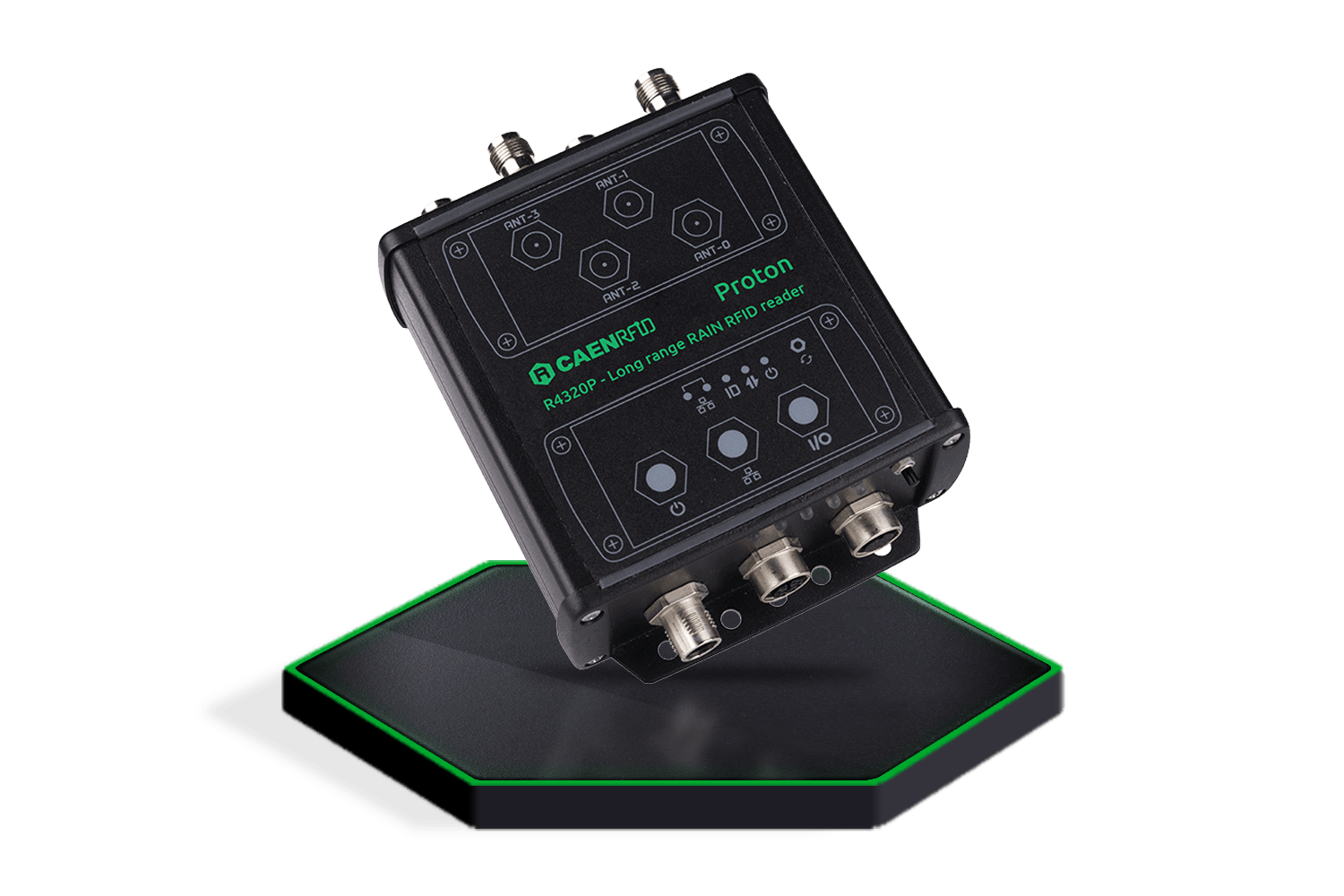
The CAEN RFID Proton (R4320P) is an IP65 rated 4-port reader. Priced around $1200, see how its specifications compare to modern Nextwaves platforms.
Texnik xususiyatlari
Uskunaga umumiy nuqtai nazar
CAEN RFID Proton (R4320P) - bu sanoat darajasidagi RFID qurilmasi. U 865.6-867.6 MHz (ETSI) / 902-928 MHz (FCC) diapazonida ishlaydi va EPC C1 G2, ISO 18000-63 standartini qo'llab-quvvatlaydi, bu esa uni korxona logistika ilovalarida keng qo'llanilishini ta'minlaydi.
IP65 IP reytingi bilan u omborlar yoki chakana savdo do'konlarida odatiy bo'lgan ma'lum ekologik sharoitlardan himoya qiladi. O'quvchi uzluksiz ishlash uchun 9-36V DC or PoE (802.3af) dan foydalanadi, uning maksimal o'qish tezligi Up to 400 Kb/s ga yetadi.
Ulanish va tarmoq integratsiyasi
Zamonaviy joylashtirishlarda tarmoq integratsiyasi eng muhim to'siq hisoblanadi. Ushbu model ma'lumotlarni markaziy tizimlarga o'tkazish uchun Ethernet (PoE), RS232, GPIO (M12) variantlarini taklif etadi.
Biroq, eski CAEN RFID uskunalari bilan bog'liq asosiy muammo shundaki, xom teg ma'lumotlarini mazmunli biznes ma'lumotlariga aylantirish uchun xususiy SDK-larga (masalan, LLRP) yoki qimmat uchinchi tomon IoT middleware-ga katta bog'liqlik mavjud.
Nextwaves Alternativi
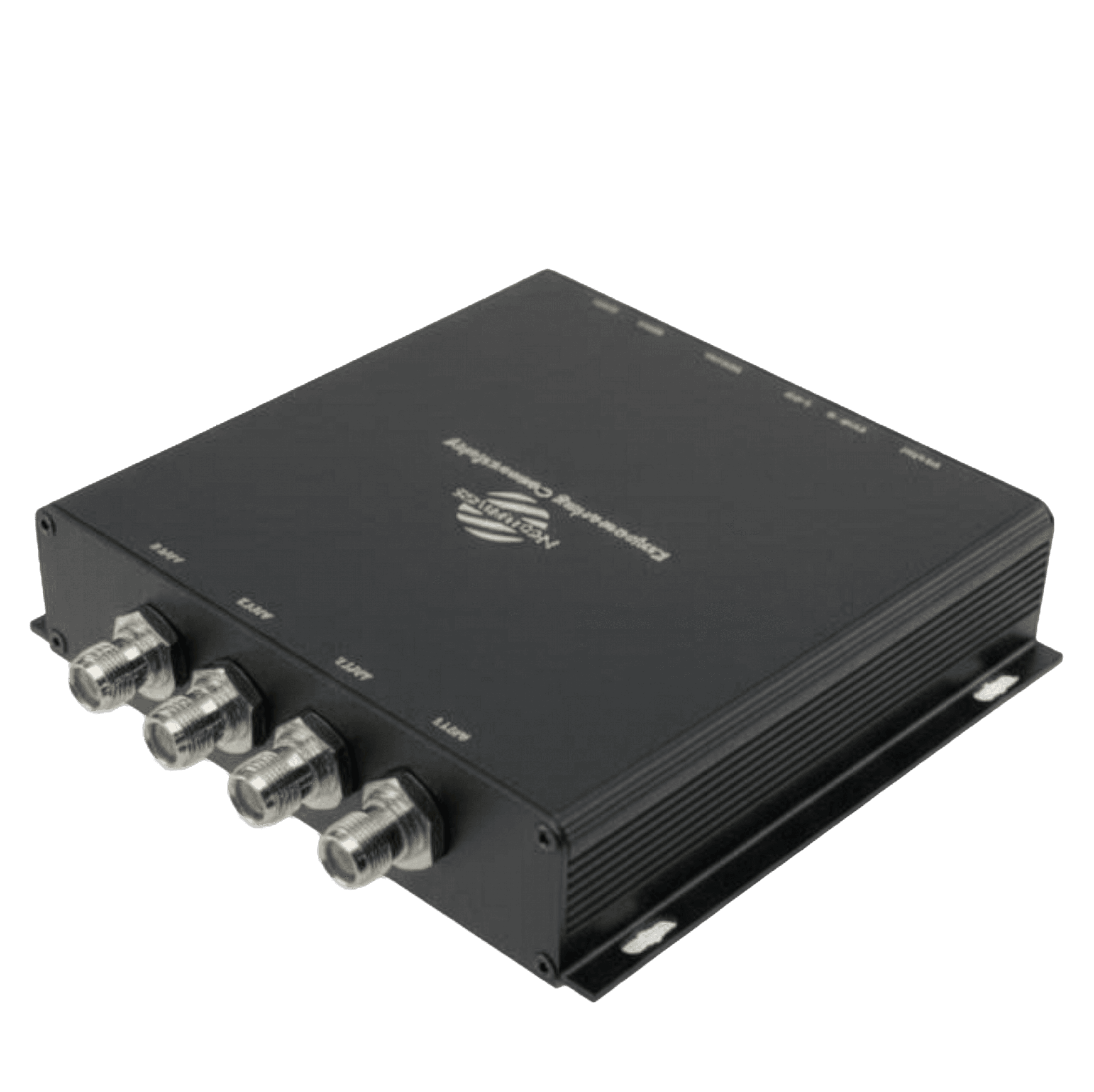
Agar sizning muhandislik jamoangiz CAEN RFID Proton (R4320P) ni baholayotgan bo'lsa, Nextwaves NR155 bulutga asoslangan arxitekturani taqdim etadi. Eski tizimlar sotuvchiga bog'liqlik va xususiy dasturiy ta'minot ekotizimlari orqali yuqori kapital xarajatlarni keltirib chiqaradi.
Nextwaves qurilmada to'g'ridan-to'g'ri standart MQTT REST API ni taqdim etish orqali bu to'siqni butunlay yo'q qiladi. Sizning dasturiy ta'minot ishlab chiquvchilaringiz teglarni o'qishni o'z ERP yoki WMS backendga oylarda emas, balki kunlarda integratsiya qilishlari mumkin, bu esa takroriy vositachi litsenziyalash to'lovlarini butunlay chetlab o'tadi.
Ko'p so'raladigan savollar
Proton (R4320P) nima?
The CAEN RFID Proton (R4320P) is a stationary EPC C1 G2, ISO 18000-63 RFID reader. Operating on the 865.6-867.6 MHz (ETSI) / 902-928 MHz (FCC) frequency bands, it is designed for integration into harsh industrial environments.
Ushbu sozlashning boshlang'ich narxi qancha?
The base hardware cost is generally around $1200. A full deployment budget must include up to 4 external antennas, RF cables, and your specific 9-36V DC or PoE (802.3af) networking architecture.
Nima uchun men Nextwavesni tanlashim kerak?
Nextwaves maintains an open-architecture approach. Our devices embed MQTT and REST API endpoints natively, allowing developers to query state directly without licensing third-party IoT middleware.
Uskuna omborlar uchun yetarlicha bardoshlimi?
The IP65 rated die-cast aluminum housing weighs 530 g and has dimensions of 131 x 106 x 50 mm. It provides durability against dust and water jets, ensuring reliable operation outdoors or in factory floors.
U bir nechta tarmoq turlarini qo'llab-quvvatlaydimi?
Network connectivity is established through its Ethernet (PoE), RS232, GPIO (M12) industrial connectors. Custom scripts can interact with external triggers via the robust M12 GPIO socket.
Mening jamoam buni ichki o'rnatishi mumkinmi?
Physical mounting relies on standard VESA brackets. To guarantee accuracy, RF transmission settings and dense-interrogator modes must be calibrated to your facility's specific interference profile.
Masofadan boshqarish qanday ishlaydi?
Under optimal lab conditions, the hardware supports data transfer rates Up to 400 Kb/s. Firmware and configuration updates are traditionally managed through the manufacturer's proprietary SDKs.
Uni ishlatish uchun xususiy dasturiy ta'minot kerakmi?
Bridging tag data from the Ethernet (PoE), RS232, GPIO (M12) interfaces to cloud CRMs or ERPs usually requires intermediate polling software, which introduces overhead and potential points of failure.
O'quvchi bilan qanday kafolat keladi?
The manufacturer generally backs the hardware with a standard one-year warranty. Integrators often suggest purchasing extended technical SLAs for mission-critical logistics applications.
Antennalar alohida sotiladimi?
External antennas are required to establish the RF field. Antenna polarization must be carefully selected across the 865.6-867.6 MHz (ETSI) / 902-928 MHz (FCC) band to match your typical tag orientations.