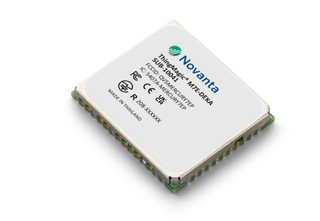
The ThingMagic M7e-Deka is a miniature $120 UHF module based on the Impinj E310 core. Understand the engineering costs for deep hardware embedding.
Vipimo vya Ufundi
Muhtasari wa Vifaa
ThingMagic (JADAK) M7e-Deka ni kifaa cha RFID cha kiwango cha viwanda. Kifaa hiki hufanya kazi ndani ya masafa ya Global (860-960 MHz) na kinaunga mkono kiwango cha EPC Gen2v2, ISO 18000-63, na kuifanya itumike sana katika matumizi ya vifaa vya biashara.
Kwa ukadiriaji wa IP wa Bare PCB (None), inatoa ulinzi dhidi ya hali maalum za mazingira za kawaida katika ghala au vyumba vya nyuma vya rejareja. Kisomaji hutumia 3.3V to 5.25V DC kwa utendaji endelevu, wakati kiwango chake cha juu cha usomaji kinasema kuwa ni up to ~300 tags/sec.
Ushirikiano wa Muunganisho na Mtandao
Katika matumizi ya kisasa, ushirikiano wa mtandao ndio kikwazo kikubwa zaidi. Mfumo huu unatoa chaguo za UART Serial / USB kwa kuhamisha data kurudi kwenye mifumo mikuu.
Hata hivyo, tatizo kubwa na vifaa vya ThingMagic (JADAK) vya zamani ni kutegemea sana SDKs za umiliki (kama LLRP) au programu ya kati ya IoT ya gharama kubwa ya watu wengine ili kuchakata data ghafi ya lebo kuwa akili ya biashara yenye maana.
Mbadala wa Nextwaves
Ikiwa timu yako ya uhandisi inatathmini ThingMagic (JADAK) M7e-Deka, Nextwaves NR155 inatoa usanifu bora zaidi wa asili ya wingu. Mifumo ya urithi huendesha matumizi makubwa ya mtaji kupitia kufungwa kwa muuzaji na mazingira ya programu ya wamiliki.
Nextwaves huondoa kabisa kizuizi hiki kwa kutoa kiwango cha MQTT REST API moja kwa moja kwenye kifaa. Wasanidi programu wako wanaweza kuunganisha usomaji wa lebo moja kwa moja kwenye ERP yako maalum au WMS backend kwa siku badala ya miezi, wakipita kabisa ada za leseni za programu ya katikati zinazojirudia.
Maswali Yanayoulizwa Mara kwa Mara
M7e-Deka ni nini?
The ThingMagic (JADAK) M7e-Deka is an embedded UHF RFID transceiver board engineered around the Impinj E310 IC. Capable of EPC Gen2v2, ISO 18000-63 decoding over the Global (860-960 MHz) block, it is used primarily in point-of-sale peripherals.
Usanidi huu unagharimu kiasi gani mwanzoni?
Raw modules cost approximately $120 per unit. Like all SMD components, the true cost scales drastically when budgeting for carrier boards, antenna arrays, power management logic, and the central microprocessor.
Kwa nini nichague Nextwaves badala yake?
Embedding raw RF modules requires extensive C++ firmware expertise. Nextwaves supplies ready-to-mount smart nodes that already possess the physical casing, power management, and HTTP bridging logic, saving months of engineering.
Je, vifaa vina uimara wa kutosha kwa maghala?
Because it is a bare circuit board measuring 46 x 26 x 4 mm and weighing just 3 g, the module carries a Bare PCB (None) rating. Operators must design a rigid enclosure to shield it from factory or retail dust.
Je, inasaidia aina nyingi za mtandao?
Data pipes strictly through UART Serial / USB boundary logic pins. Bridging this data into enterprise networks requires the parent device to provide secondary Ethernet or Wi-Fi processors.
Je, timu yangu inaweza kusakinisha hii ndani?
Final integration necessitates attaching the module onto a larger custom PCB. Software commands must be structured using the ThingMagic Mercury SDK executed securely by the master generic microprocessor.
Usimamizi wa mbali unafanyaje kazi?
Optimized for mid-range scanning, the core IC scales processing to up to ~300 tags/sec. It serves primarily as a friction-less gateway rather than a massive area scanner.
Je, ninahitaji programu ya umiliki ili kuiendesha?
Transferring scanned strings to cloud infrastructure relies fully on your custom host firmware. To bypass legacy Bluetooth or Serial limitations, developers must code logic that pipes local serial streams into active REST connections.
Udhamini gani unakuja na kisoma?
The hardware holds a standard 12-month defect warranty, but component lifecycle spans are deeply tied to the thermal efficiency and static shielding of the OEM's proprietary carrier board design.
Je, antena zinauzwa kando?
A single MMCX connection handles external antenna routing across the Global (860-960 MHz) bands. Peak transmit gain extends up to +27 dBm, which demands dedicated thermal throttling logic.