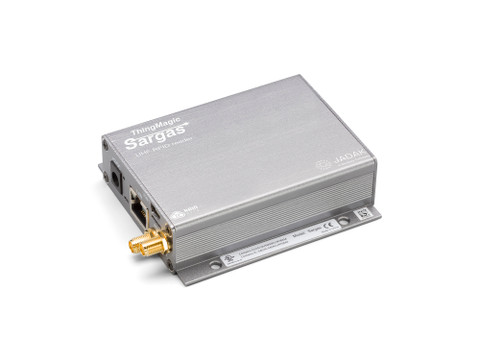
The Sargas 2-Port is a compact edge computing reader operating on UHF/RAIN frequencies. Starting at $1000. See how it compares to Nextwaves open architecture.
Nkọwa Nkà na Ụzụ
Nkọwa Hardware
ThingMagic (JADAK) Sargas (2-Port) bụ ngwaọrụ RFID nke ụlọ ọrụ. Ọ na-arụ ọrụ n'ime oke UHF/RAIN (global) ma na-akwado ụkpụrụ EPC Gen2V2, ISO 18000-63, Gen2X, na-eme ka e jiri ya mee ihe n'ọtụtụ ngwa ngwa ngwa ngwa ụlọ ọrụ.
Site na IP rating nke IP52, ọ na-enye nchebe megide ọnọdụ gburugburu ebe obibi dị na ụlọ nkwakọba ihe ma ọ bụ ụlọ azụmaahịa. Onye na-agụ akwụkwọ na-eji 4.5-5.5V DC maka arụmọrụ na-aga n'ihu, ebe ọnụego ịgụ ya kachasị elu na 750.
Njikọ na Njikọ Netwọk
Na ntinye nke oge a, njikọ netwọk bụ ihe mgbochi kachasị mkpa. Ihe nlereanya a na-enye nhọrọ RJ45, USB A/B, Micro-SD, 4 GPIO maka ịnyefe data azụ na sistemụ etiti.
Otú ọ dị, nnukwu ihe mgbochi na ngwaike ThingMagic (JADAK) nketa bụ nnukwu ntụkwasị obi na SDKs nwe (dị ka LLRP) ma ọ bụ dị oké ọnụ ahịa nke atọ IoT middleware iji hazie data tagi raw ka ọ bụrụ ọgụgụ isi azụmahịa bara uru.
Nextwaves Alternative
Ọ bụrụ na ndị otu injinia gị na-enyocha ThingMagic (JADAK) Sargas (2-Port), Nextwaves NR155 na-enye ihe owuwu igwe ojii dị elu. Usoro nketa na-akpata nnukwu mmefu isi obodo site na mkpọchi onye na-ere ahịa na sistemụ ngwanrọ nke onwe.
Nextwaves na-ewepụ ihe mgbochi a kpamkpam site n'inye ọkọlọtọ MQTT REST API ozugbo na ngwaọrụ ahụ. Ndị mmepe ngwanrọ gị nwere ike itinye ịgụ akara ozugbo n'ime azụ ERP ma ọ bụ WMS omenala gị n'ime ụbọchị kama ọnwa, na-agafe kpamkpam ụgwọ ikike middleware na-eme ugboro ugboro.
Ajụjụ A Na-ajụkarị
Gịnị bụ Sargas (2-Port)?
The ThingMagic (JADAK) Sargas 2-Port is an embedded edge reader designed around the M6e Micro module. Operating on the UHF/RAIN (global) band, it is built to handle strict EPC Gen2V2, ISO 18000-63, Gen2X protocol standards within a compact footprint.
Ego ole ka nhazi a na-efu na mbụ?
The unit retails around $1000. Comprehensive project budgeting must also account for two external RP-SMA antennas, required coaxial cabling, and the provision of a steady 4.5-5.5V DC power source.
Gịnị mere m ga-eji họrọ Nextwaves kama?
Nextwaves provides embedded REST API and MQTT endpoints natively on the hardware. Software engineering teams bypass the proprietary Mercury API format and integrate JSON RFID events directly into modern cloud management systems.
Ngwaike ahụ ọ siri ike zuru ezu maka ụlọ nkwakọba ihe?
The aluminum enclosure weighs approximately 0.27 kg and measures 87 x 80 x 23.8 mm. This compact IP52-rated chassis is easily embedded inside smart cabinets or secondary industrial enclosures.
Ọ na-akwado ọtụtụ ụdị netwọkụ?
Network integration utilizes RJ45, USB A/B, Micro-SD, 4 GPIO connections. The 4 hardware logic GPIO pins are frequently used to trigger scanning based on external photoelectric sensors or PLC relays.
Ndị otu m nwere ike ịwụnye nke a n'ime ụlọ?
Hardware mounting utilizes standard corner flange holes. To optimize detection, software teams must utilize custom C/C++ or Java routines via the Mercury API to finely tune power amplitude curves based on environmental reflections.
Kedu ka njikwa dịpụrụ adịpụ si arụ ọrụ?
Under optimal tuning parameters, the micro-module core is rated up to 750 tag reads per second. Remote administration is heavily reliant on JADAK's custom Universal Reader Assistant suite.
Ọ dị m mkpa ngwanrọ nwe naanị iji mee ya?
Typically, bridging data from the RJ45, USB A/B, Micro-SD, 4 GPIO ports into modern web stacks requires an intermediate middleware system or proprietary SDK implementation, which increases technical debt.
Kedu akwụkwọ ikike na-abịa na ihe ọgụgụ?
The manufacturer provides a standard one-year hardware warranty against component failure. Critical integration paths should often be supplemented by authorized VAR support agreements.
A na-ere antenna iche iche?
External antennas must be attached to the two RP-SMA terminal ports. Tuning the system dynamically across the UHF/RAIN (global) band is necessary to prevent FCC/ETSI non-compliance while maximizing read strength.