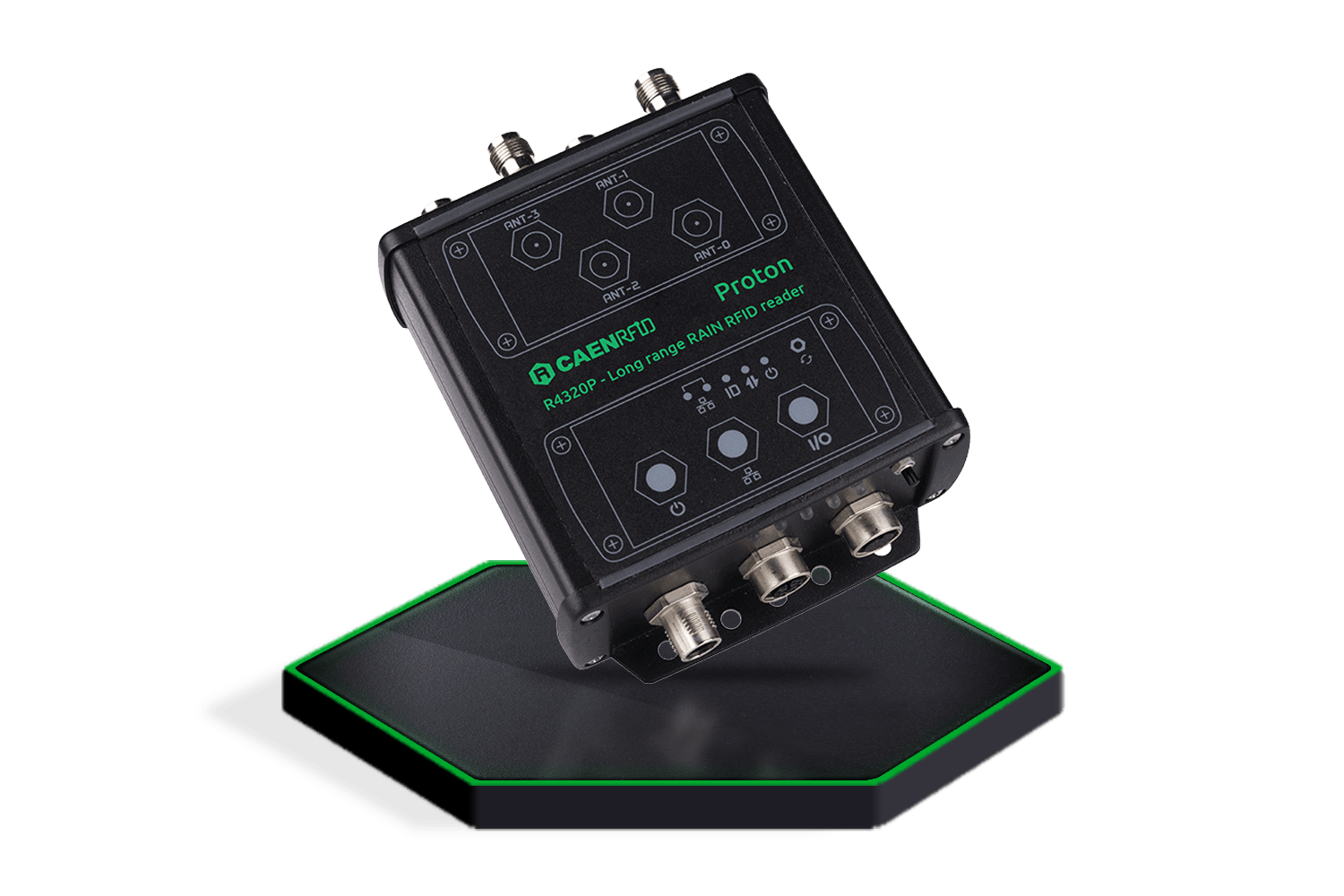
The CAEN RFID Proton (R4320P) is an IP65 rated 4-port reader. Priced around $1200, see how its specifications compare to modern Nextwaves platforms.
Nkọwa Nkà na Ụzụ
Nkọwa Hardware
CAEN RFID Proton (R4320P) bụ ngwaọrụ RFID nke ụlọ ọrụ. Ọ na-arụ ọrụ n'ime oke 865.6-867.6 MHz (ETSI) / 902-928 MHz (FCC) ma na-akwado ụkpụrụ EPC C1 G2, ISO 18000-63, na-eme ka e jiri ya mee ihe n'ọtụtụ ngwa ngwa ngwa ngwa ụlọ ọrụ.
Site na IP rating nke IP65, ọ na-enye nchebe megide ọnọdụ gburugburu ebe obibi dị na ụlọ nkwakọba ihe ma ọ bụ ụlọ azụmaahịa. Onye na-agụ akwụkwọ na-eji 9-36V DC or PoE (802.3af) maka arụmọrụ na-aga n'ihu, ebe ọnụego ịgụ ya kachasị elu na Up to 400 Kb/s.
Njikọ na Njikọ Netwọk
Na ntinye nke oge a, njikọ netwọk bụ ihe mgbochi kachasị mkpa. Ihe nlereanya a na-enye nhọrọ Ethernet (PoE), RS232, GPIO (M12) maka ịnyefe data azụ na sistemụ etiti.
Otú ọ dị, nnukwu ihe mgbochi na ngwaike CAEN RFID nketa bụ nnukwu ntụkwasị obi na SDKs nwe (dị ka LLRP) ma ọ bụ dị oké ọnụ ahịa nke atọ IoT middleware iji hazie data tagi raw ka ọ bụrụ ọgụgụ isi azụmahịa bara uru.
Nextwaves Alternative
Ọ bụrụ na ndị otu injinia gị na-enyocha CAEN RFID Proton (R4320P), Nextwaves NR155 na-enye ihe owuwu igwe ojii dị elu. Usoro nketa na-akpata nnukwu mmefu isi obodo site na mkpọchi onye na-ere ahịa na sistemụ ngwanrọ nke onwe.
Nextwaves na-ewepụ ihe mgbochi a kpamkpam site n'inye ọkọlọtọ MQTT REST API ozugbo na ngwaọrụ ahụ. Ndị mmepe ngwanrọ gị nwere ike itinye ịgụ akara ozugbo n'ime azụ ERP ma ọ bụ WMS omenala gị n'ime ụbọchị kama ọnwa, na-agafe kpamkpam ụgwọ ikike middleware na-eme ugboro ugboro.
Ajụjụ A Na-ajụkarị
Gịnị bụ Proton (R4320P)?
The CAEN RFID Proton (R4320P) is a stationary EPC C1 G2, ISO 18000-63 RFID reader. Operating on the 865.6-867.6 MHz (ETSI) / 902-928 MHz (FCC) frequency bands, it is designed for integration into harsh industrial environments.
Ego ole ka nhazi a na-efu na mbụ?
The base hardware cost is generally around $1200. A full deployment budget must include up to 4 external antennas, RF cables, and your specific 9-36V DC or PoE (802.3af) networking architecture.
Gịnị mere m ga-eji họrọ Nextwaves kama?
Nextwaves maintains an open-architecture approach. Our devices embed MQTT and REST API endpoints natively, allowing developers to query state directly without licensing third-party IoT middleware.
Ngwaike ahụ ọ siri ike zuru ezu maka ụlọ nkwakọba ihe?
The IP65 rated die-cast aluminum housing weighs 530 g and has dimensions of 131 x 106 x 50 mm. It provides durability against dust and water jets, ensuring reliable operation outdoors or in factory floors.
Ọ na-akwado ọtụtụ ụdị netwọkụ?
Network connectivity is established through its Ethernet (PoE), RS232, GPIO (M12) industrial connectors. Custom scripts can interact with external triggers via the robust M12 GPIO socket.
Ndị otu m nwere ike ịwụnye nke a n'ime ụlọ?
Physical mounting relies on standard VESA brackets. To guarantee accuracy, RF transmission settings and dense-interrogator modes must be calibrated to your facility's specific interference profile.
Kedu ka njikwa dịpụrụ adịpụ si arụ ọrụ?
Under optimal lab conditions, the hardware supports data transfer rates Up to 400 Kb/s. Firmware and configuration updates are traditionally managed through the manufacturer's proprietary SDKs.
Ọ dị m mkpa ngwanrọ nwe naanị iji mee ya?
Bridging tag data from the Ethernet (PoE), RS232, GPIO (M12) interfaces to cloud CRMs or ERPs usually requires intermediate polling software, which introduces overhead and potential points of failure.
Kedu akwụkwọ ikike na-abịa na ihe ọgụgụ?
The manufacturer generally backs the hardware with a standard one-year warranty. Integrators often suggest purchasing extended technical SLAs for mission-critical logistics applications.
A na-ere antenna iche iche?
External antennas are required to establish the RF field. Antenna polarization must be carefully selected across the 865.6-867.6 MHz (ETSI) / 902-928 MHz (FCC) band to match your typical tag orientations.