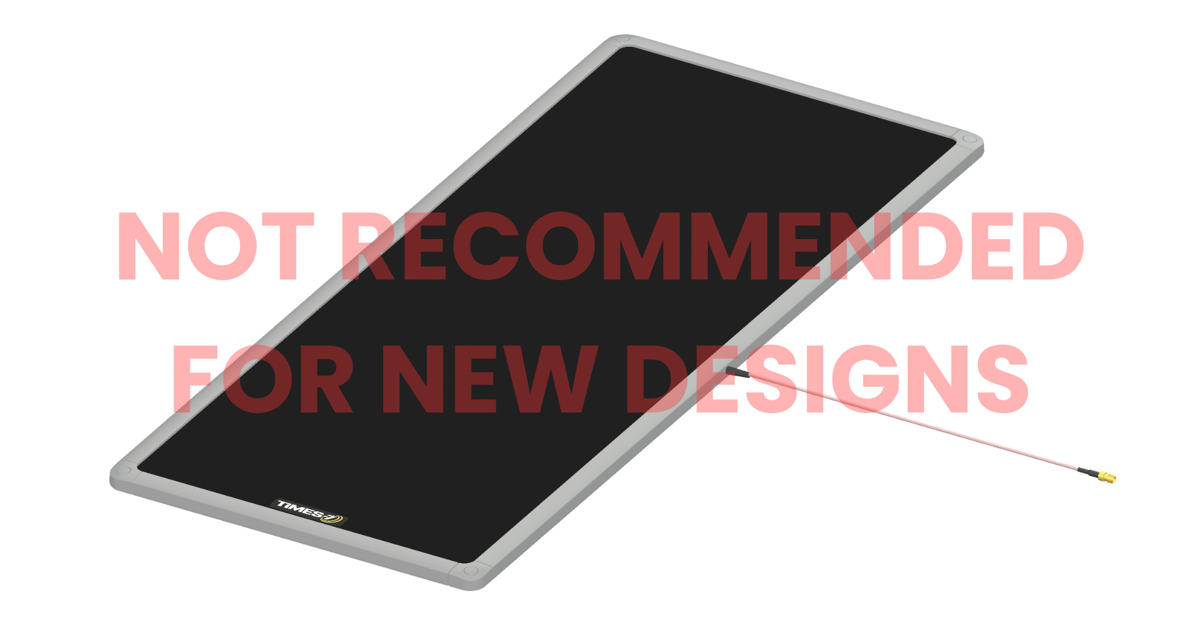
The Times-7 A6034 is a large 2.2 kg portal antenna starting at $250. Learn the installation complexities of massive multi-component RF dock systems.
Zehaztapen Teknikoak
Hardwarearen Ikuspegi Orokorra
Times-7 A6034 RFID gailu industrial bat da. 865-868 MHz / 902-928 MHz tartean funtzionatzen du eta N/A (Passive Antenna Element) estandarra onartzen du, enpresen logistika aplikazioetan oso zabalduta egon dadin.
IP65 IP balorazioarekin, biltegi edo txikizkako atzeko gelatan ohikoak diren ingurumen baldintza zehatzen aurkako babesa eskaintzen du. Irakurgailuak N/A (Passive) erabiltzen du etengabeko errendimendurako, eta bere irakurketa-abiadura maximoa N/A (Passive) da.
Konektibitatea eta Sarearen Integrazioa
Egungo inplementazioetan, sarearen integrazioa da oztopo nagusia. Eredu honek SMA Female aukera eskaintzen ditu datuak sistema zentraletara transferitzeko.
Hala ere, Times-7 hardware zaharkituaren arazo nagusia SDK jabedunen (LLRP bezalakoak) edo hirugarrenen IoT middleware garestien menpekotasun handia da, etiketen datu gordinak negozio adimen esanguratsu bihurtzeko.
Nextwaves Alternatiba
Zure ingeniaritza taldea Times-7 A6034 ebaluatzen ari bada, Nextwaves NR155-ak hodeian oinarritutako arkitektura askoz hobea aurkezten du. Ondare-sistemek kapital-gastu handiak eragiten dituzte saltzaileen blokeoaren eta software-ekosistema jabedunen bidez.
Nextwaves-ek oztopo hori guztiz ezabatzen du MQTT REST API estandar bat gailuan zuzenean eskainiz. Zure software garatzaileek etiketen irakurketa zuzenean integra dezakete zure ERP edo WMS atzeko plano pertsonalizatuan egunetan, hilabetetan baino, bitarteko lizentzia-kuota errepikariak guztiz saihestuz.

Galdera Arruntenak
Zer da A6034?
The Times-7 A6034 is a massive, high-gain portal antenna built specifically for extreme coverage footprints. Generating high circular polarization across 865-868 MHz / 902-928 MHz boundaries, it provides the physical framework for warehouse pallet tunnels.
Zenbat balio du konfigurazio honek hasieran?
Selling for approximately $250, the absolute total cost must include structural heavy-metal mounting poles, expensive active interrogators (like an Impinj R700), and custom-length LMR-400 equivalent cabling lines.
Zergatik aukeratu beharko nuke Nextwaves besteen ordez?
Building portal arrays from separate components forces teams to fight coaxial cable degradation. Nextwaves completely unifies the massive antenna surface and active gateway processing into one monolithic device powered by standard Ethernet switches.
Hardwarea nahikoa iraunkorra al da biltegietarako?
Spanning a massive 714 x 380 x 12 mm area, the antenna weighs a hefty 2.2 kg. Protected by an IP65 shell, it comfortably survives standard indoor warehousing moisture and heavy dust.
Sare mota anitz onartzen al ditu?
The array integrates zero logic silicon and runs zero network traffic. Interaction is limited strictly to driving +30 dBm pulses into the SMA Female coax input.
Nire taldeak barnean instala al dezake hau?
Due to its extreme size, installation relies on secure VESA mounts or articulating flange arms. Proper tuning requires physically aiming the wide lobe effectively to prevent 'bleed-over' into adjacent loading dock sectors.
Nola funtzionatzen du urruneko kudeaketak?
With a strict N/A (Passive) metric, read operations are fully disconnected from the plate itself. Speed bottlenecks strictly reflect the intelligence of the connected master reader.
Software jabedunik behar al dut hura exekutatzeko?
Writing logic to extract EPCs occurs entirely on the external interrogator attached downstream. Software developers never address the A6034 natively, interacting only with the hardware pushing the RF pulses.
Zer berme dakar irakurgailuak?
Times-7 standard defect warranties apply. Passive plates of this scale rarely fail electronically; their operational lifespan is usually halted only by violent forklift impacts.
Antenak bereiz saltzen al dira?
Pushing out an aggressive 9.0 dBic polarized signal, it efficiently illuminates large pallets moving cleanly across 865-868 MHz / 902-928 MHz bandwidth constraints in heavily active dock systems.