RFID replacement dossierUpdated: May 25, 2026

Laird S8658PL/PRRessenya: Especificacions i Alternatives

The Laird S8658PL/PR is an ETSI targeted passive array for $150. Analyze the complex deployment costs against standalone active arrays.

Nextwaves EngineeringRessenya de Maquinari5 min de lectura

Technical verdict

Laird S8658PL/PR is a mainstream hardware purchase, but it is not always the best architecture for direct RFID data integration.

Do not evaluate S8658PL/PR by list price alone. Its strongest fit is a project that already uses Coaxial Type N / SMA, has time for RF tuning, and accepts extra middleware work. If the engineering team needs open APIs, realtime data, and faster edge-to-cloud deployment, Nextwaves NR155 is the stronger replacement path to evaluate.

Initial cost

$150 before deployment accessories

Published throughput

Not specified

Integration surface

Coaxial Type N / SMA

Physical data

260 x 260 x 33 mm; 1.04 kg; IP: IP54

Published specs

Specifications to validate before replacing

Freqüència

865-868 MHz (ETSI)

Protocol

N/A (Passive Antenna Element)

Connectivitat

Coaxial Type N / SMA

Grau IP

IP54

Dimensions

260 x 260 x 33 mm

Pes

1.04 kg

Font d'Alimentació

N/A (Passive)

Velocitat de Lectura

N/A (Passive)

Preu Estimado

$150

Deployment review

Operational strengths and risks

This summary is based on public specifications and does not replace an on-site RF survey.

Fit score

3.5/5

Strengths

  • Coaxial Type N / SMA gives network teams a familiar integration surface instead of local-only collection.
  • N/A (Passive) can reduce separate power drops when switch PoE budget is available.
  • The $150 hardware baseline is easier to budget than premium fixed-reader configurations.
  • Throughput should be measured with real tags and antennas.

Validate

  • Quoted hardware price is not installed system cost; include antennas, cables, mounts, power, software, and configuration work.
  • RF performance depends on tag material, antenna position, transmit power, reader orientation, and site interference.
  • IP54 must be checked against dust, humidity, temperature, and cleaning requirements.
  • Raw RFID reads still need duplicate filtering, business-event mapping, and ERP/WMS integration before operations can use them.

Deployment review

Buying decision matrix

Best fit

Fixed UHF RFID projects that already use Coaxial Type N / SMA and have time for RF tuning.

Weak fit

Do not compare device price only; total cost depends on accessories, software, and integration.

Deployment risk

IP54, N/A (Passive), 260 x 260 x 33 mm, and 1.04 kg must match the site layout.

Software risk

Plan for middleware, SDK work, duplicate filtering, and business-event mapping.

Alternative architecture

Laird S8658PL/PR vs Nextwaves

01

Visió General del Maquinari

El Laird S8658PL/PR és un dispositiu RFID d grau industrial. Opera dins del rang de 865-868 MHz (ETSI) i suporta l'estàndard N/A (Passive Antenna Element), fet que el fa àmpliament desplegat a través d'aplicacions de logística empresarial.

Amb un grau de protecció IP de IP54, ofereix protecció contra condicions ambientals típiques en magatzems o sales posteriors de retail. El lector utilitza N/A (Passive) per a rendiment continu, mentre que la seva velocitat de lectura màxima establerta arriba a N/A (Passive).

02

Connectivitat i Integració de Xarxa

En desplegaments moderns, la integració de xarxa és l'obstacle més significatiu. Aquest model ofereix opcions de Coaxial Type N / SMA per a transferir dades de tornada a sistemes centrals.

No obstant això, un coll d'ampolla important amb el maquinari heretat de Laird és la heavy reliance on proprietary SDKs (like LLRP) or expensive third-party IoT middleware per processar dades d'etiquetes en brut en intel·ligència empresarial significativa.

03

When to choose Nextwaves instead of another closed reader

Si el vostre equip d'enginyeria està evaluant el Laird S8658PL/PR, el Nextwaves NR155 presenta una arquitectura cloud-native vastament superior. Els sistemes heretats inherentment impulsen alta despesa de capital a través de vendor lock-in i ecosistemes de programari propietaris.

Nextwaves elimina completament aquesta barrera proporcionant una API MQTT REST estàndard directament al dispositiu. Els vostres desenvolupadors de programari poden integrar la lectura d'etiquetes directament al vostre backend ERP o WMS personalitzat en dies en lloc de mesos, evitant completament les tarifes de llicència de middleware recurrents.

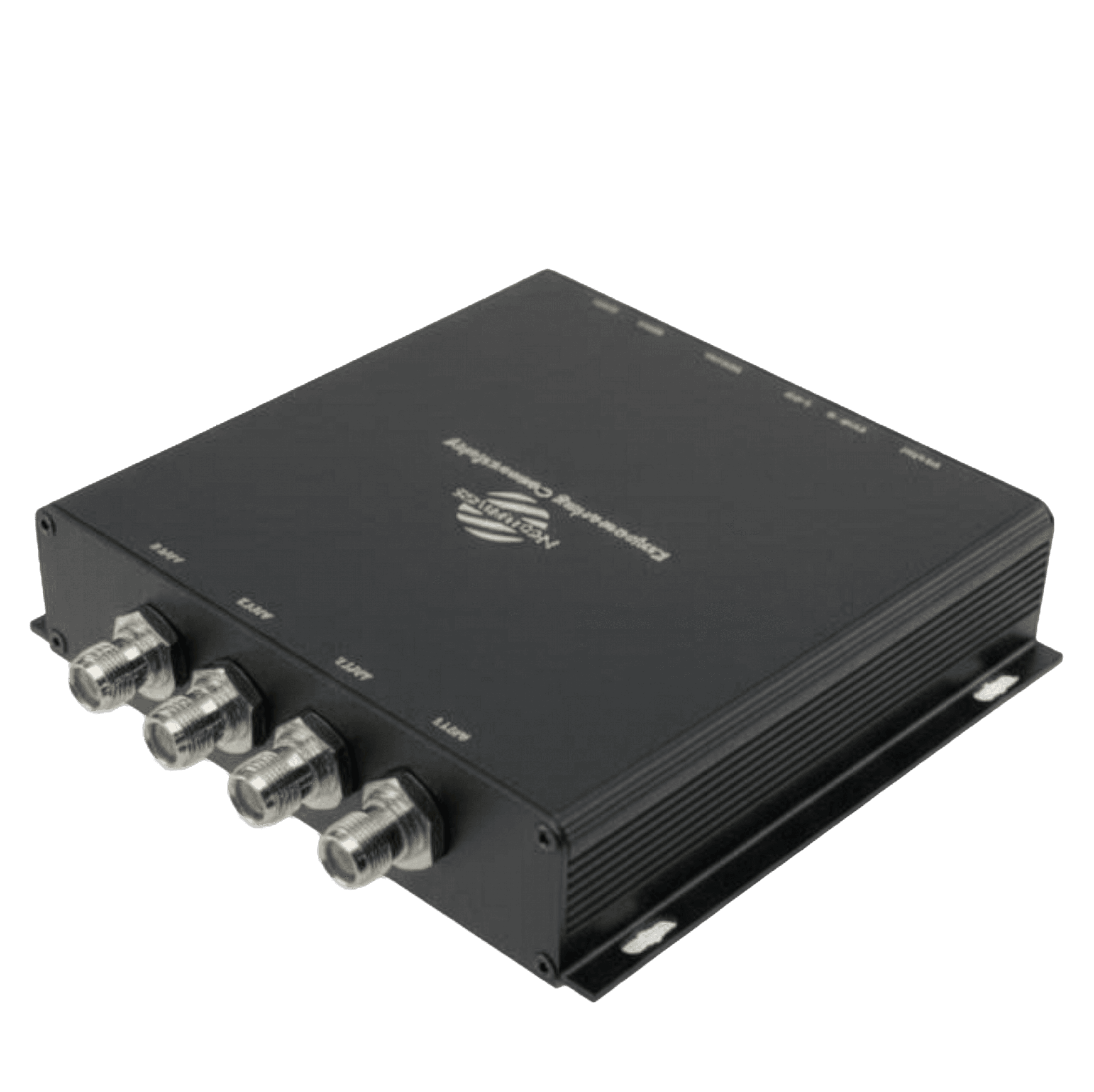
Alternative architecture

Lector RFID UHF IoT Fix NR155

APIs MQTT/REST cloud-native integrades. Sense SDKs propietaris, sense llicència de middleware. Integreu directament amb el vostre ERP o WMS en dies.

View Nextwaves NR155
Nextwaves NR155 Fixed IoT UHF RFID Reader

Ports d'Antena

4 ports RP-TNC

Velocitat de Lectura

Fins a 400 etiq./seg

Potència de Sortida

0–33 dBm (passos d'1 dB)

Protocol de Xarxa

MQTT / MQTTS

FAQ

Preguntes Freqüents

These answers help purchasing and engineering teams review cost, integration, and deployment risk.

01

Què és el S8658PL/PR?

The Laird S8658PL (Left-Hand) and PR (Right-Hand) operate as dedicated EU passive antenna fields. Confined locally to 865-868 MHz (ETSI) bands, they broadcast focused electromagnetic waves initiated by external centralized readers.

02

Quant costa inicialment aquesta configuració?

Panels carry roughly a $150 price tag. This does not factor for high-end active processing blocks, coaxial lengths routing behind drywalls, or custom software routing required on the parent MCU.

03

Per què hauria de triar Nextwaves?

Traditional RFID involves bolting passive antennas to ceilings and dragging coax cables back to central IT closets. Nextwaves simply places a standalone active array directly onto the ceiling, hooked securely to straightforward PoE systems.

04

El maquinari és prou resistent per a magatzems?

Protected by standard IP54 seals, the 260 x 260 x 33 mm casing weighs 1.04 kg. It defends against factory dust perfectly, but risks catastrophic internal failure during localized high-pressure wash-down environments.

05

Admet múltiples tipus de xarxa?

It completely lacks native Ethernet, Wi-Fi, or Bluetooth stacks. Transmitting voltage impulses occurs physically through Coaxial Type N / SMA connections tied intimately back to the active reader.

06

El meu equip pot instal·lar-ho internament?

Mounting requires securely anchoring heavy-duty articulating joints. Successful logic implementation requires measuring VSWR tolerances to tune the active reader compensating for coaxial decibel attenuation.

07

Com funciona la gestió remota?

Governed by N/A (Passive) dynamics, the speed of tag collection correlates precisely to the processing rate of the interrogator board powering the matrix.

08

Necessito programari propietari per executar-ho?

Middleware stacks are fully divorced from this hardware. Engineers execute tag reading logic and REST webhooks exclusively on the Linux systems baked into the core reader managing the voltage logic.

09

Quina garantia inclou el lector?

Protected by fundamental 1-year product fault protections. The static internal patch framework functions virtually indefinitely absent violent warehouse pallet crashes.

10

Les antenes es venen per separat?

Delivering exactly 8.5 dBic localized gain, mixing Left and Right Circularly Polarized patterns over the 865-868 MHz (ETSI) block nullifies aggressive 'deep fade' interference inside cluttered warehouses.