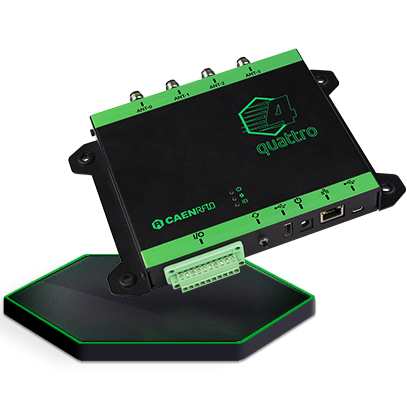
The CAEN RFID Quattro is a 4-port reader for indoor retail or smart cabinets. Compare its $1000 MSRP and specs to Nextwaves REST API controllers.
Tegniese Spesifikasies
Hardeware Oorsig
Die CAEN RFID Quattro (R4321P) is 'n industriële-graad RFID-toestel. Dit werk binne die 865.6-867.6 MHz (ETSI) / 902-928 MHz (FCC) reeks en ondersteun die EPC C1 G2, ISO 18000-63 standaard, wat dit wyd ontplooi maak oor ondernemingslogistiek toepassings.
Met 'n IP-gradering van IP30, bied dit beskerming teen spesifieke omgewingstoestande tipies in pakhuise of kleinhandel agterkamers. Die leser gebruik 5V DC or PoE (802.3af) vir deurlopende werkverrigting, terwyl die gespesifiseerde maksimum leessnelheid pieke by Up to 400 Kb/s.
Verbindings- en Netwerkintegrasie
In moderne ontplooiings is netwerkintegrasie die grootste hindernis. Hierdie model bied Ethernet (PoE), USB, GPIO opsies vir die oordrag van data terug na sentrale stelsels.
’n Groot knelpunt met ou CAEN RFID hardeware is egter die swaar afhanklikheid van eie SDK's (soos LLRP) of duur derdeparty IoT-middelware om rou merkerdata in betekenisvolle sake-intelligensie te verwerk.
Die Nextwaves Alternatief
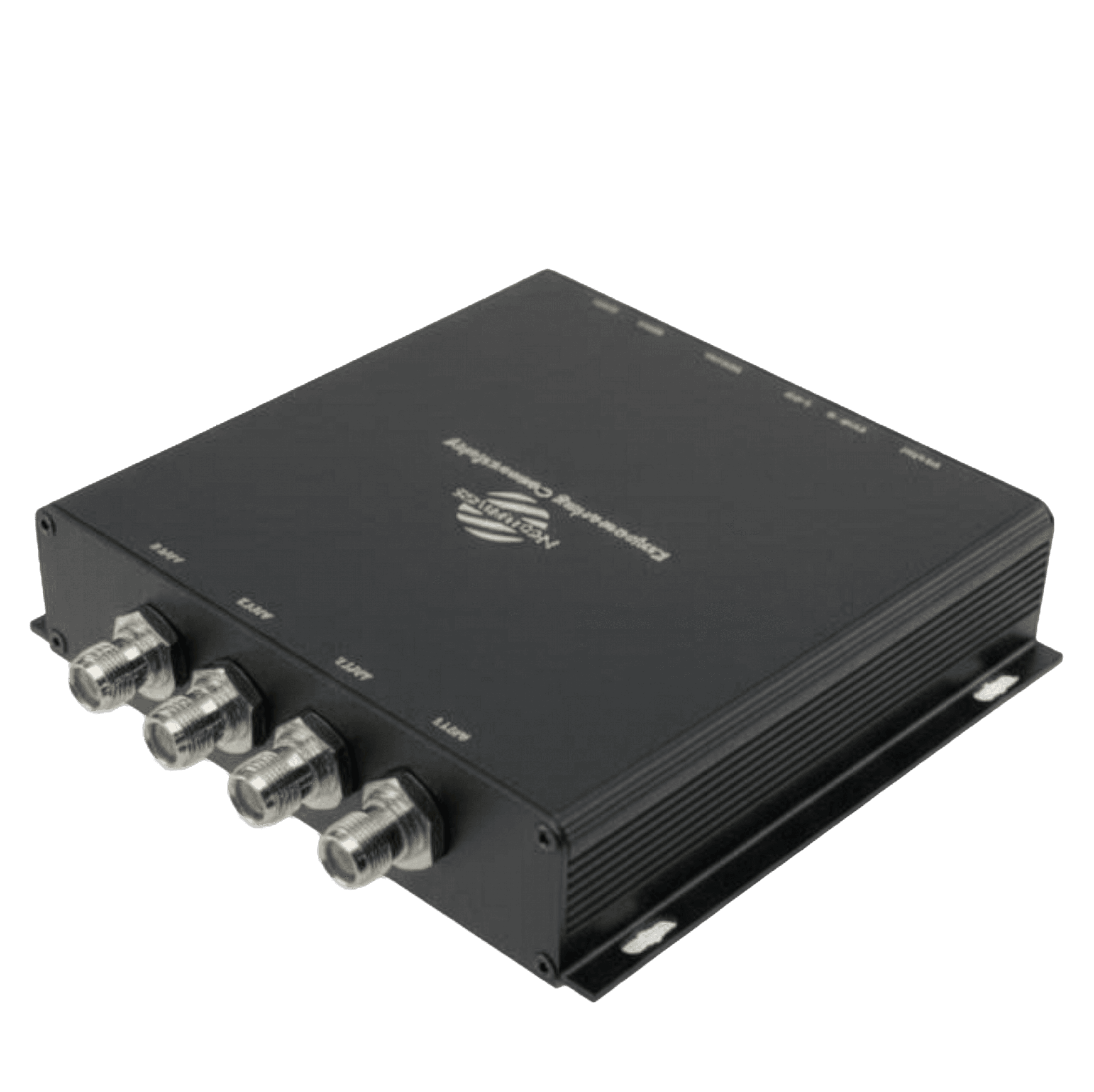
As jou ingenieurs-span die CAEN RFID Quattro (R4321P) evalueer, bied die Nextwaves NR155 'n baie beter wolk-inheemse argitektuur. Ouer stelsels dryf inherent hoë kapitaaluitgawes aan deur verskaffers-insluiting en eie sagteware ekosisteme.
Nextwaves skakel hierdie hindernis heeltemal uit deur 'n standaard MQTT REST API direk op die toestel te verskaf. Jou sagteware-ontwikkelaars kan tag-lees direk in jou pasgemaakte ERP of WMS backend in dae in plaas van maande integreer, en sodoende herhalende lisensiefooie vir middeware heeltemal omseil.
Gereelde Vrae
Wat is die Quattro (R4321P)?
The CAEN RFID Quattro (R4321P) is a compact, stationary EPC C1 G2, ISO 18000-63 RFID reader. Operating on the 865.6-867.6 MHz (ETSI) / 902-928 MHz (FCC) frequency bands, it is primarily intended for indoor smart cabinet or point-of-sale integration.
Hoeveel kos hierdie opstelling aanvanklik?
The base hardware cost is generally around $1000. A full deployment budget must include up to 4 external antennas, MMCX cables, and 5V DC or PoE (802.3af) networking switching gear.
Hoekom moet ek Nextwaves eerder kies?
Nextwaves maintains an open-architecture approach. Our devices embed MQTT and REST API endpoints natively, allowing developers to query state directly without licensing third-party IoT middleware.
Is die hardeware duursaam genoeg vir pakhuise?
The sleek casing weighs 740 g and has dimensions of 210 x 140 x 27 mm. With an indoor-only IP30 rating, it provides minimal durability against environmental ingress and must be kept away from splashing water.
Ondersteun dit verskeie netwerktipes?
Network connectivity is established through its Ethernet (PoE), USB, GPIO ports. While typical IT protocols provide baseline security, segregating RFID hardware on dedicated LAN subnets is heavily recommended.
Kan my span dit intern installeer?
Physical mounting utilizes standard flush brackets. To guarantee accuracy, RF transmission settings and dense-interrogator modes must be calibrated to your facility's indoor interference profile.
Hoe werk die afstandbestuur?
Under optimal lab conditions, the hardware supports data link rates Up to 400 Kb/s. Firmware and configuration updates are traditionally compiled against the CAEN RFID API.
Benodig ek eie sagteware om dit te gebruik?
Bridging tag data from the Ethernet (PoE), USB, GPIO interfaces to cloud CRMs or ERPs usually requires intermediate C/C++ polling software, which introduces legacy code overhead.
Watter waarborg kom saam met die leser?
The manufacturer generally backs the hardware with a standard one-year warranty. Integrators often suggest purchasing extended technical agreements for scaled rollouts.
Word die antennas apart verkoop?
External near-field or far-field antennas are required to establish the RF portal. Antenna polarization must be carefully selected across the 865.6-867.6 MHz (ETSI) / 902-928 MHz (FCC) band.